


Vintage Japanese Lighting
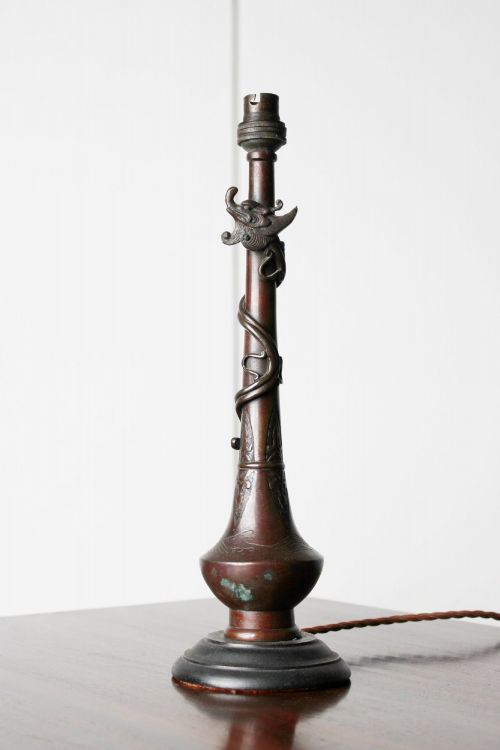
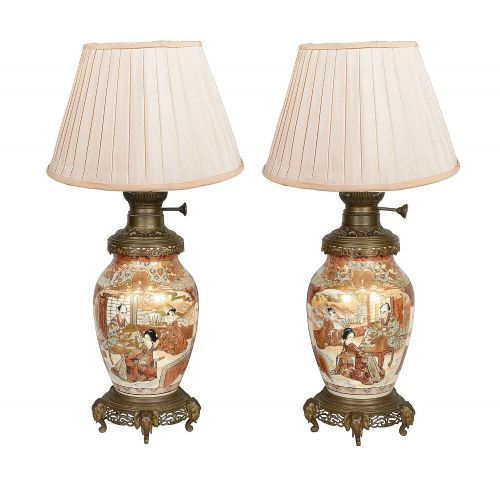
These vintage japanese lighting pieces bring hand-worked metal and painted porcelain into rooms as fitted lamps.
Vintage Japanese Lighting
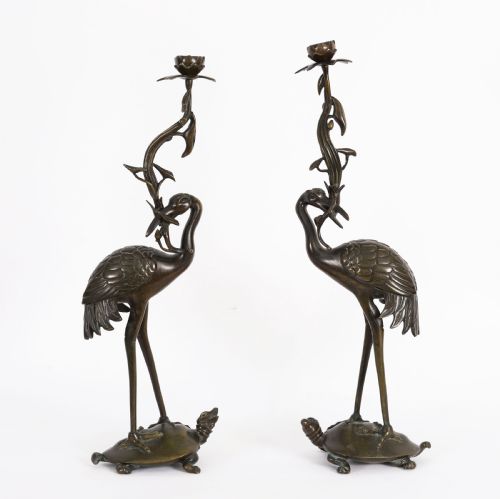
When searching for vintage japanese lighting, buyers encounter decorative lamps formed from converted vessels and metalwork dating from the seventeenth century through to the Edwardian era. The selection centres heavily upon table lamps and candlesticks created from earlier vases, brush pots, and bronze vessels. Examples span the Edo period, the Meiji period, and later nineteenth-century manufacturing traditions.
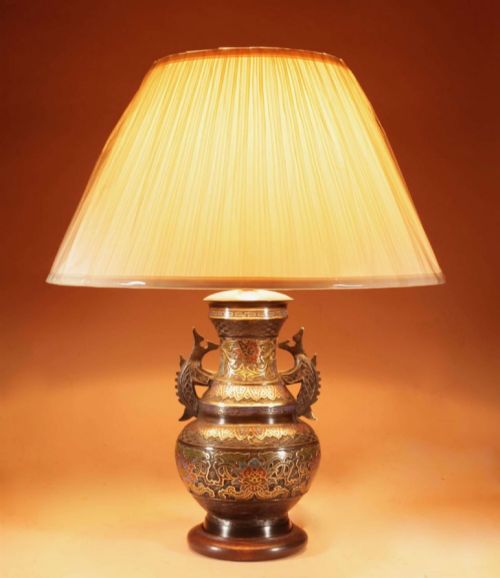
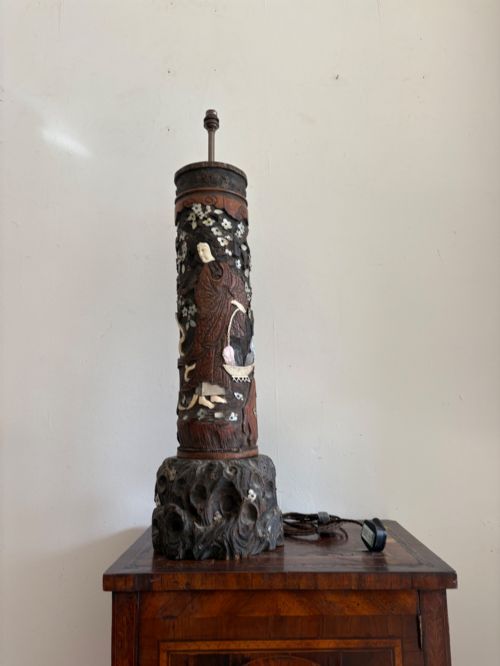
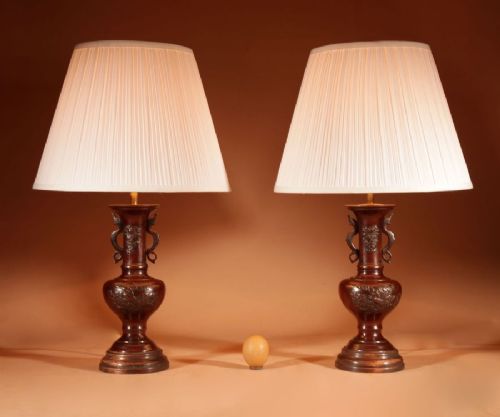
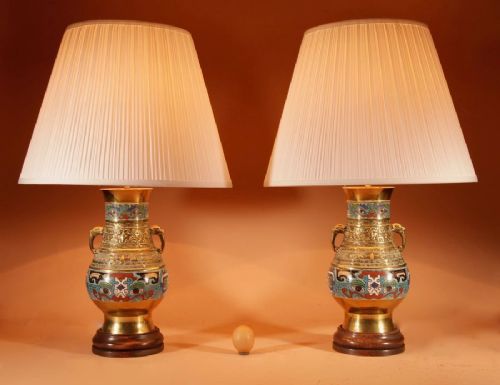
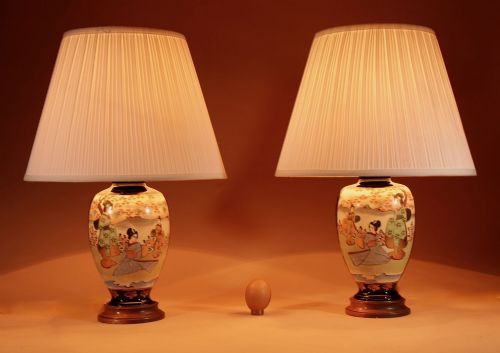
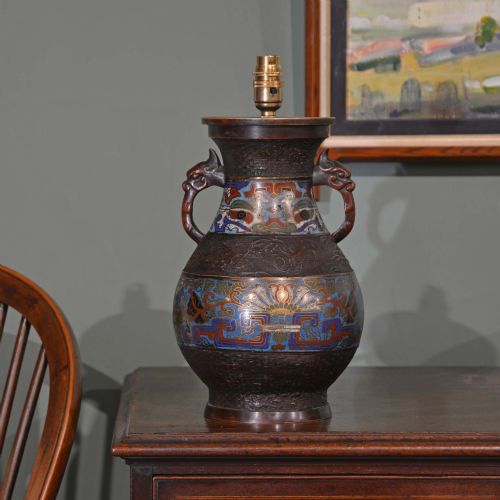
Many items utilise Satsuma, Kutani, and Arita Imari porcelain bodies mounted for electrical or domestic use. Others employ bronze, brass, and champlevé enamel, alongside root wood and carved brush pots adapted into standard lamps and table lights. Pairs appear frequently across the material types, alongside single decorative objects.
Originating styles incorporate traditional Japanese motifs, Chinoiserie, and ormolu mounts added during Victorian and Edwardian periods. The forms bridge traditional East Asian craftsmanship with Western domestic illumination needs from the nineteenth and early twentieth centuries.
How they were made
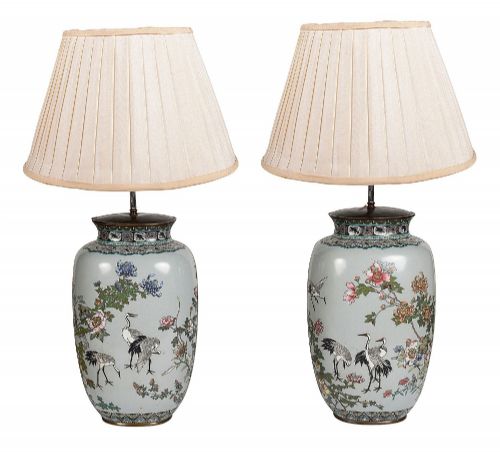
Makers utilised cast bronze, brass, and copper frames inlaid with champlevé and cloisonné enamels to build durable metallic lamp bodies. Porcelain vessels from Kutani, Satsuma, and Arita kilns were formed in clay, fired, and hand-painted with detailed mineral pigments before later conversion.
Natural materials such as root wood and carved bamboo or mother of pearl served as sculptural bases for specialised lamps. Artisans combined these carved organic elements with metal fittings and fabric wiring components during the conversion processes of the nineteenth and early twentieth centuries.
Materials span porcelain, bronze, brass, fabric, silk, earthenware, and root wood across multiple centuries.
What varies in quality
The degree of fineness in hand-painted enamel and porcelain decoration dictates the visual standard across Satsuma and Kutani pieces. Crisp casting work in champlevé bronze and precise cloisonné wire placement distinguish superior metalwork from simpler production.
The integrity of the original vessel prior to conversion affects the overall stature of the piece. Matching pairs demonstrate higher architectural and decorative cohesion than single assembled lamps.
The Vintage Japanese Lighting Glossary
- Champlevé
- Enamelling technique where troughs or cells are chiselled or cast directly into the surface of a bronze or brass object and filled with vitreous paste before firing. This method creates bold metallic outlines around coloured enamel designs.
- Cloisonné
- Decorative metalwork method using thin metal wires soldered to a base to form compartments filled with enamel paste. The piece is then fired and polished smooth to reveal intricate patterns.
- Satsuma
- Earthenware pottery originating from Satsuma Province, typically featuring a ivory-coloured, crackled glaze painted with polychrome enamels and gilt. These ceramics were frequently converted into table lamps during the nineteenth century.
- Kutani
- Japanese porcelain distinguished by bold, vibrant overglaze colour palettes, particularly iron red and greens. Kutani vases often form the body of antique lamps.
- Imari
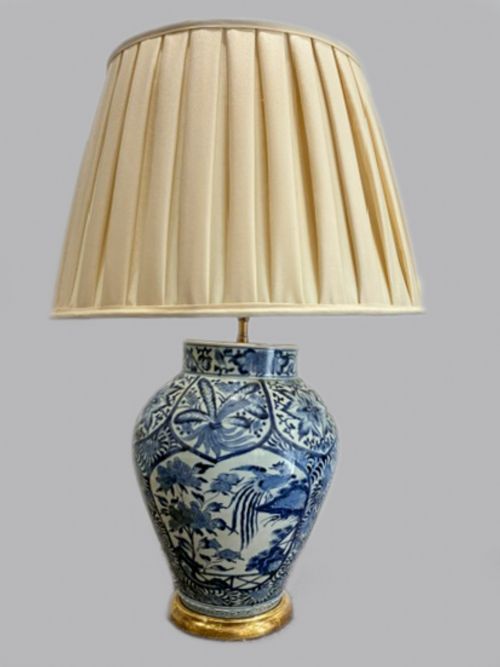
- Style of Japanese porcelain exported from Arita, characterised by a palette of underglaze blue, iron red, and gold. 18th century examples are frequently found adapted as lamps.
Vintage Japanese Lighting: Frequently Asked Questions
What are vintage japanese lighting pieces made of?
The pieces utilise materials including bronze, brass, porcelain, root wood, silk, and fabric. Enamel work in champlevé and cloisonné styles also appears across the metal bodies.
Earthenware elements draw from Satsuma and Kutani traditions, whilst older vessels originate from Arita kilns.
How do I date these lamps?
Dating relies on stylistic periods such as the Edo and Meiji eras, alongside Victorian and Edwardian conversion mounts. Evidence shows pieces spanning from the seventeenth century through to the early twentieth century.
Porcelain types and metal casting techniques help establish the primary age of the original vessel used in the lamp.
Were these originally made as lamps?
Many items began as vases, brush pots, or candlesticks before conversion into lamps in later periods. Vases from the seventeenth, eighteenth, and nineteenth centuries were commonly adapted for domestic illumination.
Some bronze and brass objects served as pricket candlesticks or decorative vessels prior to electrical fitting.
What styles are included in this category?
The selection includes Japanese Meiji period works, Edo period items, and traditional Japanese designs. Chinoiserie styles and ormolu-mounted Victorian pieces also feature heavily.
Blue and white ceramics sit alongside multi-coloured Satsuma and Kutani porcelains.