

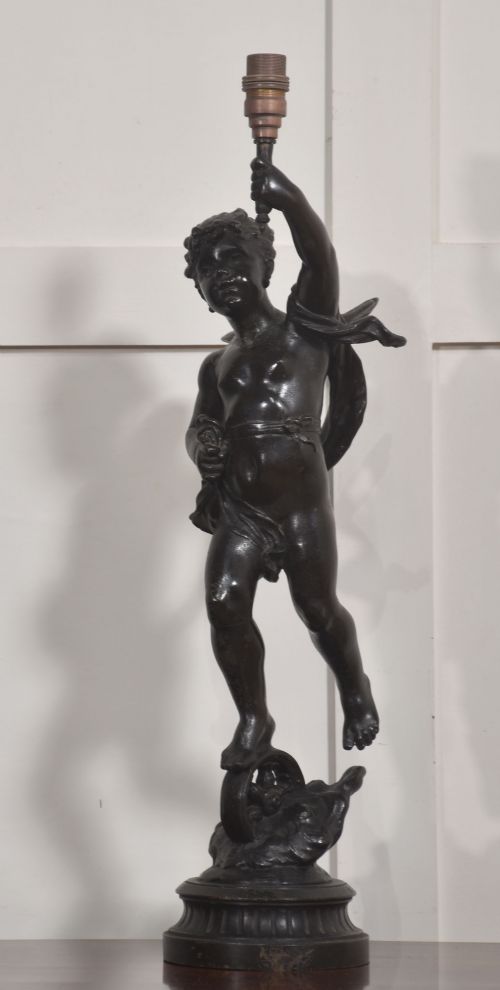


Dark Bronze Desk Lamp
A dark bronze desk lamp brings deep historical character and a warm, directional glow to a study or workspace.
Dark Bronze Desk Lamp
A dark bronze desk lamp is a functional light source cast in metal, frequently originating from the nineteenth century or early twentieth century. These pieces often adapt older objects, such as oil lamps, ewers, and classical columns, into electrical table lights.
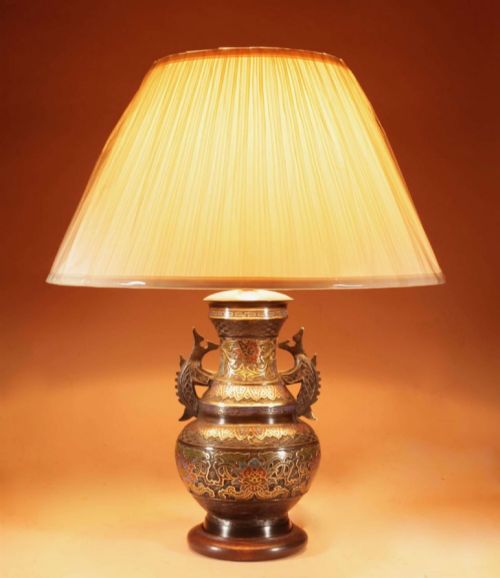
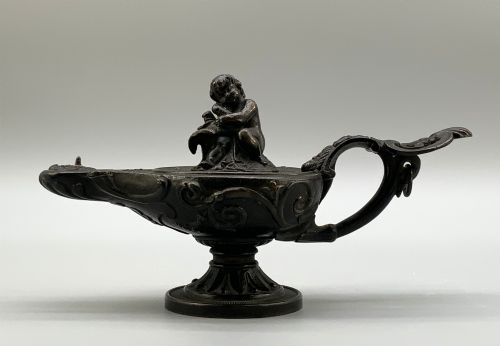
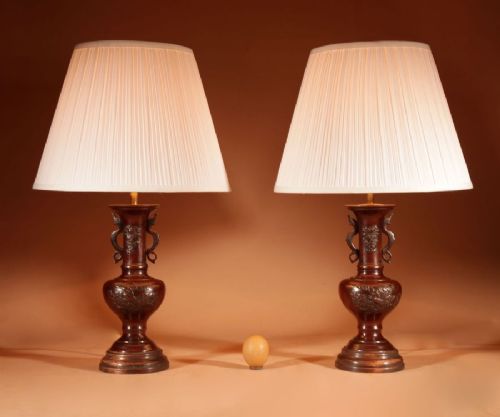
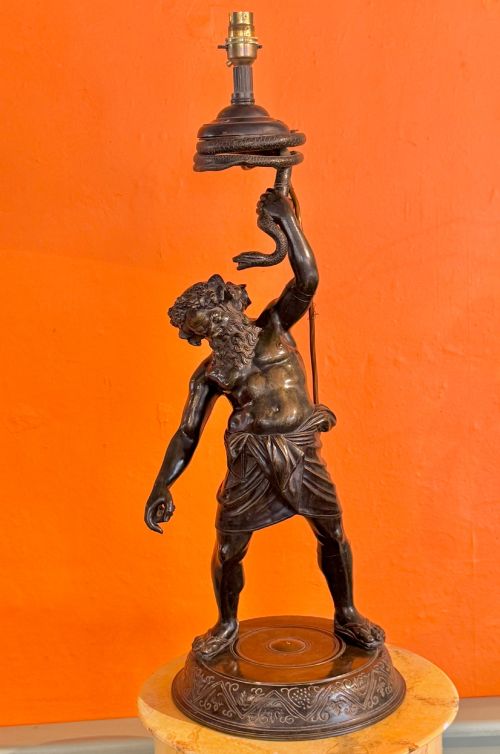
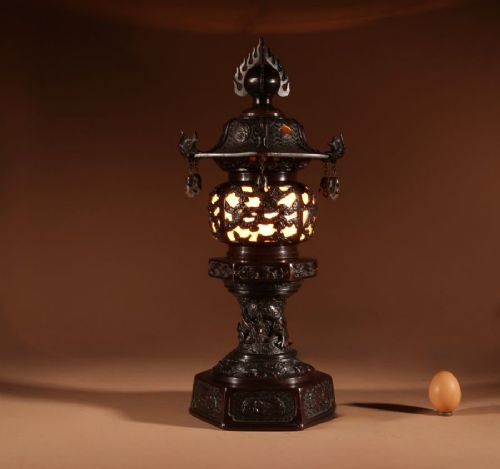
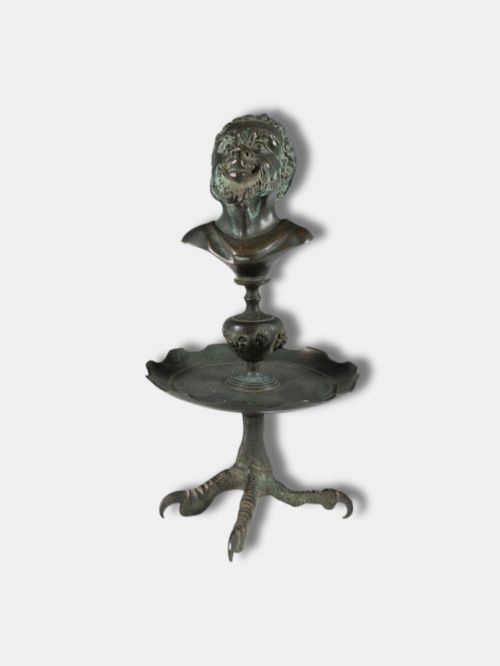
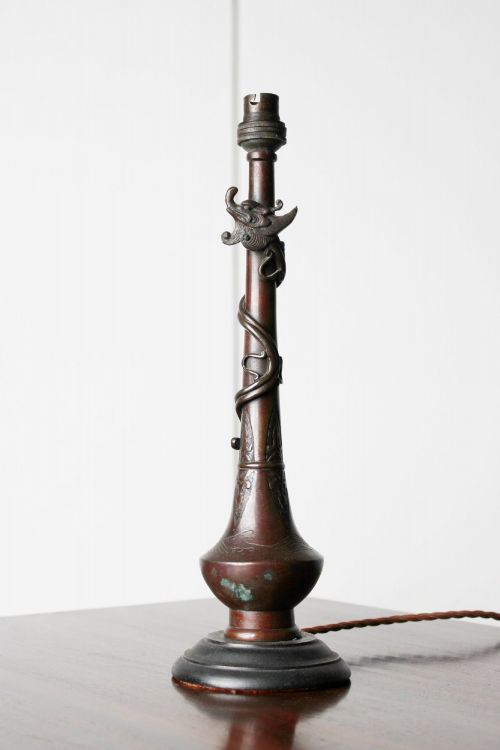
The selection on this page ranges from Grand Tour figural pieces and neoclassical designs to Japanese Meiji period bronzes and French Art Nouveau creations. Buyers encounter table lamps, converted oil lamps, and figural works featuring cherubs, dragons, and classical motifs.
Origins span across Europe and East Asia, with particular emphasis on French ateliers, Italian workshops, and Japanese metalwork. Each dark bronze desk lamp carries the distinct stylistic markers of its period, whether the strict symmetry of the Regency era or the flowing lines of Art Nouveau.
Materials and construction methods
Foundries utilised traditional lost-wax casting and sand casting methods to shape the bronze, often adding patinated finishes to achieve a dark, rich surface tone. Ormolu, gilt bronze, and brass accents frequently complement the dark metal body to highlight specific architectural or figural details.
Many examples incorporate mixed media, pairing patinated bronze with white marble plinths, rock crystal columns, or glass cabochons. Later adaptations integrate electrical wiring into structures originally designed for oil or candlelight.
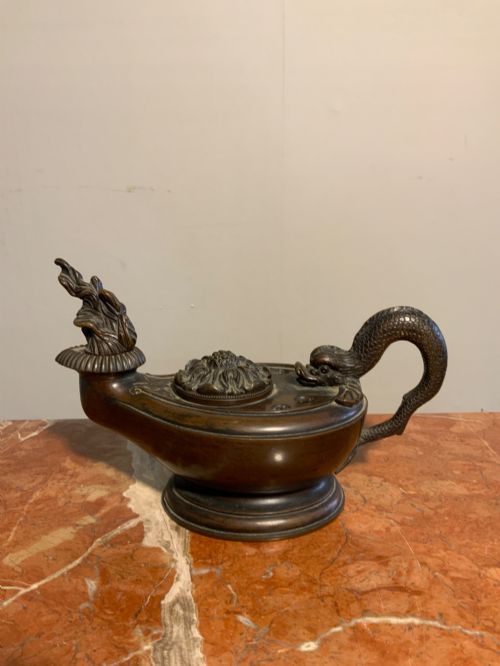
Some nineteenth-century makers converted ancient bronze ewers into domestic lighting, proving that a clever mounting job heals almost any identity crisis.
Markers of quality and craftsmanship
The nuance of the patination and the integration of secondary materials, such as genuine marble bases or hand-set glass cabochons, elevate the overall distinction of the piece. Attribution to known sculptors or workshops also marks out superior examples from standard production items.
G. Amodio Naples·Georges Leleu·Emile Picault·Ivan Zaiec·Aug. Moreau
The Dark Bronze Desk Lamp Glossary
- Patinated bronze
- Bronze that has been chemically treated to alter its surface colour, usually yielding a dark brown, black, or greenish hue. This finish protects the metal and defines the sculptural contours.
- Ormolu
- Gilt bronze produced by applying a finely ground high-carat goldmercury amalgam to a bronze object. The mercury is then driven off by heat, leaving a rich gold coating.
- Grand Tour
- A traditional trip of Europe undertaken by upper-class young European men of means in the 18th and 19th centuries. Souvenirs from these travels frequently included small bronzes and classical lamps.
- Spelter
- An alloy of zinc and lead, sometimes mixed with copper, used as a less expensive substitute for bronze. It is softer and lighter than bronze, often painted to resemble darker metals.
- Meiji Period
- The era in Japanese history from 1868 to 1912 characterised by the modernisation and export of traditional crafts. Metalwork from this period is noted for intricate bronze casting and champlevé enamel.
Dark Bronze Desk Lamp: Frequently Asked Questions
Are these lamps originally electric?
Most pieces from the nineteenth and early twentieth centuries began life as oil lamps, candlesticks, or decorative vessels. They were subsequently converted to run on electricity during or after their period of manufacture.
Wiring and internal components are typically modern updates to ensure safe daily operation while preserving the historic exterior structure.
How do I clean a bronze lamp?
Dusting gently with a soft, dry cloth is the safest way to maintain the surface without disturbing the historic patina. Avoid commercial metal polishes, as these can strip away the aged dark finish entirely.
Professional conservation advice should be sought if the metal requires more intensive cleaning or restoration.
How do I identify the period?
Stylistic clues such as the sweeping organic lines of Art Nouveau or the strict symmetry of Regency design point directly to specific decades. Examining the casting technique, the wear on the base, and any maker signatures provides further chronological context.
Comparing the object's materials, such as the use of spelter versus heavy bronze, also helps narrow down its age.
What is the difference between bronze and spelter?
Bronze is a durable alloy primarily composed of copper and tin, prized for its strength and capacity to hold fine sculptural detail. Spelter is a softer, zinc-based alloy that is lighter in weight and more susceptible to surface wear.
Magnification and weight tests often reveal whether a dark metal body is heavy bronze or lighter spelter.