
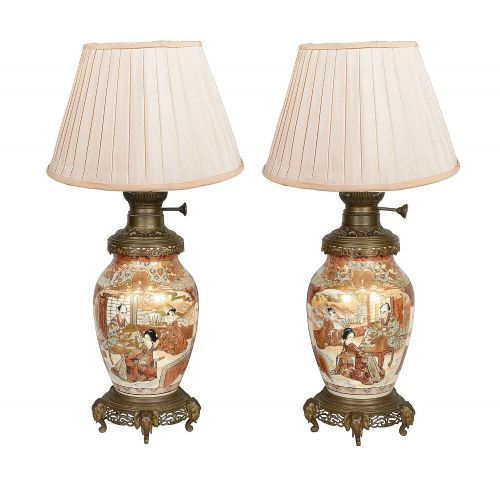


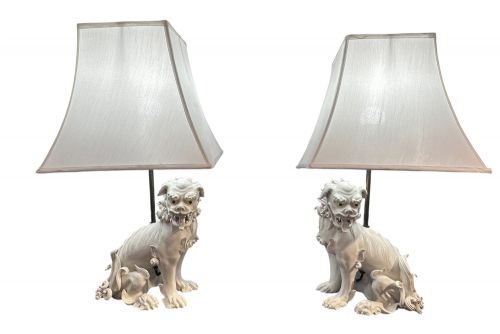


Asian Ceramic Table Lamps
These asian ceramic table lamps bring character to a room through centuries of porcelain and enamel work.
What these pieces are
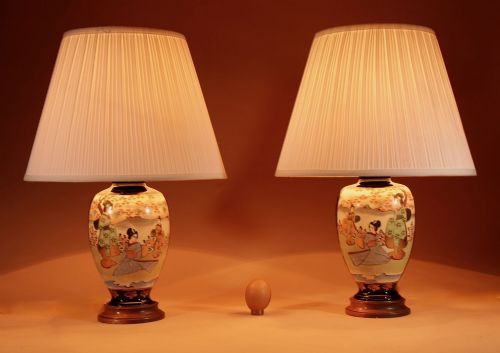
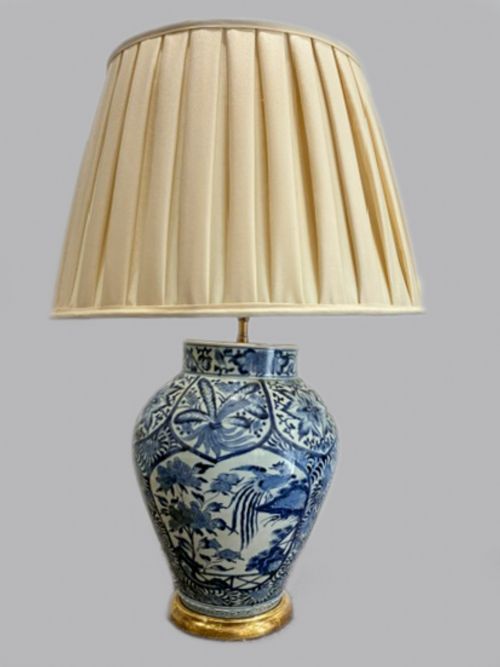
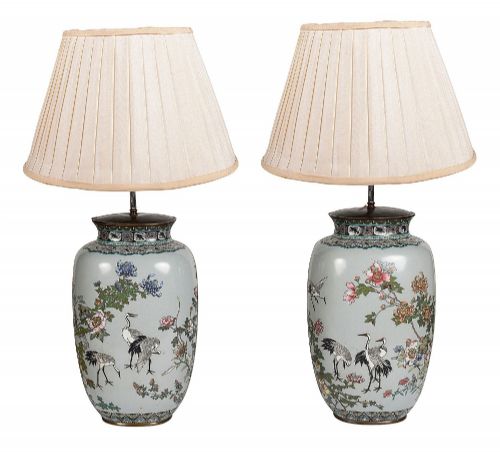
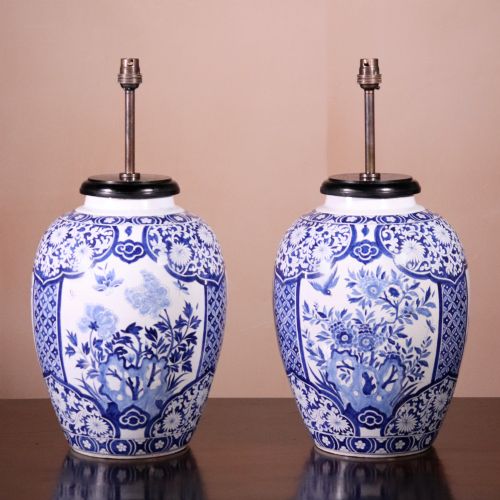
When you search for asian ceramic table lamps, you are looking at vases from China and Japan that have been wired for lighting. The pieces on this page span the 18th century, the 19th century, and 1910.
The forms originate from distinct periods and styles including the Edo period, the Meiji period, and the Qing Dynasty. You will encounter pairs of porcelain and cloisonné enamel vessels adapted into lamps.
Chinese and Japanese workshops created these original vessels long before their conversion to lighting. The selection highlights porcelain and enamel forms paired with materials like brass, wood, and fabric shades.
How they were made
Makers shaped porcelain and cloisonné enamel using traditional ceramic and metalworking techniques. Artisans applied glazes such as powder blue, famille rose, and Imari patterns directly onto the body of the vase.
Workshops constructed the mountings and structural elements using brass, wood, and enamel. Later adaptation involved fitting these historic vessels with electrical components and fabric or silk shades.
Retail Price Guide 2026
Typical UK retail prices for asian ceramic table lamps, calculated from the Sellingantiques database of over a million retail prices indexed since 2003. This retail price guide relies exclusively on Sellingantiques data; no external sources or auction records are used, so the figures do not describe the wider market.
Current listings feature porcelain and cloisonné enamel materials across the eighteenth century, nineteenth century, and nineteen ten.
What varies in quality
Quality rests in the precision of the hand-painted glaze work and the complexity of the enamel detailing. Pieces from specific periods demonstrate superior control over pigment and firing.
The distinction between standard examples and the finest items lies in the crispness of the cloisonné wirework and the depth of the porcelain glaze.
The Asian Ceramic Table Lamps Glossary
- Cloisonne enamel
- A technique where thin metal wires are applied to a base to form compartments filled with enamel paste. This method creates intricate patterns across the surface of the vessel before firing.
- Famille Rose
- A palette of opaque enamels dominated by pink or rose colours, introduced in Chinese ceramics during the Qing dynasty. It allowed artists to paint delicate floral and figural scenes.
- Imari
- A style of Japanese export porcelain decorated in underglaze blue, iron red, gold, and supplementary colours. The tradition originated in Arita and became popular in European interiors.
- Meiji Period
- A Japanese historical era spanning from eighteen sixty-eight to nineteen twelve, noted for exceptional decorative arts and metalwork. Pieces from this time often display meticulous craftsmanship.
- Satsuma
- A type of Japanese earthenware featuring a crackle glaze and elaborate polychrome and gilt decoration. These ceramics were widely produced for export during the late nineteenth and early twentieth centuries.
Frequently Asked Questions
How old are these lamps?
The pieces span the eighteenth century, the nineteenth century, and nineteen ten. They combine historic Asian ceramic vessels with modern electrical fittings.
Specific dates depend on the individual maker and period of the original vase.
Are these converted vases?
Yes, these items began as traditional decorative vases and were later adapted into table lamps. The original ceramic or enamel bodies retain their historical character.
Wiring and mountings are added to allow functional use in contemporary interiors.
How do I identify styles?
Styles range from Japanese Meiji period cloisonné to Chinese powder blue and Famille Rose porcelains. Each style reflects the artistic conventions of its specific region and era.
Examining the glaze colours and decorative motifs helps determine the origin.
What materials are used?
The primary materials are porcelain, ceramic, and cloisonné enamel, often supported by brass and wood components. Fabric and silk shades complete the assembly.
These mixed media combinations unite historic vessels with functional lighting design.