


Blue White Porcelain Lamp
These blue white porcelain lamp options bring historic ceramic forms into modern rooms with classical pattern work.
What blue white porcelain lamp pieces are
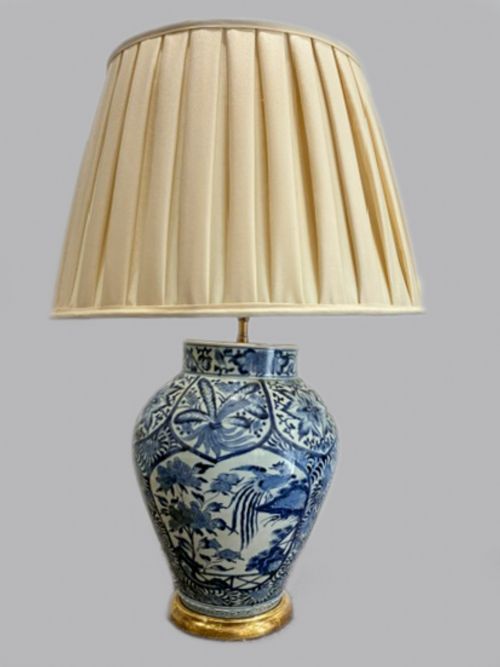
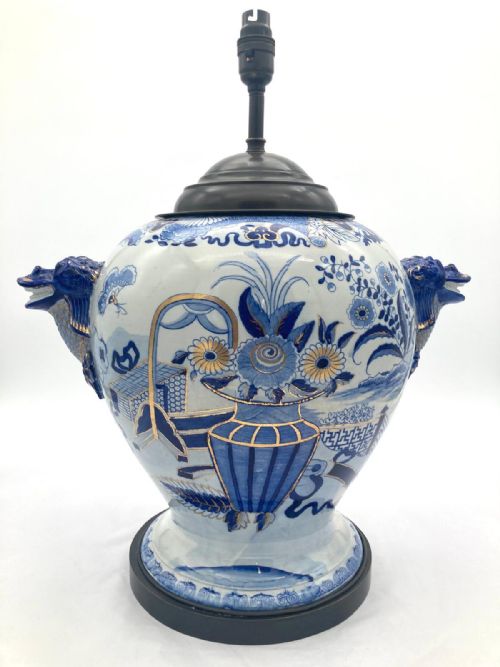
A blue white porcelain lamp combines historic ceramic vessels with domestic lighting hardware, transforming antique jars and vases into functional table pieces. Buyers searching this category frequently encounter converted vases originating from East Asian kilns during the seventeenth, eighteenth, and nineteenth centuries. These table lamps repurpose porcelain bodies from diverse stylistic traditions such as Chinese Qing dynasty productions and Japanese Arita or Yokohama periods.
The inventory reflects several distinct eras, including seventeenth century pieces from around sixteen ninety alongside nineteenth century monumental vases. Art Deco examples from nineteen twenty incorporate the same ceramic palette into twentieth century design schemes. Most items function as table lamps, standing as singular conversation pieces or matching pairs.
How blue white porcelain lamp items were made
The primary material is porcelain, shaped into vases and vessels before receiving cobalt blue decoration under a clear glaze. Metal mounts, brass components, and gilt bronze elements often secure the wiring and support the ceramic body. Bases incorporate wood or giltwood alongside metal fittings to stabilise the heavier porcelain forms.
Lighting adaptors and lamp hardware are integrated with fabric or silk shades to complete the conversion from vessel to lamp. Historic vases from the seventeenth and nineteenth centuries undergo this adaptation while retaining their original ceramic surfaces and hand-painted blue motifs.
Retail Price Guide 2026
Typical UK retail prices for blue white porcelain lamp, calculated from the Sellingantiques database of over a million retail prices indexed since 2003. This retail price guide relies exclusively on Sellingantiques data; no external sources or auction records are used, so the figures do not describe the wider market.
Listings feature porcelain, brass, fabric, silk, wood, giltwood, metal, and gilt bronze across multiple centuries.
What varies in quality
Quality rests upon the preservation of the original porcelain body and the proportion of the ceramic vessel relative to its lighting hardware. Pieces originating from the seventeenth century or eighteenth century display finer potting and intricate brushwork compared to later mass production. The integration of brass, gilt bronze, or carved wood bases also dictates the refinement of the finished object.
Scale influences desirability, ranging from standard table heights to monumental nineteenth century specimens standing over ninety centimetres tall. Pairs command particular interest due to the difficulty of matching historic ceramic vases in size, pattern, and glaze quality.
The Blue White Porcelain Lamp Glossary
- Porcelain
- A hard, fine-grained ceramic material fired at high temperatures, known for its translucence and strength. It serves as the primary body for these historic lamp conversions.
- Celadon
- A pale green or grey-green glaze often associated with Chinese ceramics. It occasionally appears alongside blue decoration on nineteenth century vessels.
- Imari
- A style of Japanese porcelain featuring underglaze blue and overglaze red, gold, and green. Arita kilns produced notable examples of this ware during the eighteenth century.
- Chinoiserie
- European artistic styles reflecting Chinese motifs and techniques. This aesthetic influenced various decorative objects and lighting fixtures.
- Meiji
- A period in Japanese history spanning from eighteen sixty-eight to nineteen twelve. Yokohama porcelain from this era frequently appears in export markets.
Frequently Asked Questions
Are these antique vases damaged by conversion?
Most antique vessels used for these pieces were already adapted or drilled during past centuries to accommodate wiring and fittings. This process transforms ornamental ceramics into functional room lighting.
Buyers appreciate how this adaptation preserves historic porcelain forms by giving them a practical purpose in contemporary interiors.
How do I identify seventeenth century porcelain?
Seventeenth century pieces often display specific potting characteristics, cobalt tones, and glaze textures typical of early export wares. Examining the foot ring and body helps distinguish these older vessels from later nineteenth century reproductions.
Consulting detailed provenance notes and stylistic markers assists in confirming the production era of each ceramic body.
Can I find matching pairs?
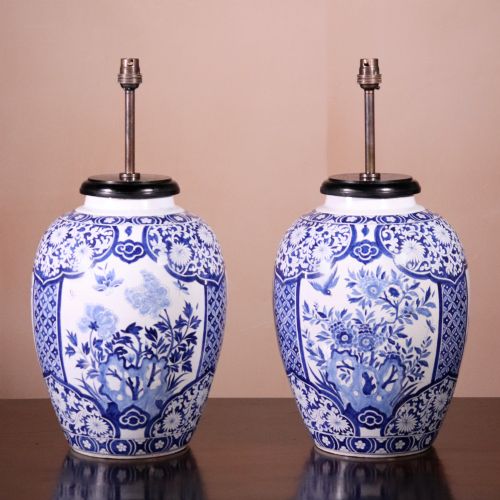
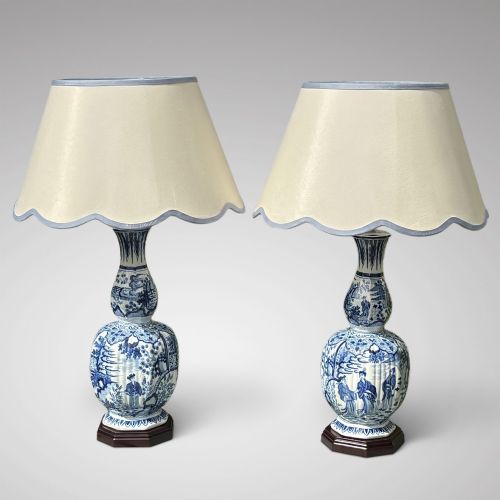
Matching pairs do appear in the selection, particularly from the nineteenth century Yokohama and Chinese export traditions. Symmetrical pairs provide balanced illumination for sideboards, mantlepieces, or large tables.
Finding identical antique vases is uncommon, making established pairs highly desirable for interior schemes.
What shades suit these lamps?
Silk and fabric shades complement the traditional blue and white patterns of the porcelain bases. Neutral or coordinating colours draw attention to the hand-painted cobalt designs without competing with the ceramic body.
Choosing the correct shade proportion ensures the assembled lamp maintains visual balance between base and top.