




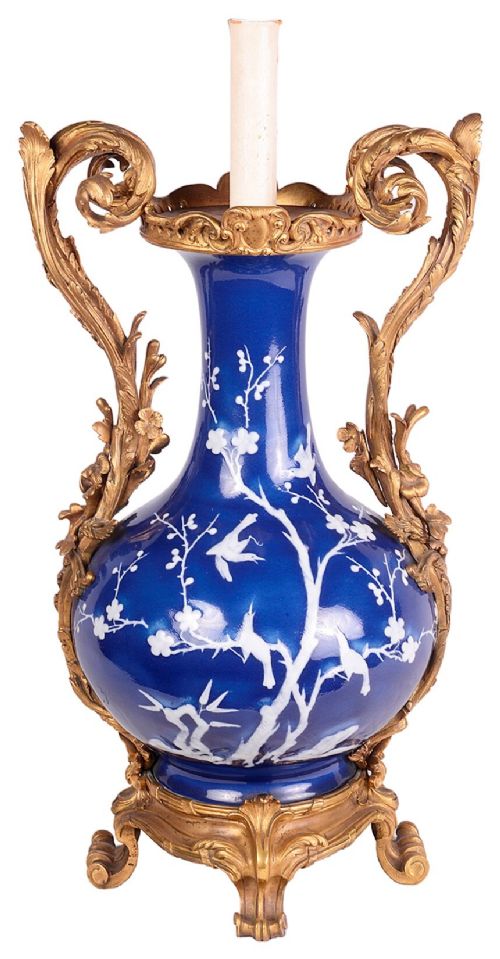


Cobalt Blue Porcelain Lamp
A cobalt blue porcelain lamp brings deep, saturated colour and striking presence to a room, anchoring a scheme with rich historical character.
Cobalt Blue Porcelain Lamp
When searching for a cobalt blue porcelain lamp, collectors encounter table lamps adapted from nineteenth-century vases, jars, and decorative vessels. These pieces range from French Sevres style porcelain creations to Chinese export wares mounted for Western interiors.
The version most commonly met on this page is the nineteenth-century French table lamp, frequently paired with gilt bronze or ormolu mounts. These items bridge decorative arts and practical lighting, often surviving as matched pairs or individual statements.
Origins span European workshops, particularly French ateliers influenced by Louis XVI and Rococo revival tastes, alongside Asian export pieces from the Qing dynasty and Meiji period. Makers utilised existing ceramic bodies, converting them into functional lighting fixtures by adding wiring and metallic bases.
How they were made
The foundation of each piece rests on high-fired ceramic bodies finished with deep cobalt glaze, sometimes enriched with hand-painted details or white prunus blossom motifs. Artisans shaped these vessels using traditional potting methods before mounting them onto cast metal structures.
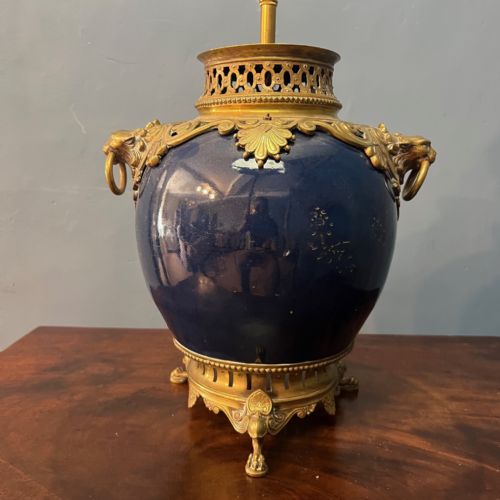
Ormolu and gilt bronze mounts secure the porcelain at the base and collar, often held together by internal rods and threaded fittings. These metal mounts are chased and cast in elaborate French Rococo or Neoclassical revival designs, framing the intense blue porcelain with bright metallic contrast.
Lamps frequently include fabric shades of silk or matching textiles, though surviving bodies are older than their contemporary electrical wiring and shades. The conversion from vase to lamp involved careful drilling through the ceramic base or utilising existing apertures without compromising the structural integrity of the antique body.
Cobalt Blue Porcelain Lamp Retail Price Guide 2026
Typical asking prices for cobalt blue porcelain lamp among the pieces listed under this phrase on Sellingantiques today, from the lower quarter to the upper quarter. They describe what is for sale here now, not the wider market.
Listings feature nineteenth-century dates alongside materials including porcelain, ormolu, gilt bronze, silk, and glazed ceramic.
What varies in quality
Quality separates through the crispness of the gilt bronze or ormolu chasing and the depth of the cobalt glaze. Superior examples display sharply defined metalwork with hand-chiselled details rather than soft, mass-produced cast surfaces.
The artistic execution of the porcelain painting dictates the upper tier of the range. Hand-painted panels, precise gilding, and well-balanced proportions between ceramic body and metal mounts distinguish finer atelier work from simpler utilitarian conversions.
The Cobalt Blue Porcelain Lamp Glossary
- Ormolu
- Gilt bronze mounts applied to furniture, clocks, and porcelain lamps. This technique involves coating cast bronze with a fine layer of gold amalgam, producing a warm, enduring metallic lustre.
- Sevres style
- A descriptor for European porcelain decorated in imitation of the famous French royal manufactory. These pieces typically feature rich blue grounds, hand-painted reserves, and heavy gilding.
- Chinoiserie
- European artistic style reflecting Chinese and East Asian motifs. It appears on porcelain bodies depicting stylized landscapes, figures, and botanical elements.
- Imari
- Japanese export porcelain decorated in underglaze blue, iron red, and gold. These wares travelled to European markets in large quantities during the nineteenth century.
- Famille Verte
- A palette of Chinese porcelain enamels dominated by green hues. The style complements rich cobalt underglazes and forms the basis for various nineteenth-century decorative lamps.
Cobalt Blue Porcelain Lamp: Frequently Asked Questions
Are these lamps newly made?
The ceramic bodies and metal mounts originate in the nineteenth century, with many pieces dating from the eighteen-seventies to the nineteen-hundreds. They were subsequently converted into lamps with modern electrical fittings for contemporary domestic use.
While the lighting components are updated for safety, the primary decorative elements retain their antique provenance and historical manufacturing techniques.
How do I style a blue porcelain lamp?
These lamps function well on heavy wooden sideboards, marble-topped tables, or desks where their saturated colour can contrast with neutral backgrounds. Their metallic mounts coordinate easily with gilt mirrors and traditional brass hardware.
Choosing a simple silk or fabric shade allows the ornate porcelain base and ormolu mounts to remain the visual focal point of the arrangement.
How can I tell French and Asian pieces apart?
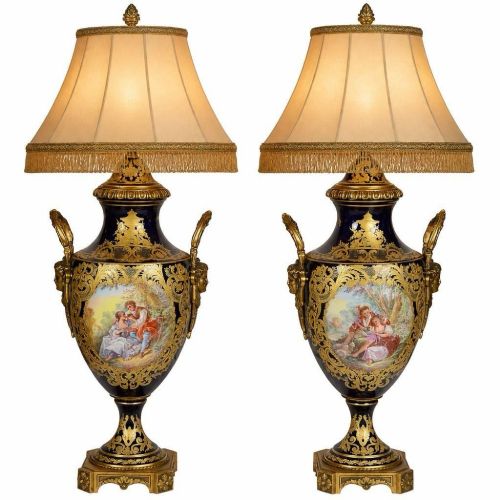
French pieces, particularly those in the Sevres style, often feature rich bleu royale glazes paired with elaborate Louis XVI or Rococo revival ormolu mounts. The decorative motifs lean towards European neoclassical wreaths, scrollwork, and painted pastoral reserves.
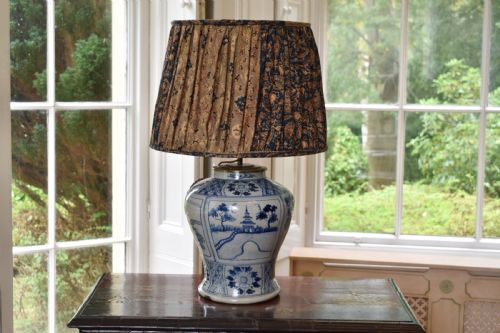
Asian pieces, including Chinese blue and white or Japanese Imari wares, display characteristic underglaze cobalt painting, floral prunus blossoms, or traditional landscapes without European figural scenes.
Can lamps be found as pairs?
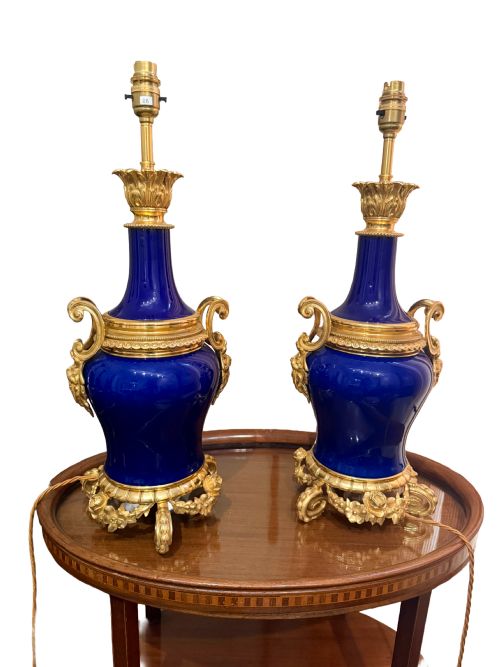
Matched pairs appear frequently among nineteenth-century French and Chinese export listings. These coordinated sets were often created from matching vases or manufactured together as decorative garnitures before conversion into lighting.
Pairs provide symmetrical balance for mantelpieces, large sideboards, or bedside tables in formal interiors.