


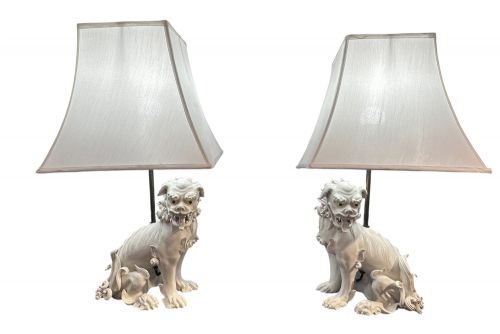


Chinese Porcelain Table Lamps
Chinese porcelain table lamps bring together hand-painted ceramics and decorative mounts to illuminate a room with historical character.
Chinese Porcelain Table Lamps
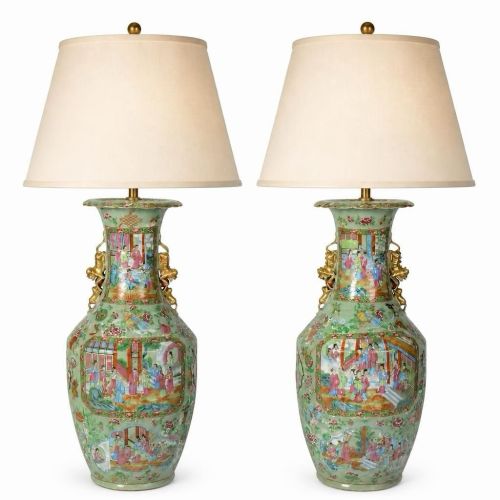
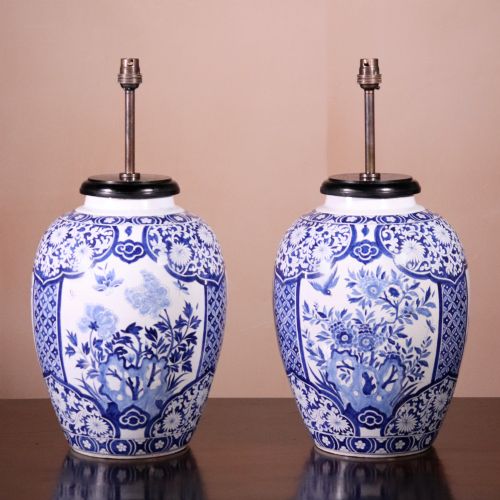
When searching for chinese porcelain table lamps, buyers encounter converted vessels such as ginger jars, lidded vases, and baluster shapes originating from the eighteenth and nineteenth centuries. These bodies often display traditional palettes including blue and white, Famille Rose, and Celadon, adapted for electrical illumination.
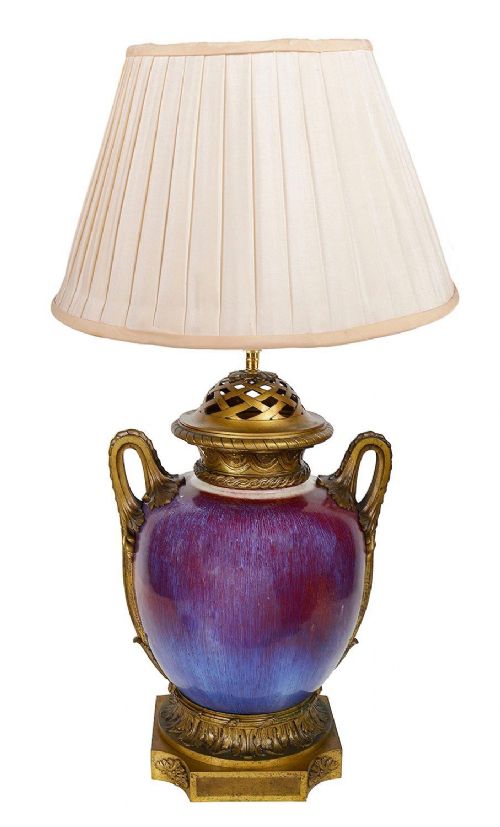
The pieces on this page frequently appear as matched pairs, particularly in Cantonese and Rose Medallion patterns, alongside single monumental examples. Many incorporate figurative subjects such as Shi Lions, while others utilise monochrome glazes like turquoise or powder blue.
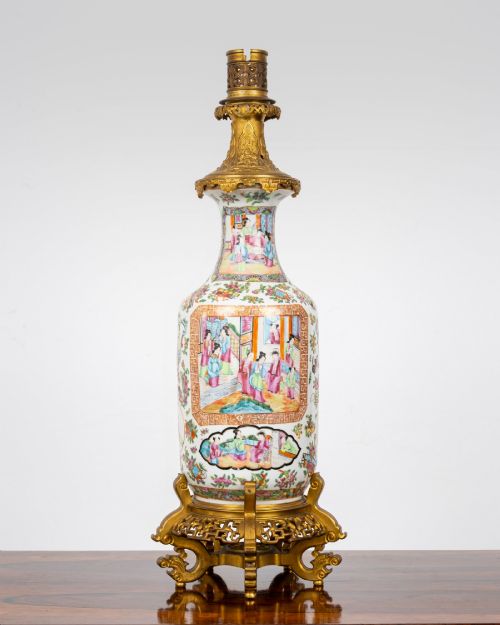
Origins span Qing Dynasty production and later export wares, sometimes augmented with European metalwork mounts in ormolu or gilt bronze. The resulting forms function as practical lighting while retaining their identity as decorative ceramics.
Materials and construction
The core bodies consist of fired ceramic porcelain, often hand-painted with mineral pigments under or over the glaze to produce complex multi-coloured scenes or stark blue and white designs. Crackleware finishes and deliberate monochrome glazes provide alternative surface textures.
Metal components such as brass, gilt bronze, and ormolu serve as mounts, bases, and neck fittings that support the electrical hardware while elevating the porcelain vessel. Fabric and silk shades complete the structure, paired with wood elements in select bases.
Chinese Porcelain Table Lamps Retail Price Guide 2026
Typical asking prices for chinese porcelain table lamps among the pieces listed under this phrase on Sellingantiques today, from the lower quarter to the upper quarter. They describe what is for sale here now, not the wider market.
Shi Lions guard these lamps with wide, ceramic grins, ready to ward off evil spirits from your bedside table.
Quality variations
The standard of painting on the porcelain body dictates much of the visual merit, with finely detailed brushwork and vibrant enamel application separating superior vessels from simpler export pieces. The crispness of the ceramic glaze and the symmetry of the original vase shape also influence the overall impact.
The integration of metal mounts plays a significant role, as finely cast and chased ormolu or gilt bronze fittings demonstrate a higher level of craftsmanship than plain brass hardware. The harmonious balance between the ceramic vessel and its metal mounts distinguishes the finest examples.
The Chinese Porcelain Table Lamps Glossary
- Famille Rose
- A palette of opaque enamels dominated by pink or rose colours, introduced in the Qing dynasty. This technique allowed for nuanced shading and detailed floral or figurative depictions.
- Ormolu
- Finely ground high-carat gold applied to a bronze base, often used for decorative mounts and furniture embellishments. In lamp conversions, it secures the porcelain and adds French stylistic influence.
- Celadon
- A pale green jade-like glaze applied to porcelain, achieving its colour from iron oxide in the reduction kiln. It creates a subtle, translucent finish prized for its quiet elegance.
- Ginger Jar
- A wide-shouldered ceramic storage vessel with a domed lid, originally used for spices or wine. These sturdy jars are frequently converted into lamps while retaining their classic silhouette.
- Rose Medallion
- A distinct Cantonese decorative style featuring panels of figures alternating with birds and flowers, filled with bright pinks and greens. This colourful enamel work appears frequently on nineteenth-century export pieces.
Chinese Porcelain Table Lamps: Frequently Asked Questions
How do I date a lamp?
Dating relies on stylistic clues in the porcelain painting, glaze characteristics, and the accompanying mounts. Eighteenth-century pieces often display deeper potting and softer enamel tones compared to later production.
Metal fittings added during conversion can also provide clues, as nineteenth-century ormolu mounts differ significantly from twentieth-century electrical hardware.
Are these lamps converted vases?
Many Chinese porcelain table lamps began life as decorative vases, ginger jars, or temple vessels before receiving electrical wiring and mounts later in their history. This practice preserves antique ceramics by giving them a functional purpose in modern interiors.
Some pieces were assembled as lamps during the nineteenth century using European ormolu mounts tailored specifically to the ceramic base.
What is Famille Verte?
Famille Verte is a ceramic palette defined by a dominance of green enamels, supplemented by iron red, blue, yellow, and black. Developed during the Qing dynasty, it creates vibrant pictorial scenes across the porcelain surface.
Pieces utilising this style often depict detailed narrative landscapes or floral arrangements set against white porcelain.
How do I care for silk shades?
Silk and fabric shades require gentle dust removal using a soft brush or a low-suction vacuum attachment. Avoiding direct sunlight prevents the delicate fibres from fading or becoming brittle over time.
Care should also be taken near the bulb fitting to ensure heat does not accumulate against the fabric.