
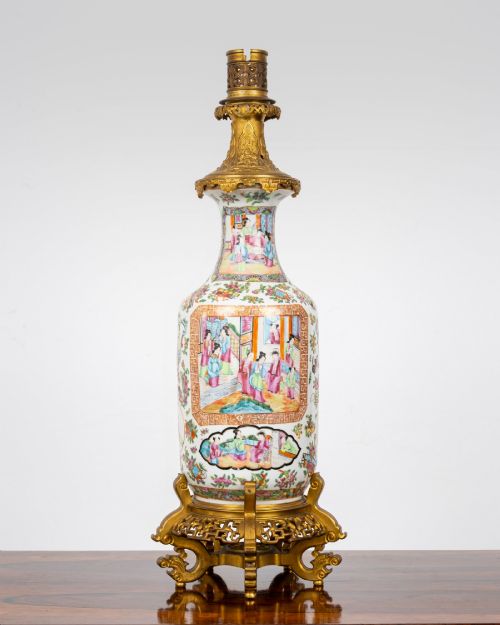


Polychrome Ceramic Lamps
Polychrome ceramic lamps bring vibrant colour and layered pattern into a room through hand-painted porcelain bodies mounted with brass, gilt metal and fabric.
What polychrome ceramic lamps are
Polychrome ceramic lamps are table lamps fashioned by mounting antique painted pottery onto metal bases and wiring them for light. Buyers searching for polychrome ceramic lamps find pairs of converted vases originating from East Asian export markets during the nineteenth and early twentieth centuries.
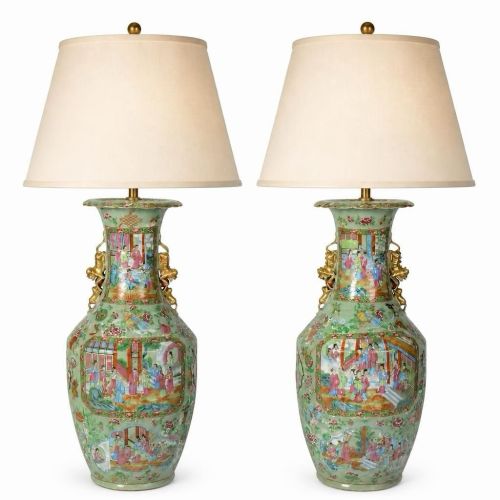
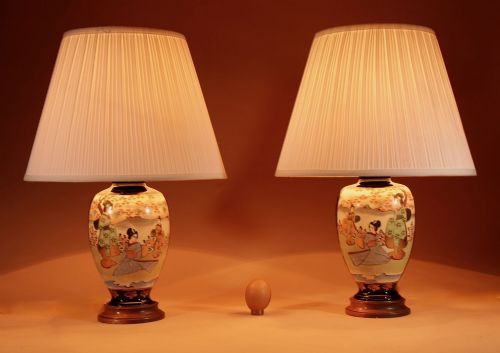
The objects seen here are predominantly matched pairs of table lamps created from Chinese and Japanese vessels. Common forms include Satsuma, Canton, Imari, and famille rose porcelain vases fitted with brass, gilt bronze, or wooden elements.
Originating in the nineteenth century, these pieces span periods such as the Meiji era, the Qing dynasty, and the early twentieth century. Their decorative schemes rely on dense enamels, gilt highlights, and pictorial panels depicting figures, flora, and fauna.
How they were made
The ceramic bodies of these lamps are high-fired porcelain or earthenware decorated with mineral pigments and enamel colours. Artisans applied hand-painted motifs, sometimes adding gilt metal highlights or enamel details before firing the pieces in kilns.
Conversion into lamps involved pairing the ceramic vessels with structural supports in brass, gilt bronze, or wood. Fabric shades complete the construction, bringing together ceramics, metalwork, and textiles into functional lighting.
Retail Price Guide 2026
Typical UK retail prices for polychrome ceramic lamps, calculated from the Sellingantiques database of over a million retail prices indexed since 2003. This retail price guide relies exclusively on Sellingantiques data; no external sources or auction records are used, so the figures do not describe the wider market.
Materials utilised across the collection include porcelain, ceramic, brass, gilt metal, gilt bronze, enamel, wood, and fabric.
What varies in quality
Quality in these lamps rests on the crispness of the hand-painted enamels and the harmony of the polychrome palette. Finer examples display meticulous brushwork across intricate figurative or botanical scenes, whereas simpler pieces show broader, more repetitive application.
The integrity of the ceramic body and the precision of the metal mounts also distinguish finer specimens. Original or complementary mounts in brass and gilt bronze elevate the overall presence of the converted vase.
The Polychrome Ceramic Lamps Glossary
- Polychrome
- Decorated in multiple colours. This technique defines the rich enamel palettes seen across nineteenth-century export ceramics.
- Famille Rose
- A palette of Chinese porcelain defined by opaque pink enamel. It dominates many nineteenth-century export vases.
- Satsuma
- Japanese earthenware featuring a crackle glaze decorated with polychrome enamels and gilt. These wares frequently date to the Meiji period.
- Imari
- A Japanese export style combining underglaze blue with iron red and gilt details. The robust patterns suit conversion into table lamps.
- Canton
- Chinese porcelain decorated in vibrant enamel colours, often featuring panels of figures and floral borders. These large vases form substantial table lamps.
Frequently Asked Questions
Are these lamps converted from old vases?
Yes, the pieces listed are antique ceramic vases that have been adapted into table lamps.
This conversion process typically pairs nineteenth-century East Asian vessels with metal mountings and modern wiring while preserving the decorated body.
Do these lamps come in pairs?
The selection consists largely of matched pairs rather than single pieces.
Symmetrical pairs provide balanced lighting for sideboards, mantelpieces, or bedside tables.
How do I date these ceramic lamps?
Dating relies on stylistic markers within the porcelain decoration, such as palette choices, subject matter, and regional export characteristics.
Periods represented span the nineteenth century through the early twentieth century.
How do I live with these lamps?
These lamps function effectively as statement pieces in traditional or eclectic interiors.
Their bright enamel colours and patterned surfaces introduce focal points and warm ambient light to a room.