



Chinese Vase Lamps
Chinese vase lamps bring together centuries-old ceramic vessels and period lighting hardware to create striking table illumination.
Chinese Vase Lamps
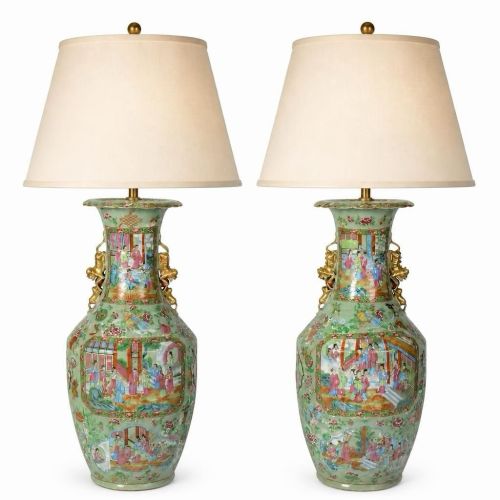
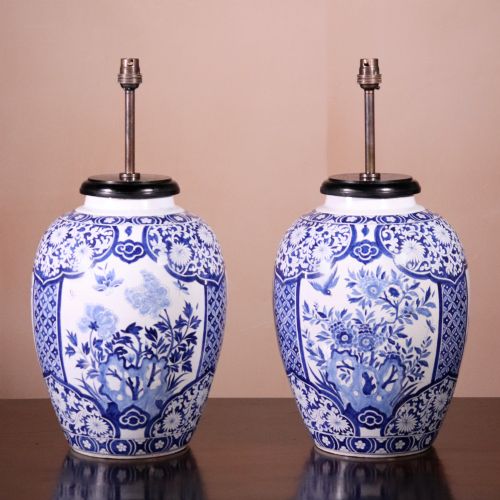
Chinese vase lamps are traditional ceramic and bronze vessels that have been converted into functional table lighting. When searching for chinese vase lamps, buyers encounter diverse forms ranging from blue and white jars to heavily decorated Canton and Famille Rose pieces.
The pieces listed here predominantly date from the nineteenth century, alongside select eighteenth-century examples and Victorian interpretations. Many survive as matched pairs, combining oriental porcelain or cloisonné bodies with Western electrical or oil-burning fittings.
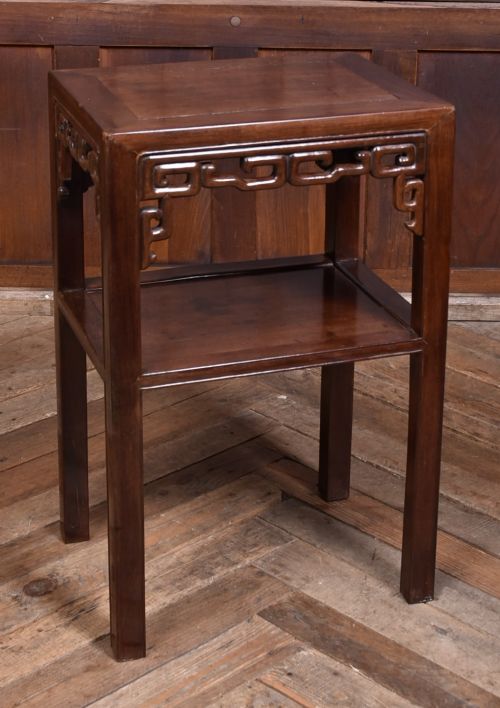
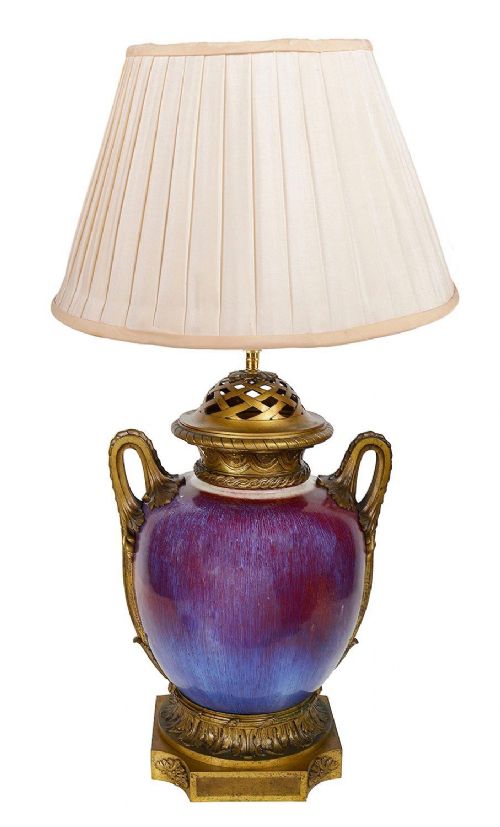
Makers and converters adapted these vessels using brass, gilt bronze, and ormolu mounts to elevate their height and stability for domestic interiors. Alongside the lamps themselves, the selection occasionally includes related oriental stands and tables designed to support them.
How they were made
The bodies of these lamps rely on traditional ceramic techniques, utilising porcelain, celadon, and crackleware decorated with enamel or underglaze blue pigments. Artisans formed ginger jars, baluster vases, and globular vessels before applying intricate hand-painted motifs characteristic of Qing dynasty styles.
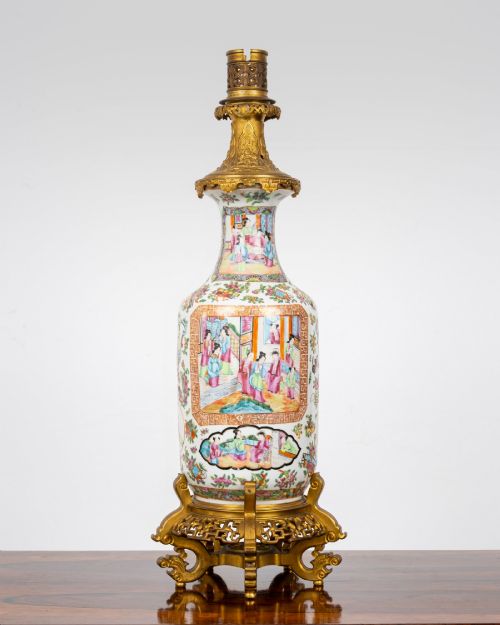
Metalwork played a crucial secondary role in their construction, with workshops adding brass and gilt bronze ormolu mounts to the necks and bases. Silk and fabric shades were subsequently paired with these mounted bodies to complete the conversion into working lamps.
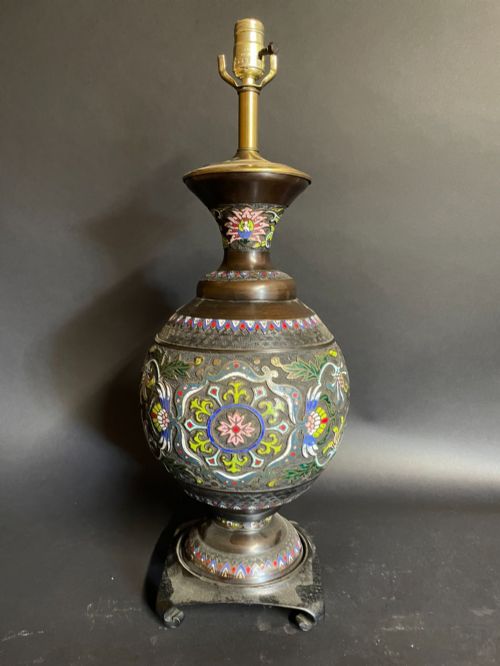
Listings feature eighteenth and nineteenth-century porcelain, bronze, and cloisonné mounted with ormolu and brass.
What varies in quality
Quality in these conversions rests primarily on the harmony between the ceramic vessel and its metal mounts. Finer examples display crisply chased ormolu and securely fitted bases that complement the proportions of the underlying porcelain rather than overpowering it.
The fidelity and detail of the hand-painted enamels, whether Famille Verte, Rose, or blue and white, set superior pieces apart from simpler or more repetitive export wares. Additionally, the survival of original matching pairs rather than assembled companions elevates the desirability of the lighting.
The Chinese Vase Lamps Glossary
- Ormolu
- Gilded bronze mounts applied to the base or rim of a vessel. This French technique was frequently added in the nineteenth century to enhance oriental porcelain for European drawing rooms.
- Famille Rose
- A palette of opaque enamels dominated by pink or rose colours. Introduced in the eighteenth century, this decorative scheme appears extensively on export porcelain.
- Cloisonné
- Enamelwork created by soldering wire compartments onto a metal base before filling them with coloured paste. This technique produces vibrant patterned surfaces on vases and jars.
- Celadon
- A pale green jade-like glaze fired over porcelain. It creates a subtle, tactile surface that has been prized by collectors for centuries.
- Baluster
- A vase shape with a rounded body that tapers toward the neck and base. This classic silhouette provides stability and generous space for painted decoration.
Chinese Vase Lamps: Frequently Asked Questions
How do I date a Chinese vase lamp?
Dating relies on examining the characteristics of the underlying ceramic body, the style of the hand-painted enamels, and the composition of any metal mounts. Nineteenth-century examples often feature distinct export patterns and heavier brass or ormolu fittings.
Secondary clues include the wiring history, base construction, and overall wear on the foot rim. Comparing the decorative motifs to established periods helps narrow down the decade of production.
Were these originally made as lamps?
Most of these vessels started life as decorative vases, ginger jars, or storage containers created in China during the Qing dynasty or earlier. They were subsequently converted into lamps in the nineteenth or twentieth centuries to suit Western interior tastes.
This conversion process typically involved drilling the base for a cord or securing hardware to the rim. Ormolu mounts were often added simultaneously to stabilize the tall ceramic body for table use.
Can I use modern lamp shades with them?
Modern shades can be fitted provided the harp and spider fittings match the existing hardware thread size. Selecting a shade that mirrors the proportions and colour palette of the painted porcelain ensures visual balance.
Silk or fabric shades complement the traditional aesthetic established by nineteenth-century examples. Care should be taken to ensure the shade weight does not strain the mounted neck.
How should I clean porcelain lamp bases?
Dusting the ceramic body regularly with a soft, dry cloth prevents the accumulation of grime in recessed enamel details. Avoid harsh chemical cleaners that might damage the aged glaze or nineteenth-century gilt bronze mounts.
If deeper cleaning is necessary, use a damp cloth with mild soap, taking care to keep all electrical components completely dry. Metal mounts benefit from gentle polishing appropriate for ormolu or brass.