





Pair Vase Table Lamps
Pair vase table lamps bring symmetry and historic craftsmanship to a room by turning antique vessels into practical lighting.
Pair Vase Table Lamps
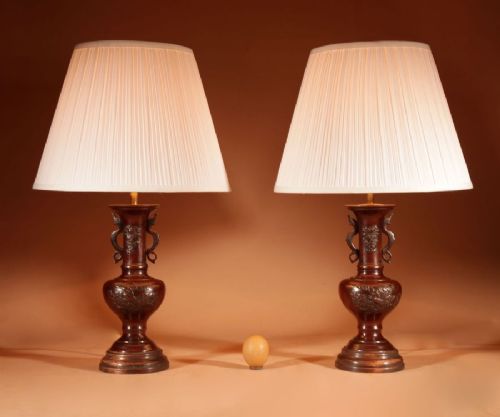
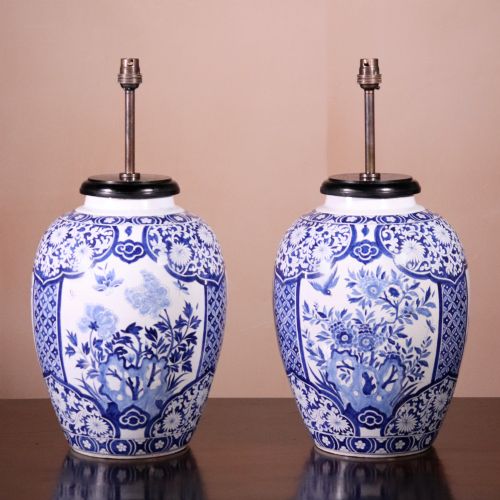
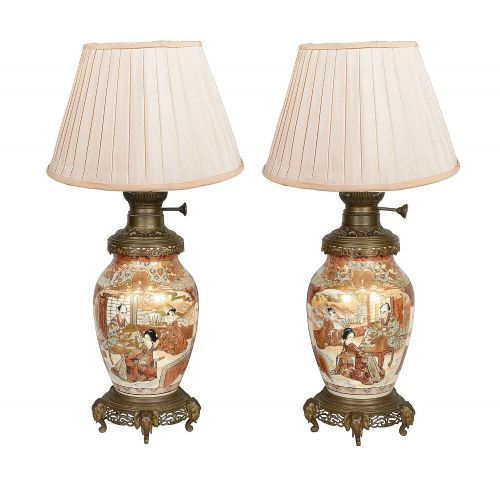
Pair vase table lamps consist of matching antique containers converted to hold electrical fittings, often paired with fabric or silk shades. These dual lights provide balanced illumination on sideboards, desks, or bedside tables.
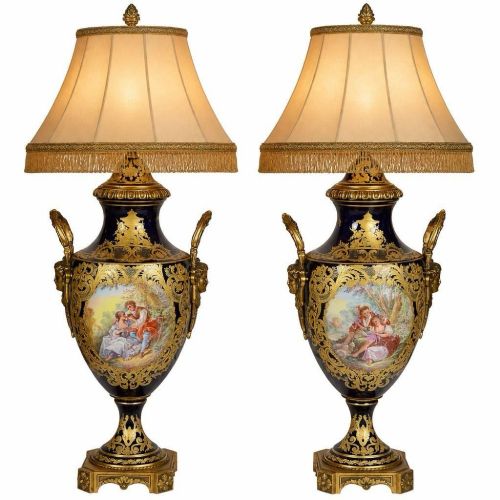
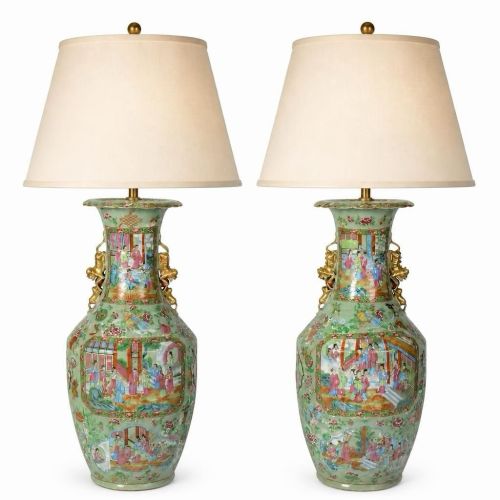
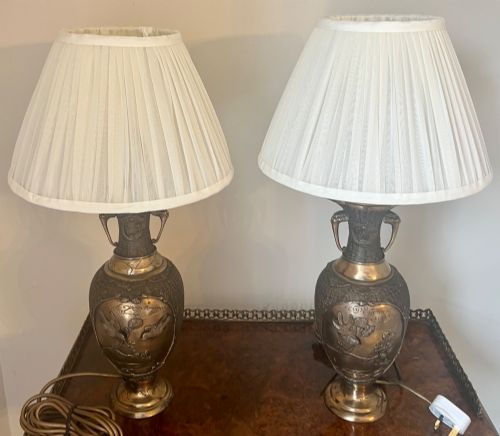
The selections available range widely across the nineteenth and early twentieth centuries, drawing heavily from Chinese export wares, Japanese Meiji period bronzes, and European porcelain traditions.
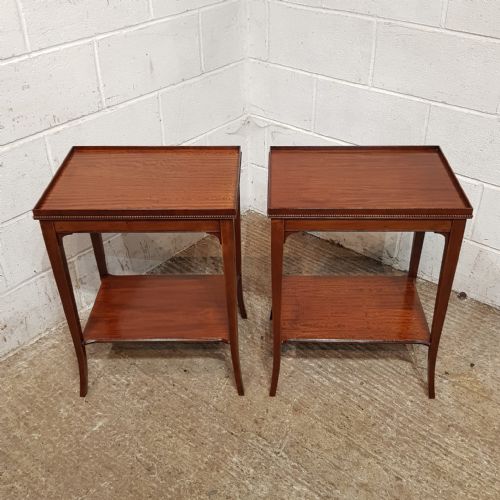
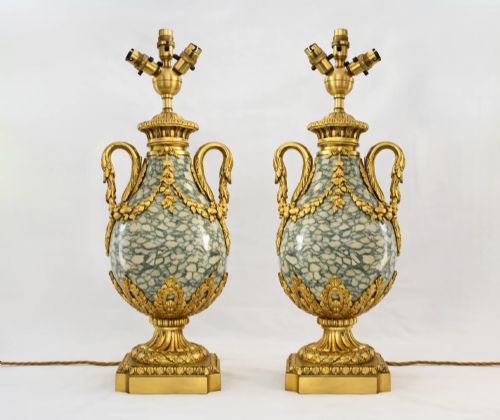
Many examples utilise converted vessels such as ginger jars, baluster vases, and cassolettes mounted with ormolu or brass. This category also occasionally encompasses matching bedside furniture designed to support them.
How they were made
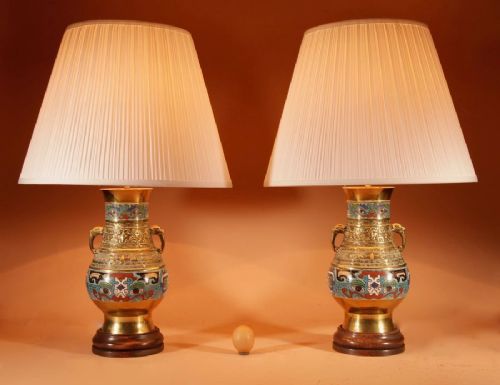
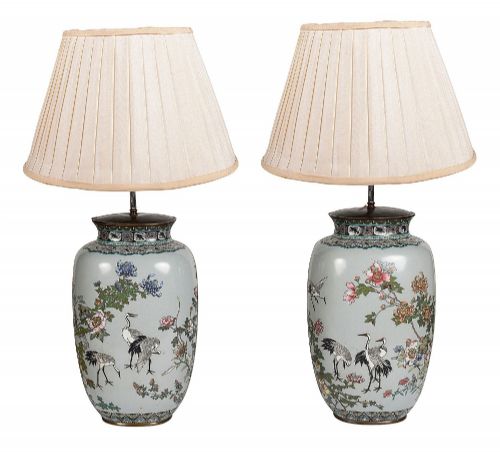
The foundational vessels combine porcelain, pottery, bronze, or cloisonné enamel, shaped through traditional potting, casting, or hammering techniques. Japanese and Chinese makers applied intricate hand-painted glazes, famille rose pigments, or champlevé enamel to the surfaces.
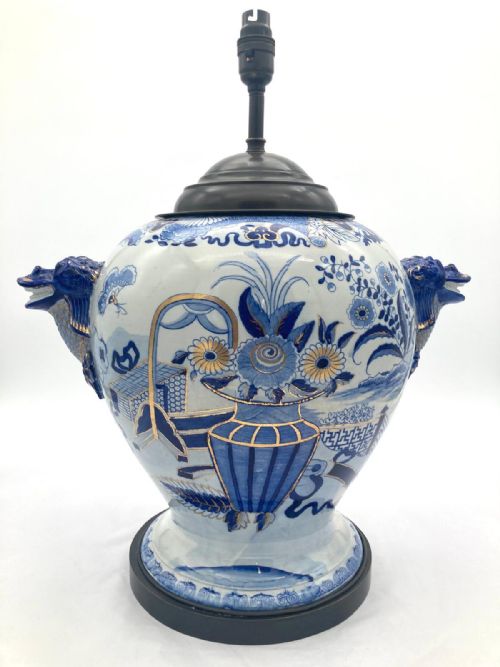
European makers frequently added gilt bronze, ormolu, and brass mounts to lift and frame the ceramic bodies. Silk and fabric shades complete the construction, often paired with wired internal components added during conversion.
Some nineteenth-century vases spent decades holding ginger before trading spices for copper wire and lampshades.
What varies in quality
Quality rests in the crispness of the hand-painted details, the weight and finish of the bronze or ormolu mounts, and how sympathetically the vessel was converted into a lamp. Early nineteenth-century and eighteenth-century examples display finer ceramic throwing and deeper enamel coloration.
Hicks and Meigh
The Pair Vase Table Lamps Glossary
- Cloisonné
- A metalwork technique where fine wires are soldered to a base to form compartments filled with enamel paste and fired. This method creates intricate patterns of coloured cells across vase surfaces.
- Famille Rose
- A palette of opaque Chinese ceramic glazes dominated by pink and rose enamel colours, introduced during the Qing Dynasty. It appears frequently on nineteenth-century export vases.
- Ormolu
- Gilt bronze mounts cast and chased by hand to frame porcelain or stone vessels. The technique adds decorative handles, bases, and rims to French and English decorative pieces.
- Satsuma
- A type of Japanese earthenware featuring a crackled ivory glaze decorated with polychrome enamels and gilt. These wares were widely exported from the Meiji period onward.
- Cassolette
- A decorative vessel shaped like a covered vase or urn, often mounted in ormolu during the eighteenth and nineteenth centuries.
Pair Vase Table Lamps: Frequently Asked Questions
How do I light a room with pair vase table lamps?
Place them symmetrically on a sideboard, console, or matching bedside tables to create balanced pools of warm light.
Their decorative bases ensure they serve as sculptural objects even when switched off during daylight hours.
Are these lamps converted from antique vases?
Many examples are historic vases, ginger jars, or cassolettes that have been professionally adapted to house electrical fittings.
This conversion preserves the original ceramic or bronze artistry while making the vessels functional for modern homes.
What periods do these lamps come from?
The pieces span from the eighteenth century through the Edwardian era and the early twentieth century.
Nineteenth-century production is particularly well represented through Chinese export porcelain and Japanese Meiji bronzes.
How do I care for silk and fabric shades?
Dust the fabric shades gently with a soft brush or a low-suction vacuum attachment to prevent dirt accumulation.
Keep them away from direct sunlight to protect delicate silk and fabric materials from fading over time.