


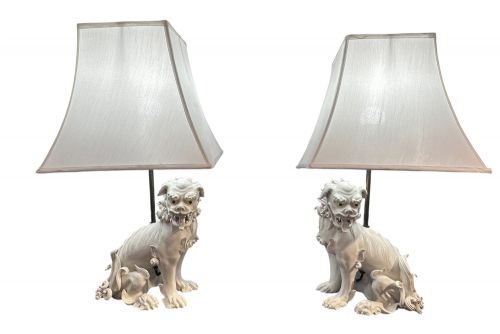


Chinese Porcelain Lamp
A Chinese porcelain lamp brings centuries of ceramic artistry and rich colour into a room, offering both soft illumination and sculptural presence.
Chinese porcelain lamp forms
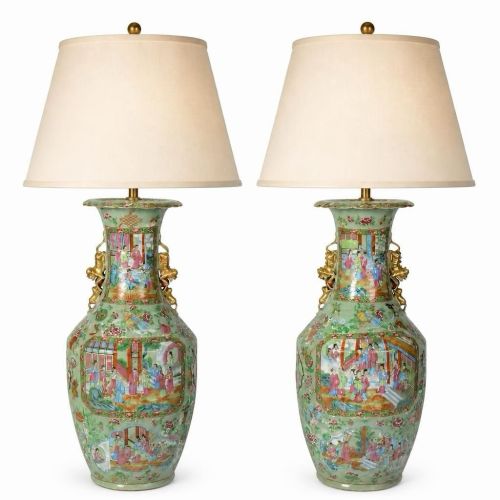
A Chinese porcelain lamp repurposes historic vessels, most commonly baluster vases, ovoid lidded jars, and octagonal vases, into functional table lighting. These pieces span the nineteenth century and the early twentieth century, drawing on Qing Dynasty styles and Chinoiserie aesthetics.
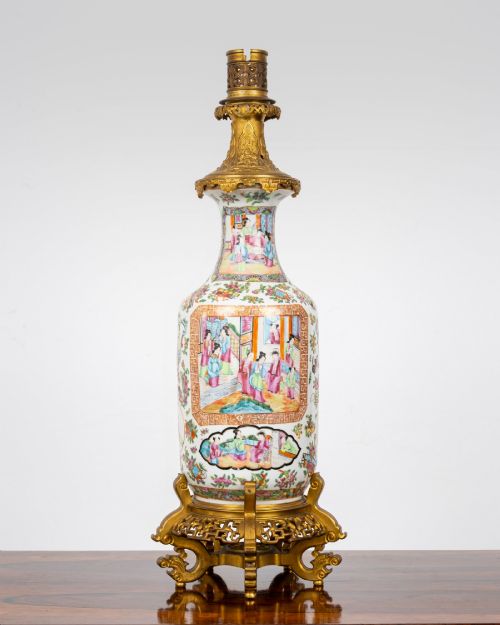
Vessels are often paired with metal mounts, such as ormolu or gilt bronze and brass, transforming decorative containers into substantial lighting fixtures. Buyers encounter both single lamps and symmetrical pairs, sometimes retaining traces of export trade origins or European mounting traditions.
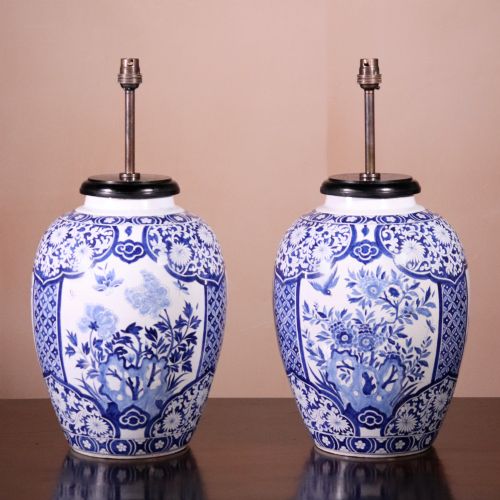
The ceramic bodies display characteristic hand-painted palettes, including blue and white, Famille Rose, Famille Verte, celadon, and turquoise glazes. Occasionally, pieces feature enamel painting or alternating bands of flowers and armorial designs.
Materials and mounting techniques
The foundation of every piece is hard-paste porcelain, shaped into vases or jars and finished with various glazes or underglaze blue and polychrome enamels. Artisans applied pigments by hand before high-temperature firing, creating durable surfaces with deep visual texture.
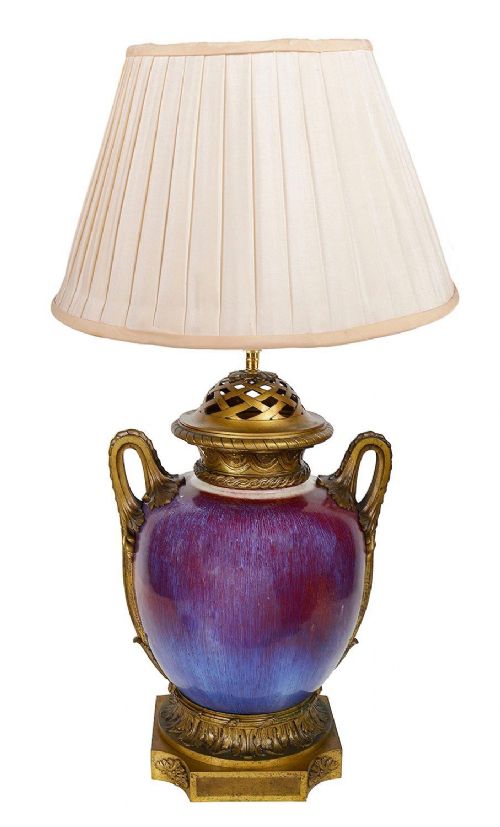
Many nineteenth-century examples incorporate cast ormolu and gilt bronze mounts fitted securely around the ceramic rims, necks, or bases. These metal additions stabilise the vase form and elevate the decorative scheme, often accompanied by wooden components or fabric shades.
Retail Price Guide 2026
Typical UK retail prices for chinese porcelain lamp, calculated from the Sellingantiques database of over a million retail prices indexed since 2003. This retail price guide relies exclusively on Sellingantiques data; no external sources or auction records are used, so the figures do not describe the wider market.
A porcelain vase spends decades holding flowers in Canton before a Parisian bronzier gives it a bright new job wearing gilt bronze shoes.
Judging porcelain lamp quality
Quality rests in the harmony between the ceramic vessel and its metal mounts. Finer examples feature crisply cast ormolu that complements the contours of the porcelain without obscuring the hand-painted details.
The clarity and precision of the hand-painted motifs dictate the upper tier of the range. Brushwork with distinct lines and rich, stable enamel colours distinguishes superior workshop production from simpler decorative output.
Samson of Paris
The Chinese Porcelain Lamp Glossary
- Ormolu
- Gilt bronze mounts applied to furniture and porcelain, adding a decorative golden accent. This technique was frequently utilised by European workshops adapting Asian ceramics.
- Famille Rose
- A palette of opaque enamels dominated by pink or rose colours, introduced in the Qing Dynasty. It allowed for subtle tonal gradations in floral and figural scenes.
- Baluster
- A vase shape characterised by a rounded body that tapers toward the base and flares slightly at the neck. This form provides a balanced silhouette for table lighting.
- Celadon
- A pale green glaze mimicking jade, prized for its subtle tone and crackle-effect surface. It offers a restrained, uniform texture across the ceramic body.
Frequently Asked Questions
How do I choose the right lamp size?
Consider the scale of your furniture and the height of the room. Larger nineteenth-century examples require sturdy side tables or console surfaces to anchor their visual weight.
Smaller vases adapted as lighting provide a more intimate glow, fitting comfortably on bedside tables or reading desks without dominating the space.
Are these lamps antique vases?
Many of these pieces began life as nineteenth-century Chinese porcelain vases or lidded jars before being converted into lighting. The process often involved adding custom mounts or drilling the base for wiring.
This adaptation history is standard for antique ceramic lighting, blending historic Asian craftsmanship with period European mounting traditions.
How do I care for my lamp?
Dust the porcelain body and metal mounts gently with a dry, soft cloth. Avoid harsh chemical cleaners that can damage delicate enamel pigments or tarnish the gilt bronze.
Check the electrical components periodically, especially if the piece retains older wiring, to ensure safe daily operation in your home.
Can I use these lamps as pairs?
Matching pairs provide a balanced look when placed on either side of a mantelpiece, sideboard, or large table. These configurations often share identical decorative motifs and corresponding ormolu mounts.
Single lamps work well as focal points on smaller tables or desks, offering a distinct decorative accent within a room.