
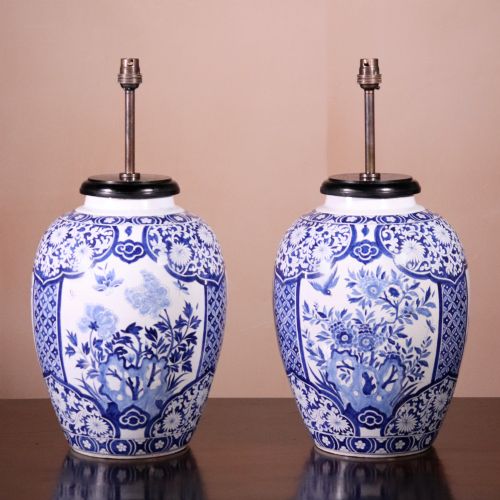


Floral Porcelain Lamp
A floral porcelain lamp brings hand-painted botanicals and refined ceramics into a room, offering both soft illumination and sculptural presence.
Floral Porcelain Lamp
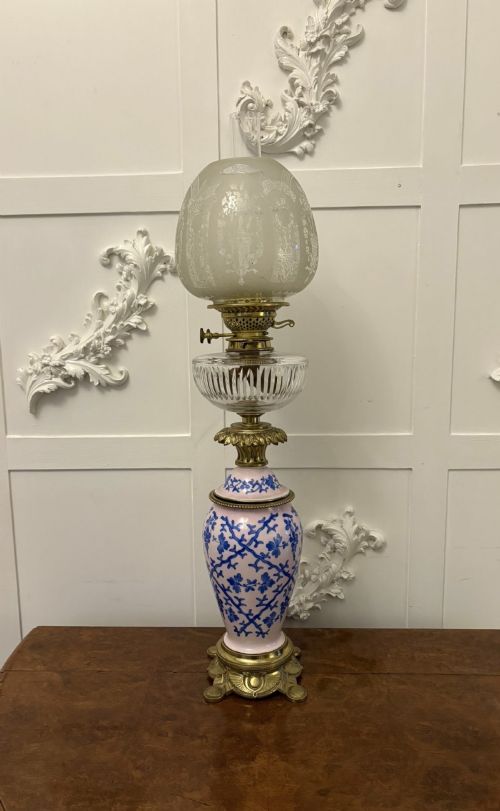
A floral porcelain lamp combines painted ceramic bodies with functional lighting, appearing frequently in Victorian, Edwardian, and nineteenth-century forms. These pieces often originate as converted oil lamps, ginger jars, or decorative vases fitted for electricity.
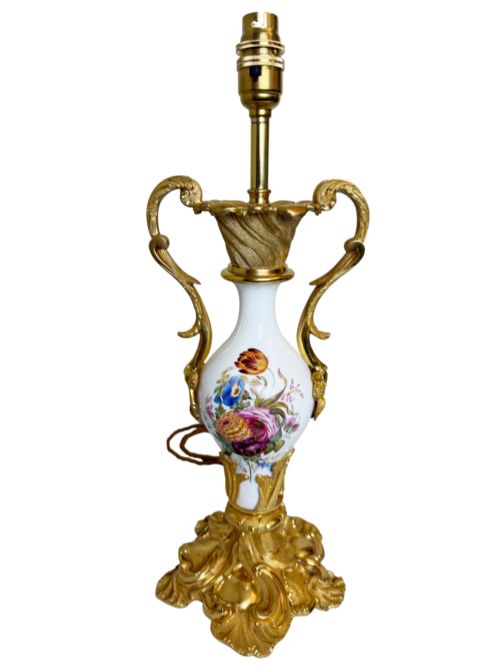
Makers drew heavily on international traditions, producing both European works in the French Rococo Revival and Chinoiserie styles alongside Asian export wares. Buyers encounter everything from petite gilt bronze designs to large oil lamps mounted on brass and ormolu bases.
The selection ranges from single table lamps to matched pairs, incorporating materials such as silk shades, beaded fringes, and carved wood stands. Each item demonstrates how earlier household vessels found new life through twentieth-century and nineteenth-century conversions.
How they were made
Artisans shaped porcelain bodies by hand or mould, applying intricate underglaze blue, famille rose, and famille verte enamels to depict floral motifs. Specialised techniques like pâte-sur-pâte built up raised white porcelain layers against contrasting coloured grounds.
Metalworkers cast mounts, collars, and bases in brass, ormolu, and gilt bronze, often incorporating detailed Rococo scrollwork. Selected items paired ceramic vessels with gilt toleware branches, fabric shades, and glass components to complete the fixture.
Some nineteenth-century vessels started as ginger jars before finding a second career as illuminated companions.
What varies in quality
The refinement of the hand-painting dictates much of the value, with crisp botanical detailing and subtle polychrome shading setting superior pieces apart. Potteries known for high artistic standards, such as Sitzendorf, Meissen, and Royal Worcester, demonstrate exceptional control over porcelain bodies and glaze saturation.
Metal mountings reveal the underlying craftsmanship through the crispness of the gilt bronze or ormolu chasing. Heavier, more substantial brass bases and integrated bronze mounts indicate workshops that invested heavily in both the ceramic body and its architectural support.
Royal Worcester·Sitzendorf·Meissen·Samson
The Floral Porcelain Lamp Glossary
- Famille Rose
- A palette of opaque overglaze enamel colours dominated by pink, introduced in Chinese ceramics during the Qing dynasty. This technique allowed artists to render soft floral petals with remarkable tonal gradation.
- Ormolu
- Gilt bronze mounts cast and chased to adorn decorative objects and furniture. The technique involves applying a gold amalgam to bronze and heating it to drive off the mercury.
- Pâte-sur-pâte
- A method where liquid porcelain slip is built up layer by layer on a ceramic base to create a low-relief cameo effect. It requires immense patience and steady hands from the decorator.
- Toleware
- Lacquered or enamelled sheet metal painted in various colours, frequently used for French chandeliers and lamp shades. It offers a durable surface that mimics ceramics while allowing bold decorative accents.
- Chinoiserie
- The European interpretation and imitation of Chinese and East Asian artistic traditions, prominent in nineteenth-century decorative arts. This style influenced porcelain painting, furniture design, and interior schemes.
Floral Porcelain Lamp: Frequently Asked Questions
What is a floral porcelain lamp?
A floral porcelain lamp is a lighting fixture constructed from a ceramic vase, jar, or oil lamp base decorated with painted flowers. These pieces often incorporate historical bodies adapted for modern use.
They bridge the gap between fine ceramics and functional home decor, displaying styles that range from Victorian floral oil lamps to Chinese export porcelain.
How do I date a floral porcelain lamp?
Dating relies on examining the porcelain body, glaze characteristics, mount materials, and wiring style. Nineteenth-century pieces often feature hand-applied enamels and heavy brass or ormolu mounts.
Maker marks, where present on the base, provide direct evidence of the pottery and production era, supported by stylistic cues like Rococo revival scrolls or Edwardian proportions.
Were these always lamps?
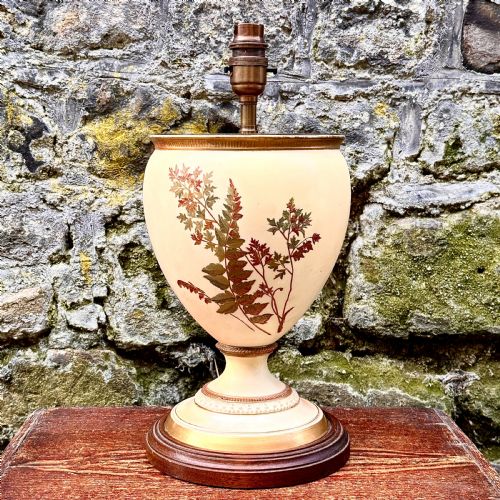
Many examples began life as vases, ginger jars, or oil lamps before being converted into electrical table lamps later in their existence. Vases were frequently drilled to accommodate internal wiring and fitted with metal collars.
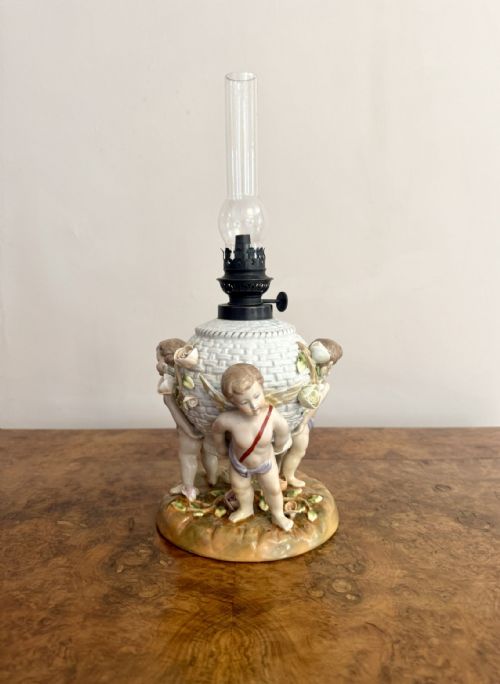
Original oil lamps retain their burners and font structures, while converted jars preserve their original lids or open mouths adapted for bulb fittings.
How do I care for a floral porcelain lamp?
Gentle dusting with a dry, soft cloth preserves the hand-painted enamel and gilt details without risking abrasion. Avoid harsh chemical cleaners that can damage delicate overglaze decorations and exposed metal mounts.
Ensure the electrical components are periodically checked by a professional, particularly on older or rewired nineteenth-century pieces.