


Polychrome Porcelain Lamp
A polychrome porcelain lamp brings hand-painted colour and ceramic form into a room, taking shape most often from converted Chinese and Japanese vessels.
Polychrome Porcelain Lamp
A polychrome porcelain lamp combines vibrant ceramic bodies with wired fittings, serving as both a light source and a decorative anchor in a room. When you search for this phrase, you look at items designed to illuminate interiors through the repurposing of antique vessels or the creation of period lighting.
The selections on this page draw heavily from nineteenth-century Chinese and Japanese manufacture, alongside twentieth-century adaptations. You will find baluster vases, ginger jars, and figural oil lamps adapted for electricity, reflecting diverse stylistic traditions from Chinoiserie to Art Deco.
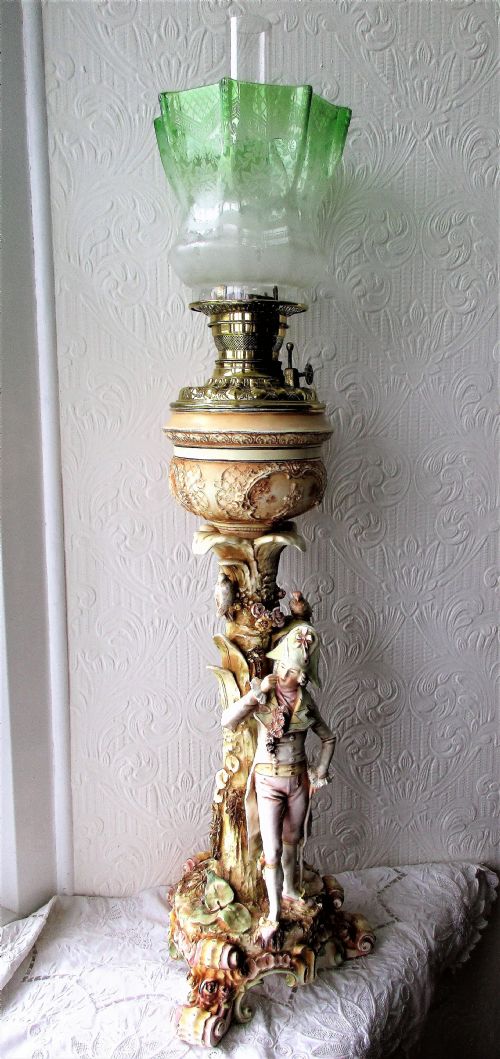
Vessels originating from Canton, Japan, and European workshops form the bulk of these listings. Many retain traces of their original function as vases or oil lamps before conversion into domestic lighting.
How they were made
Makers shaped clay into sturdy ceramic bodies, applying coloured enamels and glazes by hand before high-temperature firing. Artisans then mounted these porcelain forms onto brass, gilt bronze, or wood bases to create stable lighting fixtures.
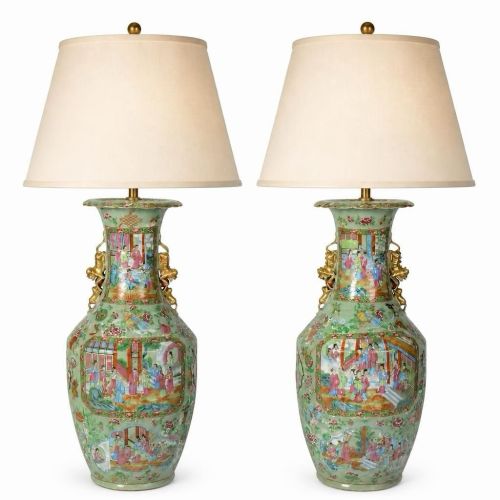
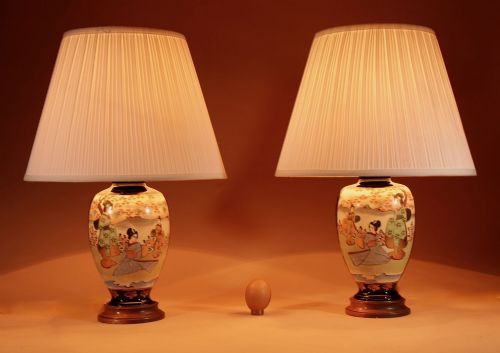
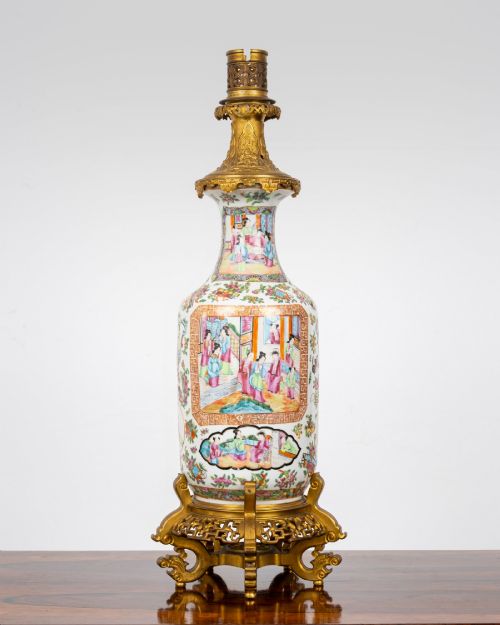
Techniques varied across regions, from the dense floral palettes of Chinese Famille Rose and Rose Medallion to the intricate crackleware and Satsuma finishes of Japan. Metal mounts and fabric shades were subsequently added to complete the transformation from vessel to lamp.
Listings feature porcelain, brass, fabric, and gilt bronze, spanning periods from the late nineteenth century into the 1930s.
What varies in quality
The standard of painting on the ceramic body dictates much of the visual appeal, separating hastily decorated export wares from meticulously detailed hand-painted compositions. Finer pieces display crisp lines in the enamel work and harmonious integration between the porcelain vessel and its metal mounts.
The integrity of the original ceramic and the quality of the supporting hardware also distinguish the range. Lamps retaining undamaged antique porcelain paired with substantial brass or gilt bronze fittings represent the higher tier of these conversions.
The Polychrome Porcelain Lamp Glossary
- Rose Medallion
- A style of Chinese Canton export porcelain featuring panels filled with figures, birds, and flowers framed by gilt and green borders. These designs cover the exterior of many table lamps from the period.
- Satsuma
- A type of Japanese earthenware or porcelain characterised by a ivory-coloured crackle glaze and ornate polychrome and gilt decoration. These pieces often depict traditional figural scenes.
- Baluster
- A vase shape with a rounded lower body that tapers towards the neck, providing a stable and symmetrical silhouette for conversion into a lamp.
- Meiji
- The period in Japanese history spanning from 1868 to 1912, known for producing decorative export ceramics that later found new life as household lighting.
Polychrome Porcelain Lamp: Frequently Asked Questions
What is a polychrome porcelain lamp?
A polychrome porcelain lamp is a lighting fixture created from a ceramic vessel decorated with multiple enamel colours. These pieces frequently originate from nineteenth-century Asian export wares adapted for modern electrical use.
They combine historical craftsmanship with functional illumination, serving as decorative focal points in residential interiors.
Are these antique lamps converted vases?
Many lamps in this category began life as ginger jars, baluster vases, or oil lamps before receiving electrical wiring and fittings. Artisans mounted these ceramic bodies onto brass or wood bases to ensure stability.
This method of adaptation preserves the decorative artistry of the original vessel while giving it a new practical purpose.
How do I identify a Rose Medallion lamp?
Rose Medallion pieces are identified by their segmented panels containing painted figures, birds, and botanical motifs. These colourful sections are typically separated by intricate gilt and green geometric borders.
This distinct decorative layout covers the entire surface of the porcelain body.
What styles are common in these listings?
The available pieces predominantly showcase nineteenth-century Chinese styles such as Famille Rose and Rose Medallion, alongside Japanese Satsuma and Meiji wares. Occasional European examples reflect Victorian and Art Deco design influences.
These varied origins provide distinct aesthetic options ranging from elaborate floral patterns to minimalist French veilleuses.