


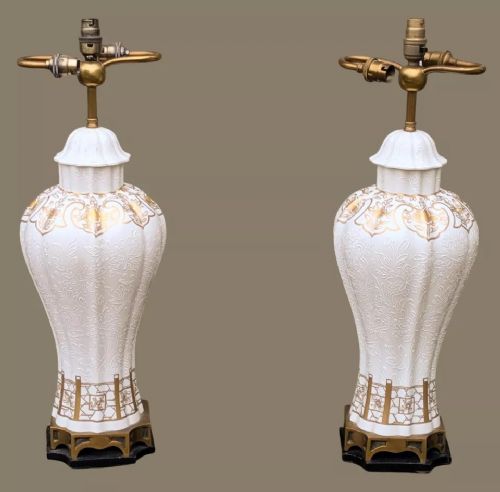


Large Porcelain Table Lamps
Large porcelain table lamps bring height, colour and substance to a room, turning antique vases and oil jars into functional centrepieces.
Large Porcelain Table Lamps
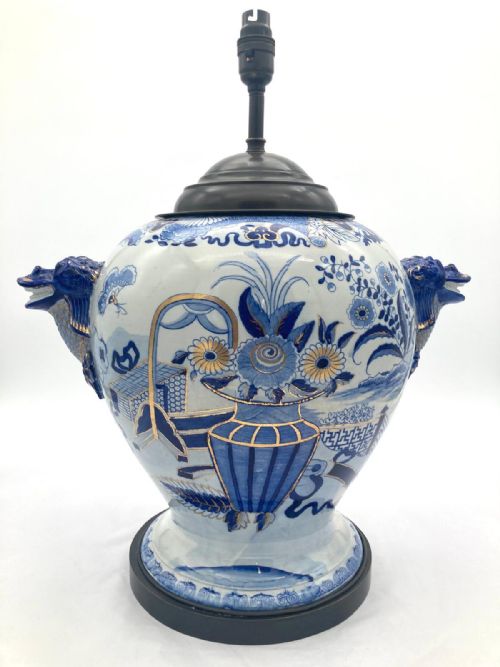
When you search for large porcelain table lamps, you find substantial statement pieces created from converted vessels and dedicated lighting bodies. The selection spans the nineteenth century through to the early twentieth century, drawing heavily on Chinese export wares, Japanese Satsuma and Imari productions, and European porcelain houses like Paris and Sevres.
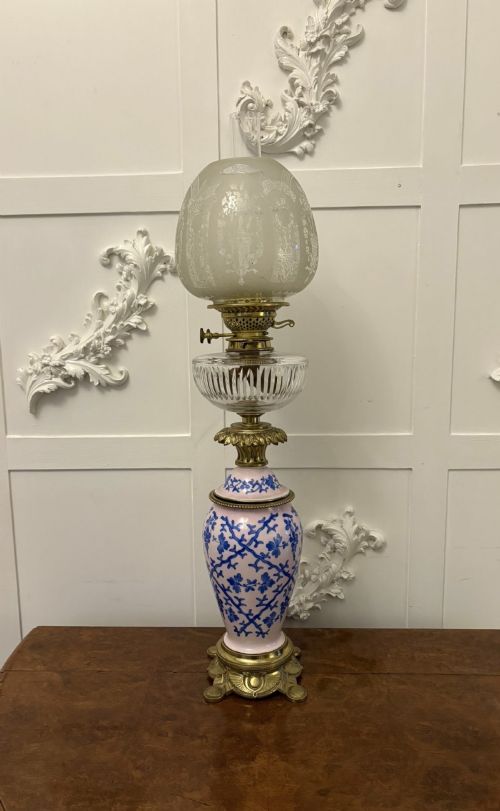
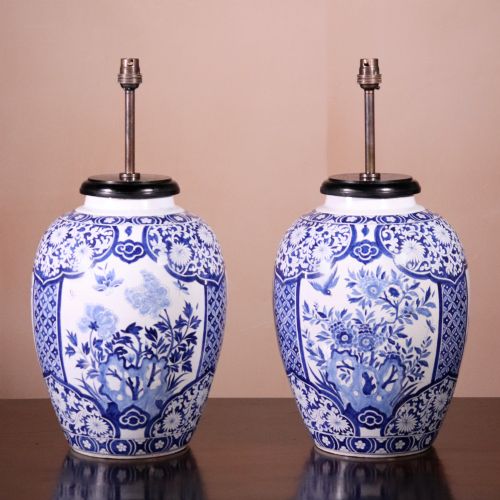
Many of these large porcelain table lamps started life as oil lamps, decorative vases or storage jars before receiving electrical fittings and mounts. Pairs dominate the offerings, often featuring balanced hand-painted scenes, floral motifs or blue and white designs suited to prominent placement on sideboards and large tables.
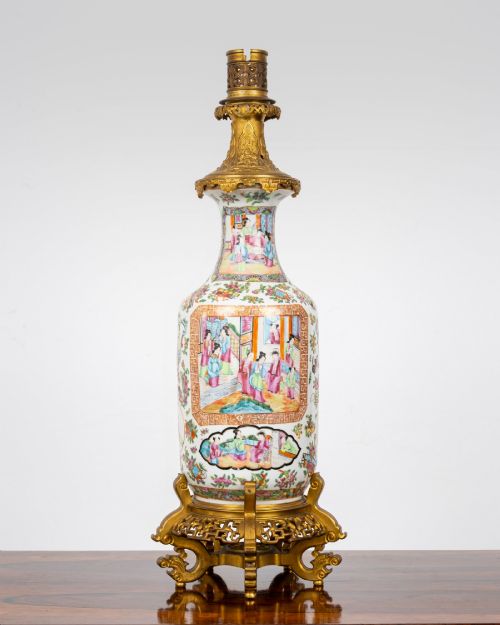
The forms reflect diverse stylistic influences, including Chinoiserie, Regency, and Meiji Period aesthetics. Buyers encounter everything from celadon jars and Rose Medallion containers to French porcelain urns fitted with gilt bronze or brass hardware.
How they were made
Potters shaped these large porcelain bodies by hand or on the wheel before applying intricate underglaze blue, enamel colours, and gilt decoration. Artisans often mounted the fired porcelain in cast brass, gilt bronze, or ormolu to elevate the status of the vessel and provide secure footing for electrical or oil mechanisms.
Conversion from utilitarian jars or oil lamps into table lamps typically involved drilling the ceramic base or fitting secure metal collars without compromising the structural integrity of the antique body. Silk and fabric shades frequently complete the construction, complementing the scale and palette of the glazed porcelain beneath.
Many of these stately lamps started out holding fragrant lamp oil or pickled ginger before finding a second career as reading companions.
What varies in quality
The sophistication of the hand-painted detail and the crispness of the enamel work distinguish finer examples from standard production. Artisans who achieved subtle gradations of tone and precise linework in motifs like Famille Rose or blue and white created pieces of enduring visual weight.
The integration and quality of the metal mounts, whether gilt bronze, ormolu, or brass, play a major role in the overall success of the piece. Superior lamps feature heavy, well-cast mounts that harmonize with the proportions of the porcelain body rather than simply serving as utilitarian adapters.
Hicks and Meigh·Sevres
The Large Porcelain Table Lamps Glossary
- Chinoiserie
- European decorative style reflecting Chinese artistic influences. This aesthetic appears frequently on nineteenth-century porcelain and furniture.
- Satsuma
- Japanese pottery type featuring a crackled creamy glaze decorated with enamel and gold. These wares were widely exported during the Meiji period.
- Ormolu
- Gilt bronze ornamentation applied to furniture and ceramics. It provides a bright metallic contrast to the glazed porcelain body.
- Celadon
- Pale green translucent glaze originating in China. It mimics the appearance of jade and covers heavy ceramic vessels.
- Imari
- Japanese porcelain decorated in underglaze blue, iron red, and gold. This palette became immensely popular across European interiors.
Large Porcelain Table Lamps: Frequently Asked Questions
How do I choose the right size?
Consider the height of the furniture and the proportions of the surrounding space. Large porcelain table lamps often exceed typical lighting dimensions, requiring sturdy sideboards or large console tables to support their visual weight.
Ensure the ceiling height and wall clearance accommodate the scale of both the ceramic body and its paired fabric shade. A well-proportioned lamp commands attention without overwhelming the room.
Were these always electric lamps?
Most of these porcelain bodies began as oil lamps, decorative vases, or storage vessels. Artisans converted them later by adding electrical wiring, lamp holders, and secure metal mounts.
This tradition of adaptation preserves historic ceramics while giving them a functional role in modern interiors. Collectors value the creative pairing of antique vessels with quality hardware.
How do I date a porcelain lamp?
Examine the style of the hand-painted decoration, the characteristics of the glaze, and the nature of the ceramic body. Pieces marked as nineteenth century or Regency often exhibit specific regional palettes like Rose Medallion or blue and white.
Inspect the metal mounts and conversion fittings for clues about when the vessel was adapted into a lamp. Combining ceramic period markers with hardware analysis provides a reliable timeline.
How do I care for antique porcelain?
Dust the porcelain body and fabric shade regularly with a soft, dry cloth to prevent grime accumulation. Avoid harsh chemical cleaners that might damage delicate overglaze enamels or gilt details.
Check the electrical wiring periodically to ensure safety, especially with older conversions. Handle the lamps carefully by their bases rather than their mounts or decorative handles when moving them.