




Asian Decorative Lighting
Asian decorative lighting brings distinctive cultural forms and rich hand-finished textures into a room, offering warm illumination alongside strong visual character.
Asian Decorative Lighting
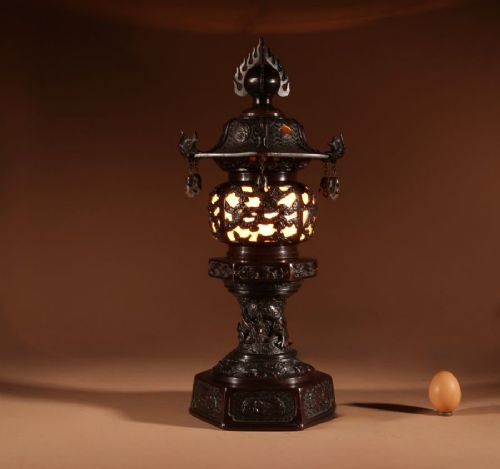
Most examples on this page date from the Victorian era up through the nineteen-thirties, spanning periods such as the Meiji and Edo. Forms range from heavy bronze lanterns and candlesticks to tall porcelain vases adapted for domestic illumination.
How they were made
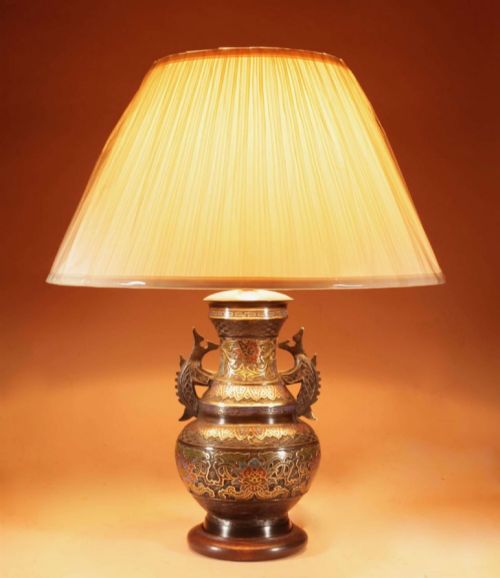
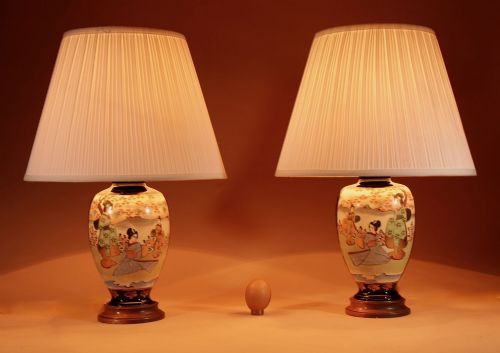
The construction relies heavily on worked bronze, brass, and heavy ceramics such as Satsuma and Yokohama porcelain, often combined with enamel work like champlevé and cloisonné. Artisans shaped metal through casting and detailed surface engraving, while ceramic bodies were hand-painted and glazed before later conversion for electrical wiring.
Wooden elements and fabric components appear across floor lamps and standard shades, complementing the rigid metallic and ceramic structures. Each material reflects traditional East Asian craftsmanship adapted later for Western domestic interiors.
Asian Decorative Lighting Retail Price Guide 2026
Typical asking prices for asian decorative lighting among the pieces listed under this phrase on Sellingantiques today, from the lower quarter to the upper quarter. They describe what is for sale here now, not the wider market.
The listings combine bronze, porcelain, and ceramic forms across the nineteenth century, Victorian era, and nineteen-thirties.
What varies in quality
Quality rests upon the crispness of the bronze casting, the depth and precision of the enamel work, and the artistry of the hand-painted ceramic glazes. Finer pieces demonstrate superior weight, intricate surface detail, and harmonious proportions between the vessel and its mountings.
The distinction between standard production and superior craftsmanship lies in the execution of decorative motifs, whether in cloisonné wirework or Satsuma pictorial scenes, where skilled hands achieved enduring clarity and balance.
The Asian Decorative Lighting Glossary
- Champlevé
- An enamelling technique where troughs are dug into a metal surface and filled with vitreous enamel before firing. This method creates rich, colourful patterns across bronze bodies.
- Cloisonné
- A technique involving metal wires soldered to a base to form compartments that hold enamel paste. It produces intricate, multi-coloured decorative designs on lamps and vessels.
- Satsuma
- A type of Japanese earthenware featuring a pale, ivory-crackled glaze decorated with elaborate enamels and gilt. These ceramics are frequently mounted as table lamps.
- Chinoiserie
- European decorative style reflecting Chinese artistic influences, popular across furniture and lighting fixtures. It employs imaginative motifs and ornate detailing.
- Imari
- Japanese porcelain decorated in underglaze blue and overglaze red, gold, and green. Originating in Arita, these wares provide striking patterns for converted lamp bases.
Asian Decorative Lighting: Frequently Asked Questions
What periods do these lamps come from?
The inventory spans the nineteenth century up to the nineteen-thirties, including Victorian pieces and items created during the Meiji and Edo periods.
Such dating reflects both the original manufacture of the ceramic or bronze vessels and their subsequent adaptation into lighting fixtures.
How were these lamps originally used?
Many of these objects began as decorative bronzes, candlesticks, or porcelain vases before being converted into table and floor lamps for domestic interiors.
Their dual function preserves traditional East Asian artistry while serving modern lighting needs in a living space.
How do I care for bronze and porcelain lamps?
Bronze and brass components require gentle dusting with a soft cloth to protect the metal surfaces and any underlying champlevé or cloisonné enamel work.
Ceramic sections should be cleaned with care to preserve delicate hand-painted glazes and gilt detailing over time.
How can I tell Satsuma ware apart?
Satsuma ceramics are characterised by a distinctive creamy, ivory-coloured glaze covered in a fine network of tiny crackles.
They are typically decorated with dense polychrome enamels and raised gold details depicting figures or floral scenes.