





Japanese Porcelain Lamps
Japanese porcelain lamps bring hand-painted narrative and historic ceramic weight into a room, turning antique vases into practical lighting.
Japanese Porcelain Lamps
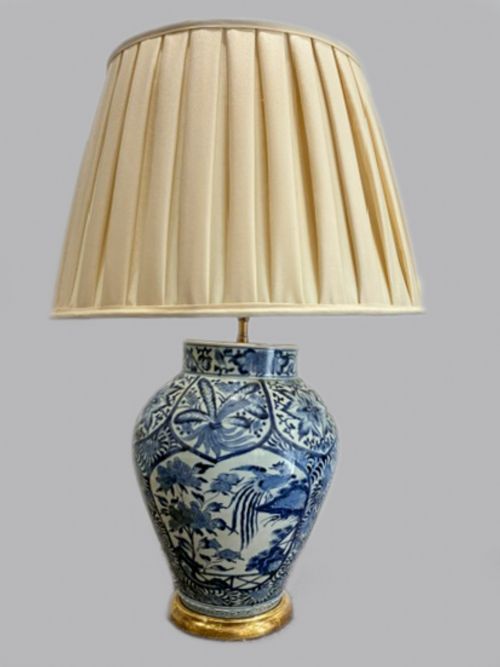
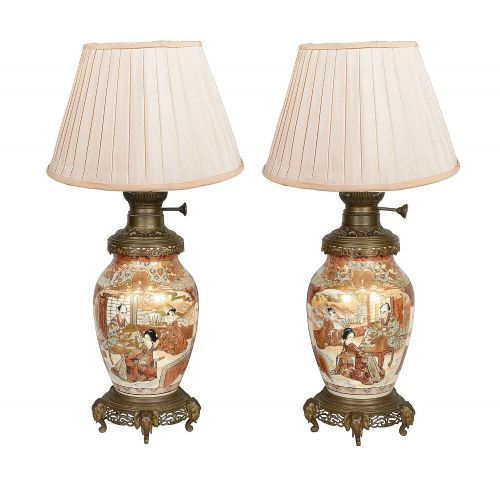
These japanese porcelain lamps comprise historic vases and vessels, predominantly originating from the seventeenth, eighteenth, and nineteenth centuries, which have been subsequently adapted to hold electrical fittings. When exploring japanese porcelain lamps, the buyer encounters everything from seventeenth-century Arita wares to nineteenth-century Satsuma and Kutani productions, often wired for modern interiors.
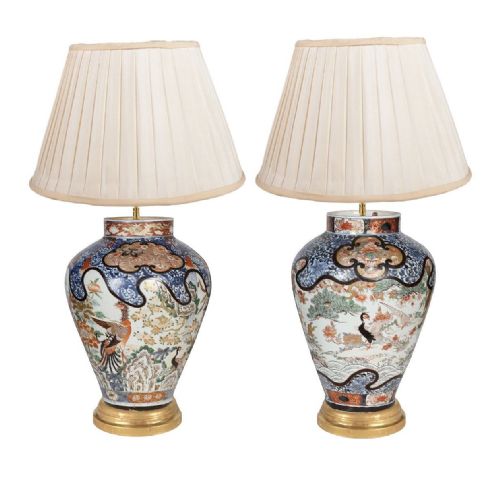
The forms span simple spill vases, large floor-standing vessels, and twin-handled jars, many retaining their original decorative schemes painted in blue and white, Imari palettes, or rich enamel colours. Pairs frequently appear alongside singular converted vases, offering options for symmetrical mantel or sideboard placement.
How they were made
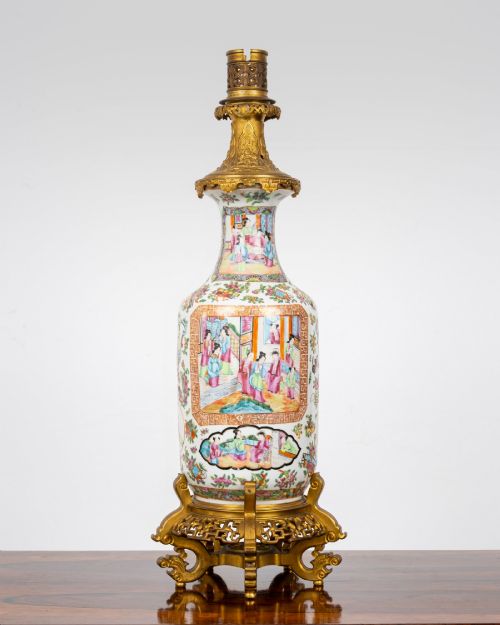
Makers shaped these bodies from native ceramic clays, firing the porcelain before applying detailed hand-painted designs using cobalt blue, underglaze pigments, and rich overglaze enamels. Many examples incorporate metal mounts, utilising brass, gilt bronze, or ormolu to secure the electrical components and elevate the base or rim of the vessel.
The conversion process involved drilling the porcelain or securing mounts around the neck and base to accommodate wiring without entirely obscuring the historic ceramic surface, frequently paired with fabric or silk shades.
Current listings feature porcelain and earthenware bodies spanning the seventeenth century through to the Meiji period, incorporating brass, silk, and ormolu mounts.
What varies in quality
The distinction between standard and exceptional pieces rests upon the crispness of the hand-painted decoration, the complexity of the ceramic form, and the integration of metal mounts. Finely potted vessels with intricate Imari or Satsuma detailing and heavy ormolu or brass mountings command greater attention than simpler, later adaptations.
Condition and proportion also dictate the standing of a piece, particularly how cleanly the antique vase was converted into a lamp and whether the porcelain body retains its original glaze lustre without extensive restoration.
The Japanese Porcelain Lamps Glossary
- Satsuma
- A type of Japanese earthenware or porcelain featuring a cracked cream glaze and elaborate polychrome and gilt enamel decoration. These wares became particularly popular during the nineteenth century.
- Imari
- A style of Japanese export porcelain decorated in underglaze blue, iron red, and gilt, originating from Arita. The palette is distinct and highly decorative.
- Kutani
- Japanese porcelain known for its bold colour palettes, frequently incorporating greens, purples, blues, and reds in intricate pictorial designs. Pieces often date from the nineteenth century.
- Ormolu
- Gilded bronze used for decorative mounts, bases, and fittings on furniture and converted porcelain lamps. It provides a heavy, polished metal contrast to the ceramic body.
- Arita
- The Japanese town and surrounding region where porcelain production began in the early seventeenth century. Arita wares include early blue and white pieces as well as complex Imari designs.
Japanese Porcelain Lamps: Frequently Asked Questions
How do I date a lamp?
Dating relies on examining the ceramic style, glaze characteristics, and painting technique of the original vessel rather than the electrical hardware. Earlier pieces from the seventeenth and eighteenth centuries display different potting weights compared to nineteenth-century Satsuma or Kutani wares.
Consulting the stylistic markers of periods such as the Edo or Meiji eras helps narrow down the decade of production. Most electrical conversions occurred much later than the manufacture of the ceramic vase itself.
Are these converted antique vases?
The majority of these pieces started life as decorative vases, jars, or spill vessels before being adapted into lamps. This conversion process usually involves adding a drilled base or secure metal mounts for the wiring and bulb fixture.
Such adaptation allows historic porcelain to function as practical lighting while preserving the hand-painted artistry of the original object.
How do I choose lamps for a room?
Consider the scale of the space and the height of the furniture where the lamp will rest, as these ceramic bodies range from small spill vases to large floor-standing vessels. Matching a pair of Imari or Satsuma pieces works well for symmetrical placement on sideboards or mantels.
Colour palette is equally important, allowing you to choose between the cool tones of blue and white porcelain or the warmer, gilded hues of Satsuma and Kutani.
Can damaged porcelain be repaired?
Professional conservation can address minor chips or hairline cracks in antique porcelain, though extensive damage affects the integrity of the piece. When evaluating a lamp, look closely at the ceramic body around the drilled areas where fittings were added.
Sound structural condition ensures the heavy porcelain securely supports the weight of the electrical stem and shade.