
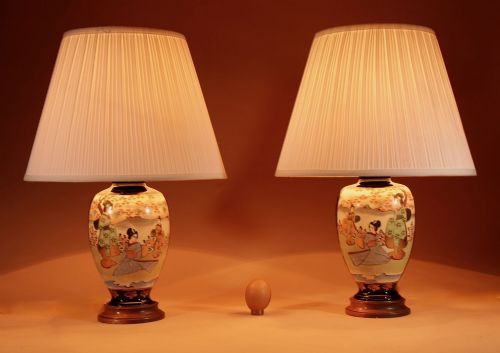
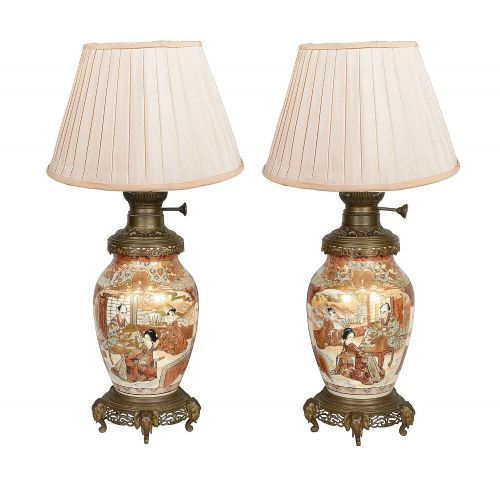


Meiji Period Porcelain Lamps
Meiji period porcelain lamps bring distinct Japanese ceramic artistry into a room, offering functional illumination paired with historical depth.
Meiji Period Porcelain Lamps
Meiji period porcelain lamps unite traditional Japanese ceramic vessels with period lighting fixtures, primarily taking the form of table lamps. These pieces originate predominantly from the nineteenth century and extend into the early twentieth century, specifically around nineteen twenty.
Vessels from Yokohama and Fukagawa also appear within these listings, demonstrating the varied regional output of Japanese kilns during this era.
Materials and construction
Makers utilised porcelain and earthenware as the primary ceramic bodies for these vessels, applying detailed enamel decoration across the surfaces. Many pieces incorporate additional elements of brass, wood, and fabric components.
Ceramic bodies were hand-thrown or moulded before undergoing high-temperature firing and subsequent hand-painted glazing. Workshops often combined porcelain with silk shades and fitted metal mounts to convert traditional vases into functional lamps.
Some nineteenth century vases had a second career, waiting decades on a sideboard before finally meeting an electrician.
Evaluating quality and execution
Quality rests upon the precision and complexity of the hand-painted enamel decoration across the porcelain surface. Finer examples display meticulous brushwork, balanced composition, and well-preserved gilt detailing.
The integration of the ceramic body with its metal or wooden base determines structural success. Pieces that retain their original proportions without excessive alteration to the ceramic material hold greater appeal.
The Meiji Period Porcelain Lamps Glossary
- Satsuma
- A type of Japanese earthenware featuring a crackled ivory glaze decorated with polychrome enamels and gilt. It represents a major decorative style found among these lamps.
- Kutani
- A style of Japanese porcelain known for bold colour palettes, particularly iron red and green. These wares frequently depict figurative and natural scenes.
- Imari
- A traditional Japanese porcelain style characterised by underglaze blue and overglaze iron red, gold, and green. Pieces in this category display rich, contrasting geometric and floral motifs.
- Japonesque
- A western design style reflecting the strong influence of Japanese art during the late nineteenth century. It appears in the decorative treatment of mounting and framing elements.
Meiji Period Porcelain Lamps: Frequently Asked Questions
Are these lamps originally wired for electricity?
Most of these ceramic vessels began as decorative vases or spill vases during the nineteenth century. They were subsequently converted into table lamps by adding electrical fittings and mounts.
Buyers should inspect the wiring and fitments to ensure compatibility with modern electrical standards while considering the preservation of the original ceramic body.
How do I identify Satsuma ware?
Satsuma ware is characterised by its distinctive cream-coloured earthenware body covered in a fine, translucent crackle glaze. The surface is typically adorned with detailed enamel and gilt painting depicting figures, birds, or landscapes.
This style provides a warm, textured appearance that distinguishes it from smooth white porcelain bodies.
Do these lamps come in pairs?
The listings include both matched pairs of lamps and individual single pieces. Pairs are often formed from converted vases that share identical dimensions, decorative schemes, and colour palettes.
Finding a balanced pair remains a key consideration for mantelpieces or matching side tables.
How do I care for antique porcelain lamps?
Maintenance requires gentle dusting with a soft, dry cloth to protect the delicate enamel and gilt decoration on the ceramic surface. Harsh chemical cleaners must be avoided as they can damage the glaze.
Care should also be taken when handling fabric shades and brass components to maintain the overall structural integrity of the lamp.