


Pair Japanese Table Lamps
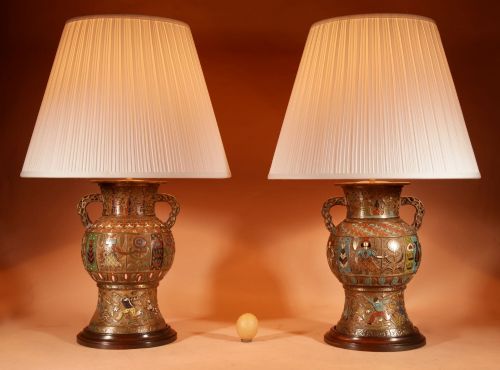
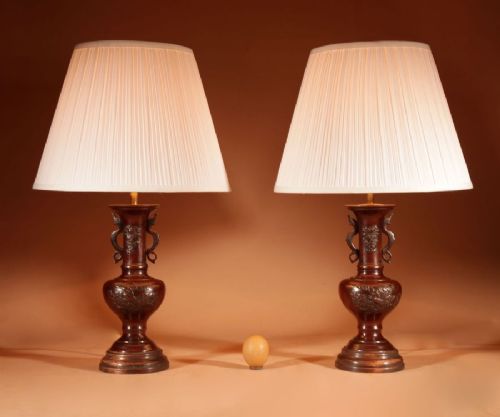
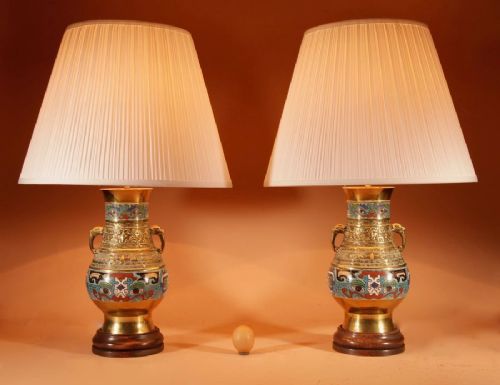
These pair japanese table lamps bring handcrafted bronze, porcelain and cloisonné from the nineteenth and early twentieth centuries directly into domestic interiors.
Pair Japanese Table Lamps
When searching for pair japanese table lamps, buyers encounter dual configurations of lighting created from imported ceramic vessels and metalware. The most frequent examples combine nineteenth-century porcelain or bronze bodies with fitted electrical hardware.
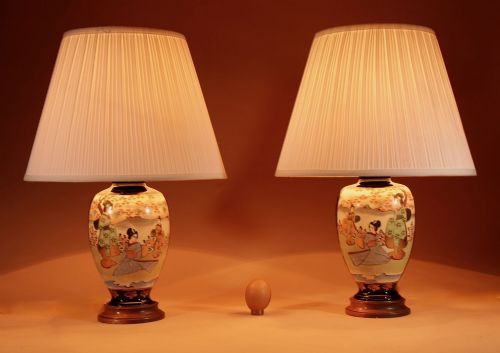
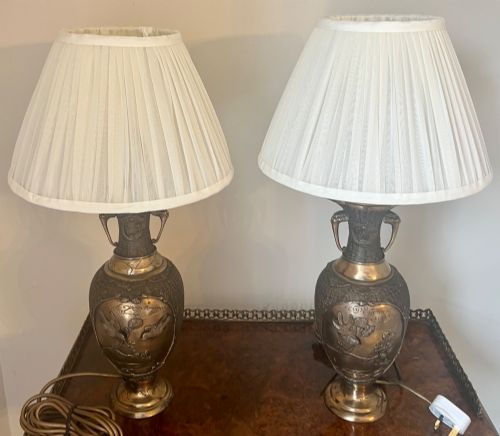
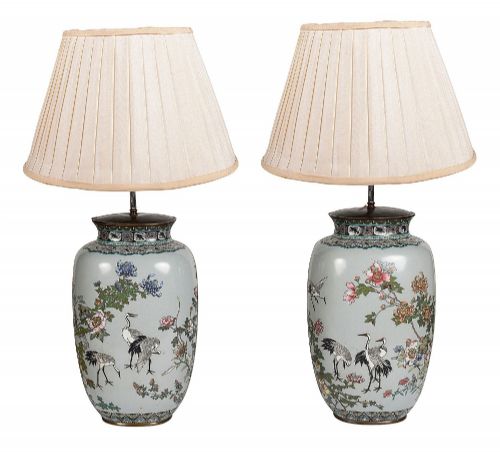
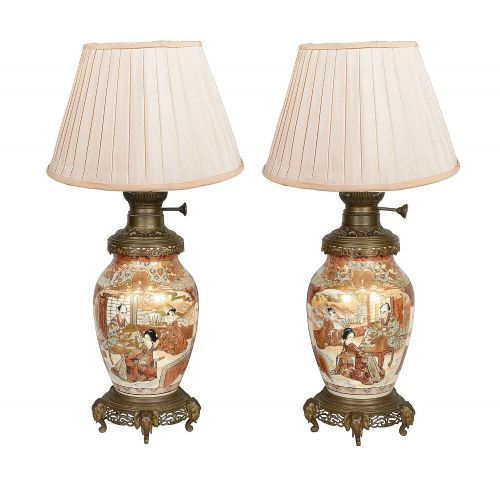
The selection spans Meiji period bronzes alongside Satsuma, Kutani, Imari, and blue and white porcelain vases adapted into lamps. Additional variations include champlevé enamel, cloisonné, ebonised elements, and root wood forms originating from various decades.
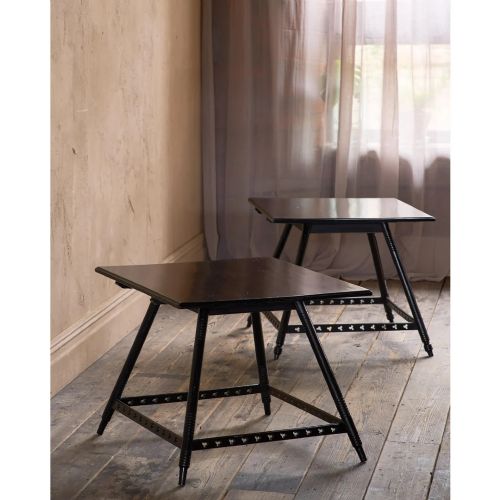
Period influences such as Japonisme and the Aesthetic Movement shape several designs, occasionally accompanied by ormolu mounts. Alongside ceramic and bronze vessels, related side tables appear within the recorded objects.
How They Were Made
Metal lamps utilise bronze, brass, and ormolu mounts, often decorated with champlevé or cloisonné enamel work. These techniques involve soldering wire or carving recesses on metal surfaces to contain coloured vitreous pastes before firing.
Ceramic examples rely on porcelain, pottery, and earthenware bodies originating from Satsuma, Kutani, Arita, Yokohama, and Fukagawa kilns. Artisans applied hand-painted glazes, blue and white pigments, and lacquer finishes to shape the visual character of each vessel.
Organic materials such as wood and root wood appear alongside fabric and silk components used for shades and wiring integration. Metal and ceramic bases frequently incorporate mounted hardware to support standard electrical fittings.
Pair Japanese Table Lamps Retail Price Guide 2026
Typical asking prices for pair japanese table lamps among the pieces listed under this phrase on Sellingantiques today, from the lower quarter to the upper quarter. They describe what is for sale here now, not the wider market.
The listings span periods from the 17th Century to 1920, incorporating materials such as bronze, porcelain, enamel, silk, and root wood.
What Varies in Quality
Quality separates through the precision of the enamel work, the clarity of hand-painted ceramic pigments, and the weight of the bronze or brass castings. Superior items display crisp champlevé cells and intricate detailing across the body.
The integration of ormolu mounts and the preservation of original lacquer or surface patination dictate the standing of metal pieces. Finer porcelain bodies exhibit balanced proportions, refined throwing, and carefully controlled kiln glazes without distortion.
Matched symmetry within a pair defines the upper tier of the range, ensuring uniform size, colour saturation, and decorative motifs between both lamps. The consistency of the conversion from original vases to functional lighting further influences the overall standard.
The Pair Japanese Table Lamps Glossary
- Meiji Period
- The era in Japanese history spanning from 1868 to 1912, associated with dynamic bronze casting and detailed decorative arts. Many lamps on this page trace their origins to these decades.
- Cloisonné
- A metalworking technique where enamel paste is applied within compartments created by soldered flat wires on a bronze or brass base. The piece is then fired and polished to a smooth finish.
- Satsuma
- A type of Japanese earthenware featuring a crackle-glaze ivory background decorated with polychrome enamels and gilt. These ceramics are frequently converted into decorative lighting.
- Champlevé
- An enamelling process where troughs or cells are hollowed directly into the surface of a bronze or brass object to hold vitreous enamel. It differs from cloisonné by carving into the base metal rather than soldering wires.
- Imari
- A traditional style of Japanese porcelain originating from Arita, characterised by a palette of underglaze blue, iron red, and gold. Export examples often date from the eighteenth and nineteenth centuries.
- Ormolu
- Gilded bronze mounts applied to decorative objects, popular for adding architectural structure and ornamentation to porcelain vases. French ormolu mounts frequently appear on imported Japanese vessels.
Pair Japanese Table Lamps: Frequently Asked Questions
What periods do these lamps come from?
The selection spans from the seventeenth century through the eighteenth and nineteenth centuries, extending into the early twentieth century around 1900 to 1920. Many pieces specifically originate from the Meiji period.
Craftsmen produced these works using traditional bronze, porcelain, and enamel techniques that continued to influence decorative arts well into the 1900s.
Were these originally made as lamps?
Most items started life as decorative vases, urns, or vessels before being converted into table lamps at a later date. Metal and ceramic bodies were selected for their size and decorative quality to house electrical components.
Mounts in brass, bronze, or ormolu were frequently added during the adaptation process to support fittings and ensure stability on furniture.
What ceramic styles are available?
Listings feature Satsuma earthenware, Kutani porcelain, Arita Imari wares, Yokohama pieces, and Fukagawa porcelain. Blue and white glazed vessels also appear alongside multi-coloured enamel designs.
Each ceramic tradition employs distinct glaze recipes and hand-painted motifs, ranging from intricate gilt patterns to bold cobalt blue decoration.
How do I identify a Meiji period piece?
Meiji period items date between 1868 and 1912, typically showcasing advanced metalwork in bronze, detailed cloisonné enamel, or finely painted ceramics. Artisans during this era produced elaborate decorative goods for both domestic and export markets.
Comparing the casting weight, enamel depth, and decorative motifs helps distinguish these late nineteenth-century objects from earlier works.
What materials are used besides porcelain?
Bronze and brass form the primary metal structures, often enhanced with champlevé or cloisonné enamel and ormolu mounts. Wood, ebonised elements, and root wood also feature in selected bases.
Shades and internal fittings incorporate fabric and silk, while structural components rely on sturdy metalwork to support the weight of the ceramic or bronze bodies.