


Rose Medallion Lamps
Rose medallion lamps bring vibrant enamel palettes and intricate court scenes directly into modern interiors, offering a striking focal point for any room.
Rose Medallion Lamps
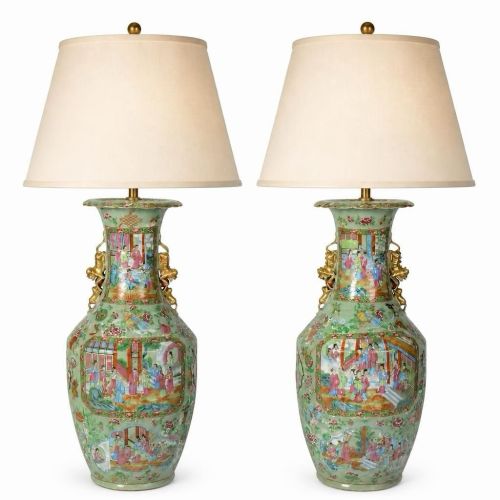
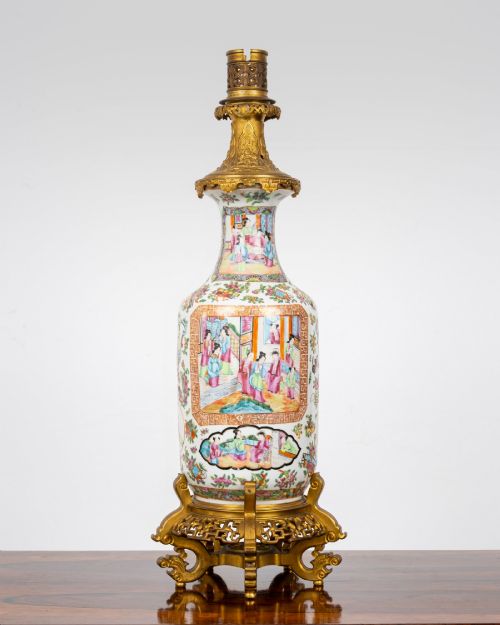
When you search for rose medallion lamps, you are looking at hand-painted Chinese porcelain vessels that have been converted into table lighting. The pieces on this page span the nineteenth century and the early twentieth century, originating from regions such as Canton and Japan.
The most common forms you will meet here are table lamps and decorative vases fitted for electricity, often presented in matched pairs. These items frequently display distinct panels filled with figures and floral motifs, characteristic of Chinese export wares created for Western markets.
The styles recorded across the inventory include Qing dynasty pieces, Chinese export designs, and Chinoiserie aesthetics. They bridge traditional oriental craftsmanship with functional domestic illumination.
How They Were Made
The foundation of these objects is porcelain, decorated with polychrome enamel paints that rely heavily on pink and rose hues. Artisans applied these pigments by hand to create intricate panels of figures, birds, and flowers.
Many examples incorporate metalwork mounts in brass, ormolu, or gilt bronze to secure the electrical fittings and elevate the ceramic body. Silk and fabric shades frequently complete the construction, complementing the rich tones of the enamel.
Rose Medallion Lamps Retail Price Guide 2026
Typical asking prices for rose medallion lamps among the pieces listed under this phrase on Sellingantiques today, from the lower quarter to the upper quarter. They describe what is for sale here now, not the wider market.
The site's current listings span the nineteenth century and the early twentieth century, featuring porcelain bodies paired with brass, ormolu, and gilt bronze mounts.
What Varies in Quality
The standard of painting on the porcelain body separates the finest examples from standard production pieces. Superior items display crisp, densely detailed brushwork in the enamel panels without blurring or smudging.
The integration and metal quality of the mounts also dictate the tier of a piece. Ormolu and gilt bronze mountings demonstrate superior craftsmanship compared to simpler brass fittings, enhancing the overall presence of the lamp.
The Rose Medallion Lamps Glossary
- Canton
- A major port in southern China from which vast quantities of decorated porcelain were exported to Europe and America. Many nineteenth-century export wares originate from this manufacturing hub.
- Famille rose
- A major palette of Chinese ceramic enamels introduced in the eighteenth century, dominated by opaque pink or rose colours. This palette forms the basis of the decoration seen on rose medallion porcelain.
- Ormolu
- Finely ground high-carat gold applied to a bronze base, often used for decorative mounts on luxury items. It provides a warm, golden gleam that complements painted porcelain.
- Chinoiserie
- The European interpretation and imitation of Chinese artistic traditions and motifs in decorative arts. This aesthetic influenced how oriental porcelain was mounted and displayed in Western homes.
- Qing dynasty
- The final imperial dynasty of China, lasting from sixteen forty-four to nineteen twelve. Many nineteenth-century export pieces were produced during its later decades.
Rose Medallion Lamps: Frequently Asked Questions
Are these original antique vases?
The ceramic bodies are genuine nineteenth-century and early twentieth-century Chinese porcelain export pieces. They have been subsequently adapted with electrical components to function as table lamps.
This conversion allows historic craftsmanship to be utilised in contemporary domestic settings without altering the primary decorative panels.
How do I clean the shades?
Fabric and silk shades require gentle dusting with a soft brush or a low-suction vacuum attachment. Avoid using liquid cleaners on vintage textiles to prevent water staining.
Permanent mounting fixtures and porcelain bodies should be wiped carefully with a dry, lint-free cloth.
Where should I place them?
These large lamps suit prominent locations such as living room sideboards, console tables, or bedroom nightstands. Their vibrant enamel panels provide a strong focal point in traditional and eclectic interiors.
Pair arrangements work well on matching mantelpieces or flanking large pieces of furniture for symmetry.