




Pair Chinese Table Lamps
These pair chinese table lamps bring together porcelain bodies from the nineteenth and early twentieth centuries with fitted electrical wiring for domestic interiors.
Understanding pair chinese table lamps
When you search for pair chinese table lamps, you are looking at matched sets of lighting created by converting ceramic vessels or utilising traditional forms from Chinese export and Chinoiserie styles. The pieces found here span the nineteenth century up to around nineteen-twenty.
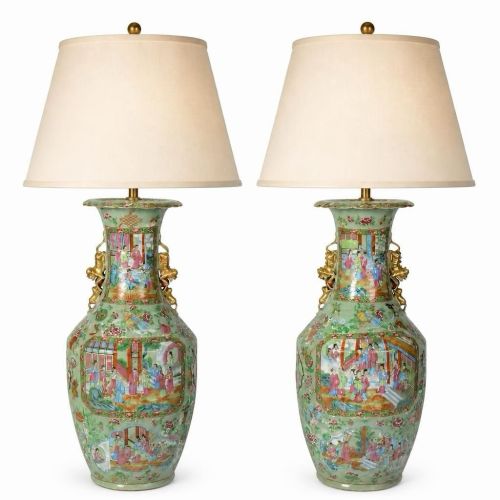
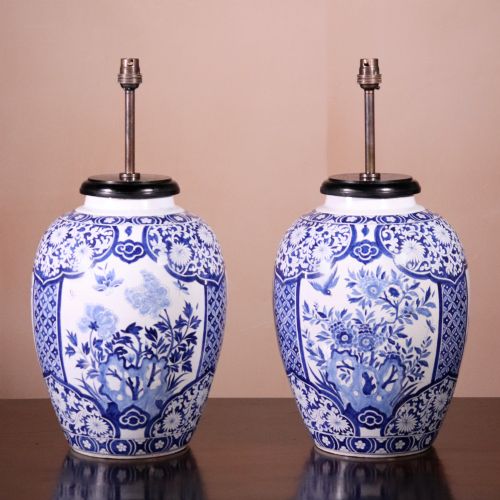
The most common forms you will meet on this page are porcelain vases adapted into lamps. These include blue and white crackleware, celadon, turquoise glaze, and rose medallion decorated ceramics.
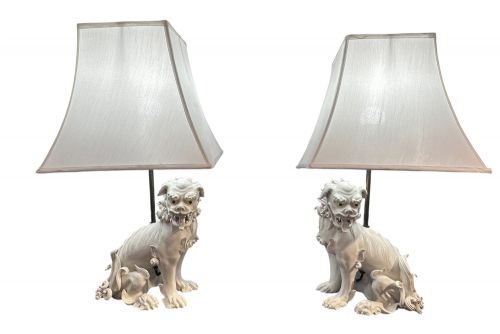
Earlier archive examples also show baluster vases mounted with ormolu, alongside blanc de chine and sang du boeuf glazes. The selection focuses squarely on matched pairs rather than single items.
Materials and construction
The primary bodies are formed from porcelain or ceramic, finished with specialist glazes such as celadon, crackleware, or famille rose enamel work. These vessels were originally made as vases before later conversion into lighting.
Metalwork components such as brass, gilt bronze, and ormolu often provide mounts, bases, or structural support for the electrical fittings. Bases may also incorporate marble or gilt wood to elevate the ceramic form.
Fabric shades complete the construction, diffusing the light above the decorated porcelain bodies.
Retail Price Guide 2026
Typical UK retail prices for pair chinese table lamps, calculated from the Sellingantiques database of over a million retail prices indexed since 2003. This retail price guide relies exclusively on Sellingantiques data; no external sources or auction records are used, so the figures do not describe the wider market.
Current listings span the nineteenth century to nineteen-twenty, utilising porcelain, brass, fabric, and marble.
Judging quality in the range
Quality rests primarily on the crispness of the porcelain body and the richness of the glaze, whether in the fine crackle of nineteenth-century pieces or the detailed enamel work of rose medallion examples. The depth of colour in turquoise, celadon, and sang du boeuf finishes sets superior examples apart.
The integration of metal mounts also defines the tier of a piece. Hand-chased ormolu and brass mountings that complement the ceramic form demonstrate higher workshop skill than simpler, utilitarian fittings.
The Pair Chinese Table Lamps Glossary
- Crackleware
- Pottery featuring a network of fine deliberate cracks in the glaze, seen frequently on nineteenth-century Chinese vases. This decorative effect arises during the cooling process in the kiln.
- Celadon
- A pale grey-green transparent glaze applied to porcelain. It mimics the appearance of jade and has a long history in Chinese ceramics.
- Ormolu
- Gilt bronze mounts used to decorate and support decorative objects. French for ground gold, it involves applying a gold-mercury amalgam to bronze.
- Famille Rose
- A palette of opaque enamels dominated by pink, introduced to Chinese porcelain in the eighteenth century. The name derives from the French classification of the colours.
- Baluster
- A vase or lamp body with a rounded swelling lower portion that tapers towards a narrow neck. The shape resembles a traditional architectural column support.
Frequently Asked Questions
Are these original lamps?
Most of these pieces started life as Chinese vases or decorative vessels before being converted into table lamps at a later date.
The porcelain bodies themselves date from the nineteenth century or around nineteen-twenty, while the electrical wiring and fittings are modern additions for practical home use.
How do I date these lamps?
Dating relies on examining the characteristics of the porcelain, the style of the glaze, and any associated metal mounts.
Nineteenth-century pieces often feature distinct crackleware, celadon, or rose medallion decoration, while early twentieth-century examples show characteristic turquoise glazes or pagoda-shaped designs.
What is Chinoiserie?
Chinoiserie refers to European interpretations and adaptations of traditional Chinese artistic motifs and styles.
This aesthetic heavily influenced the decorative arts and lighting designs found across the period represented on this page.
How should I clean porcelain lamps?
Dust the porcelain bodies gently with a dry, soft cloth to prevent any buildup of dirt on the glaze.
Avoid using harsh chemical cleaners or abrasive materials that could damage the antique ceramic surface or the metallic mounts.