


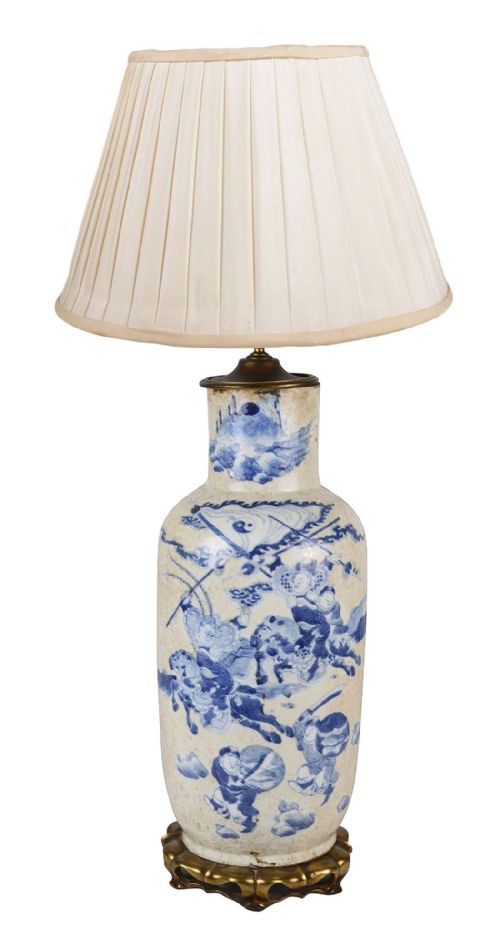


Fitted Porcelain Vase Lamps
These fitted porcelain vase lamps bring centuries of eastern craftsmanship into modern rooms as striking table illumination.
Fitted Porcelain Vase Lamps
Fitted porcelain vase lamps transform antique oriental vessels into functional table illumination by mounting them with electrical fittings and stable bases. The pieces seen here predominantly date from the nineteenth century, including specific years like eighteen eighty and nineteen twenty.
Buyers encounter forms originating from Chinese and Japanese traditions, spanning Qing Dynasty pieces, Chinese Export wares, and Japanese Meiji periods. Styles such as Famille Rose, Famille Verte, blue and white, Imari, and Canton or Rose Medallion feature heavily across the selection.
The objects take the shape of table lamps, often retaining their original vase character alongside later mounted hardware. Pairs appear frequently among the listings, offering balanced options for interior display.
How they were made
Makers utilised fine porcelain as the primary body for these vessels, applying detailed hand-painted glazes in palettes like Famille Rose and underglaze blue. Workshops shaped the ceramic bodies before firing them at high temperatures to achieve durable finishes.
Mounting hardware incorporates brass, ormolu, gilt bronze, metal, and hardwood to secure the electrical components and support the porcelain bodies. Fabric shades complete the construction, pairing with wooden or metallic bases to stabilise the tall forms.
The listings span the nineteenth century, including specific years like eighteen eighty and nineteen twenty, across Chinese and Japanese traditions.
What varies in quality
The intricacy and preservation of the hand-painted glazes dictate the visual appeal of each lamp, with complex polychrome enamels commanding attention. Crispness in the underlying porcelain body and the refinement of the decorative motifs set superior examples apart.
The quality of the metal mounts, whether brass, ormolu, or gilt bronze, contributes significantly to the overall integrity and aesthetic weight of the piece. Craftsmanship in the hardwood or metallic bases ensures the heavy porcelain vessels remain secure and balanced.
The Fitted Porcelain Vase Lamps Glossary
- Famille Rose
- A prominent palette of opaque rose-pink enamel introduced in Chinese ceramics during the eighteenth century. It defines much of the nineteenth century export porcelain seen here.
- Famille Verte
- A porcelain decoration style dominated by green enamels, complemented by other vibrant colours. This scheme originates from Qing Dynasty workshops.
- Imari
- A type of Japanese porcelain traditionally featuring underglaze blue and iron red, with added gold highlights. These wares gained substantial popularity for export.
- Ormolu
- Gilt brass or bronze applied to furniture and decorative objects. It provides ornate mounts for many nineteenth century lamp bases.
- Canton
- Porcelain decorated in the southern Chinese port city, often featuring dense panels of figures and flowers. It is frequently associated with Rose Medallion patterns.
Fitted Porcelain Vase Lamps: Frequently Asked Questions
Are these lamps converted antique vases?
Many examples utilise genuine nineteenth century Chinese and Japanese vases mounted for electrical use. The process adapts historical ceramics into functional domestic lighting.
Some pieces retain convertible elements, whilst others integrate the electrical wiring directly through drilled bases or fitted collars.
How do I identify Famille Rose porcelain?
Famille Rose pieces feature a distinctive opaque pink or rose-coloured enamel derived from colloidal gold. Artisans used this shade alongside greens, yellows, and blues to render floral and figural scenes.
This palette predominates across nineteenth century export wares and remains a key marker for this stylistic group.
Do these lamps come in pairs?
A substantial portion of the available inventory consists of matched pairs, making them suitable for sideboards or bedside tables. Single lamps also appear individually.
Pairs typically share matching glaze patterns, dimensions, and mount styles from the same period.
What periods do these lamps date from?
The selection concentrates heavily on nineteenth century production, with specific dates extending to eighteen eighty and nineteen twenty. These items span late Qing Dynasty and Meiji eras.
Styles reflect traditional Chinese Export and Japanese aesthetic movements popular during those decades.
What materials make up the lamp fittings?
Mounts and structural supports incorporate brass, gilt bronze, ormolu, and various metals alongside hardwood bases. Fabric shades commonly top the structures.
The combination of ceramic bodies and metallic hardware secures the electrical components while providing stable table placement.