
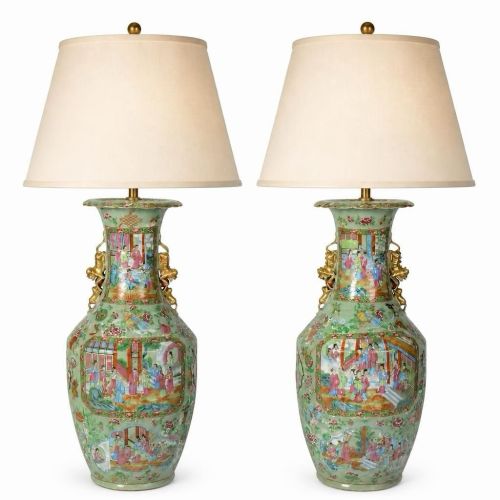
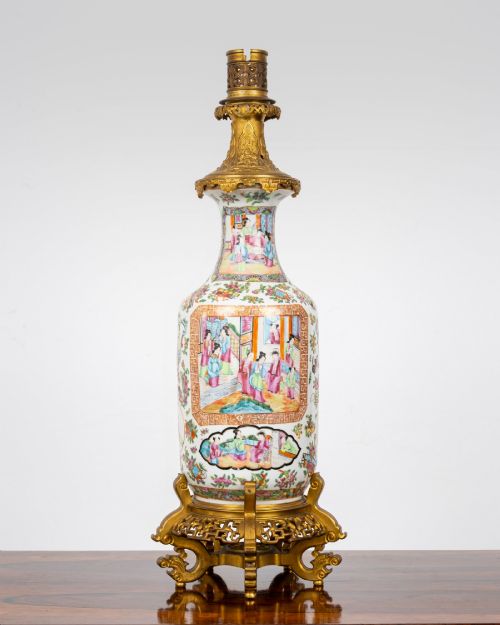


Rose Medallion Table Lamps
Rose medallion table lamps bring richly painted panels and gilt bronze mounts into interiors as statement pieces.
Rose Medallion Table Lamps
Rose medallion table lamps combine traditional porcelain vases from China with functional electrical fittings for modern interiors. These objects originate primarily from the nineteenth century, drawing on Chinese export styles and Qing Dynasty aesthetics.
Buyers encounter pairs of vases adapted into lamps, alongside single examples featuring characteristic panelled designs. The forms on this page span Cantonese and Japanese production, frequently mounted with brass, ormolu, or gilt bronze.
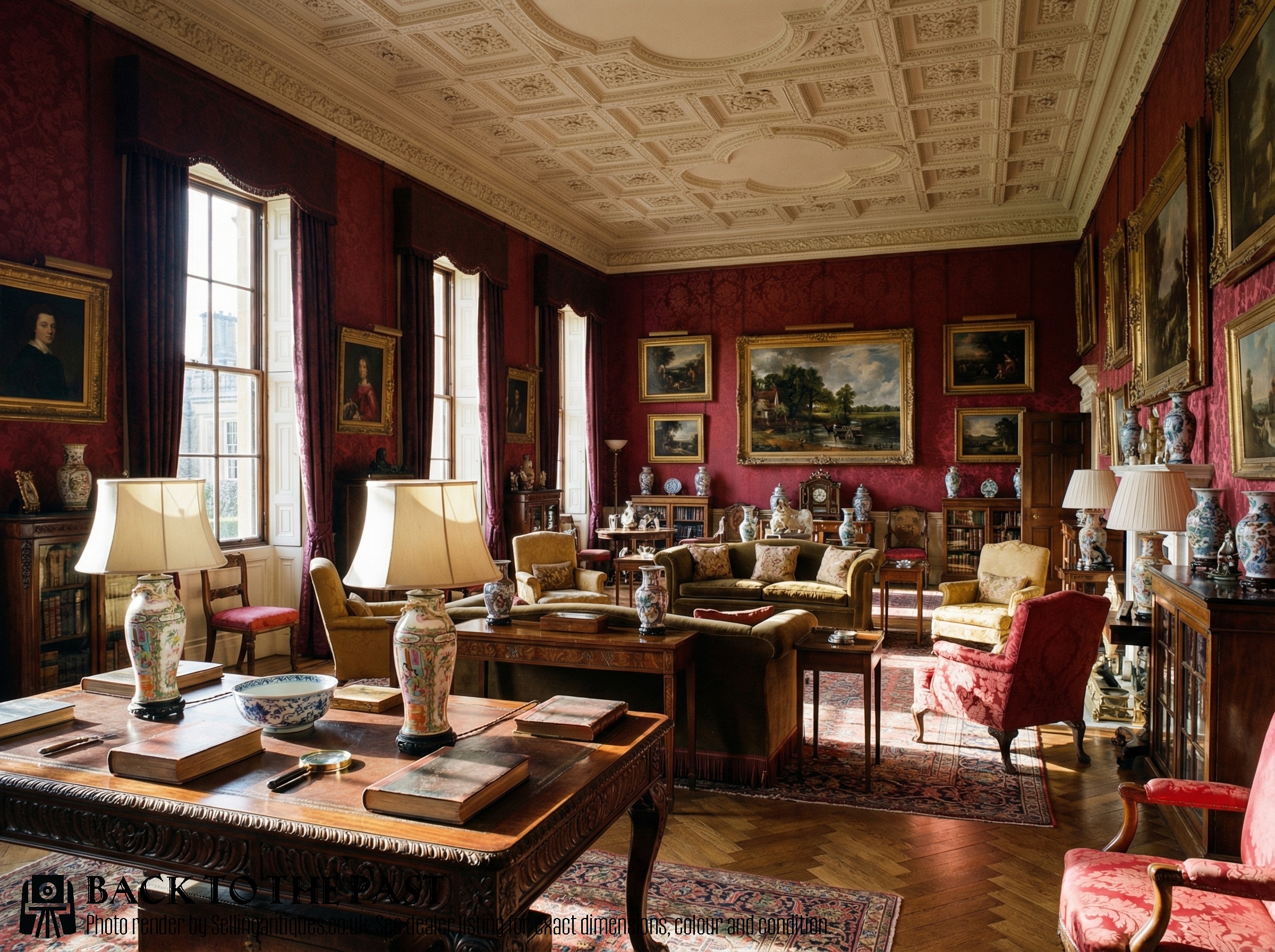
The aesthetic centres on intricate enamel work depicting figures, birds, and flowers arranged in distinct medallions. Such pieces serve as focal points in reception rooms, retaining their decorative character while functioning as lighting.
How They Were Made
Potters shaped the porcelain bodies before applying colourful enamel decoration by hand, dividing surfaces into narrative panels and floral borders. Gilding highlights specific details across the surface, framing the painted scenes within geometric patterns.
Metalworkers added mounts in brass, ormolu, and gilt bronze to stabilise the porcelain vessels and accommodate electrical fittings. Silk and fabric shades complete the construction, often added during later adaptations into lamps.
Enamelled birds gaze perpetually across living rooms, completely ignoring the modern electrical flex running through their antique toes.
What Varies in Quality
The integration of metal mounts influences the overall success of the piece, with heavier ormolu or gilt bronze bases providing better balance. Condition of the underlying porcelain and the retention of original gilding significantly determine the standing of each lamp.
The Rose Medallion Table Lamps Glossary
- Rose Medallion
- A style of Chinese export porcelain featuring segmented panels of enamelled figures, birds, and flowers surrounding a central medallion. This decorative scheme became popular during the nineteenth century for Western markets.
- Canton
- A port city in China associated with the production and export of porcelain decorated for European and American buyers. Pieces from this region often feature vibrant enamel palettes.
- Ormolu
- Finely ground high-carat gold applied to a bronze base, used historically for decorative mounts and furniture fittings. In these listings, ormolu mounts elevate the status of the porcelain bodies.
- Famille Rose
- A major palette of Chinese ceramic glazes distinguished by opaque pink or purple enamel derived from colloidal gold. This palette dominates the polychrome decoration seen on nineteenth-century export wares.
- Gilt Bronze
- Copper alloy cast and finished with a gold-coloured surface, frequently utilised for structural mounts on decorative lamps. It provides weight and durability to the base of the vessel.
Rose Medallion Table Lamps: Frequently Asked Questions
Are these lamps converted from old vases?
Many nineteenth-century rose medallion table lamps began life as decorative vases before receiving electrical fittings later. This adaptation allows antique porcelain to function safely as domestic lighting without losing its visual impact.
Makers often drilled the base or fitted collars to secure the wiring, preserving the painted panels and original mounts.
How do I date a rose medallion lamp?
Dating relies on examining the porcelain body, the style of the enamel painting, and the composition of the metal mounts. Nineteenth-century examples typically display hand-mixed enamels and heavy bronze or brass hardware.
Later pieces from the early twentieth century often show different potting techniques and brighter, more uniform colour applications under magnification.
Do these lamps come with shades?
Listings frequently include fabric or silk shades chosen to complement the proportions and colours of the porcelain base. Buyers should check individual descriptions to confirm whether a shade is part of the sale.
Original shades are uncommon, so modern replacements are standard for safe daily usage in contemporary interiors.
Where should I place a large pair?
Large pairs suit commanding locations such as sideboards, large console tables, or matching mantelpieces where they create symmetrical visual weight. Their height and bright enamel palettes draw the eye across a room.
Positioning them away from high-traffic walkways protects the delicate gilt bronze mounts and porcelain edges from accidental knocks.