




Chinoiserie Table Lamp Pair
A chinoiserie table lamp pair brings symmetry and hand-painted narrative to a room, turning converted porcelain jars and lacquered wood into functional lighting.
Chinoiserie Table Lamp Pair
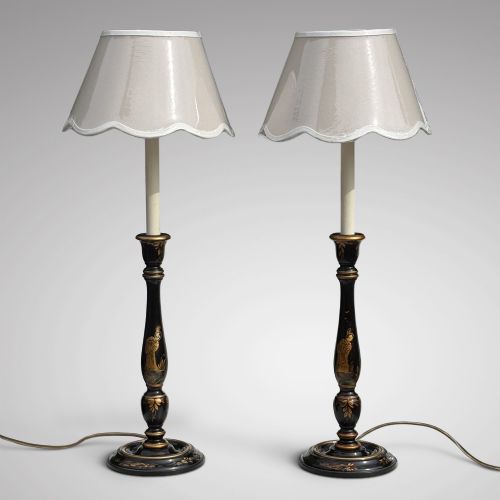
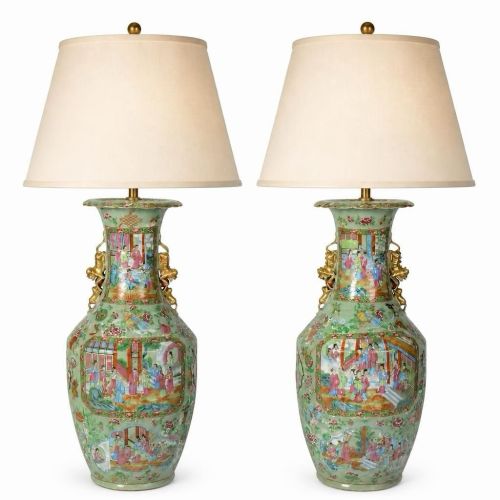
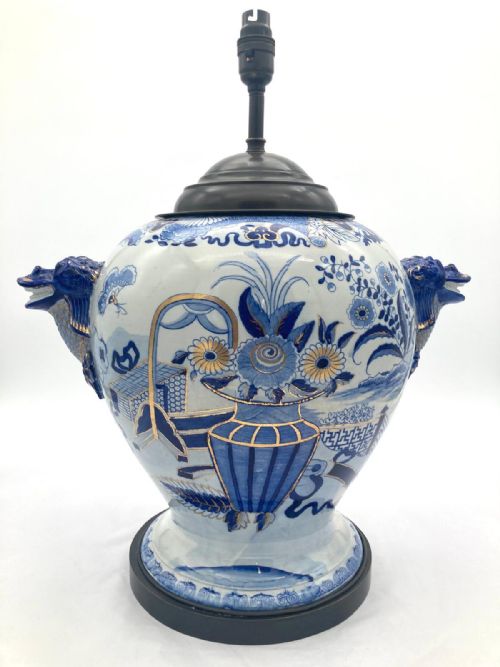
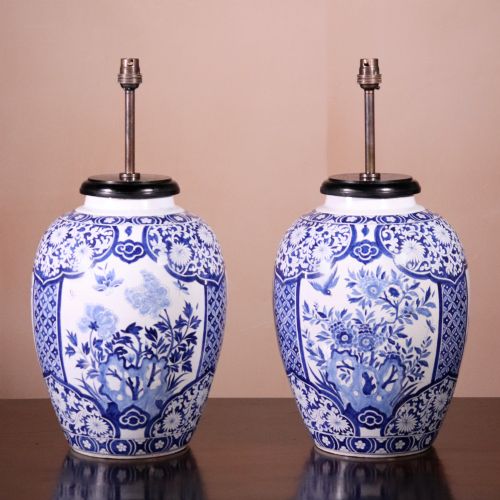
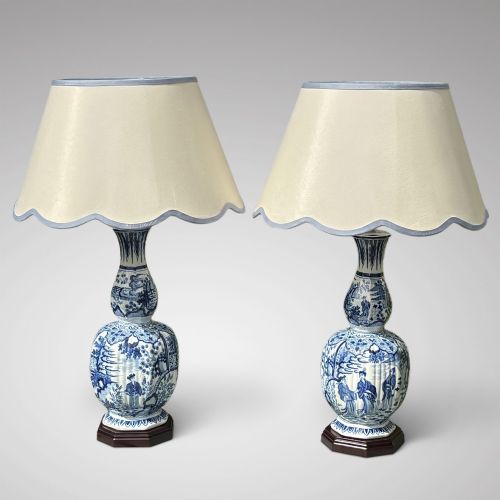
A chinoiserie table lamp pair typically consists of matched antique vessels converted into lighting, spanning the eighteenth, nineteenth, and early twentieth centuries. The selection relies heavily on converted porcelain jars and vases, including Rose Medallion, blue and white, and famille verte wares, alongside lacquered wood bodies.
Beyond ceramics, the category embraces cloisonné enamel, bronze, ormolu-mounted pieces, and toleware. Many examples bridge continents and eras, pairing Asian export porcelain with European gilt mounts or French neoclassical styling.
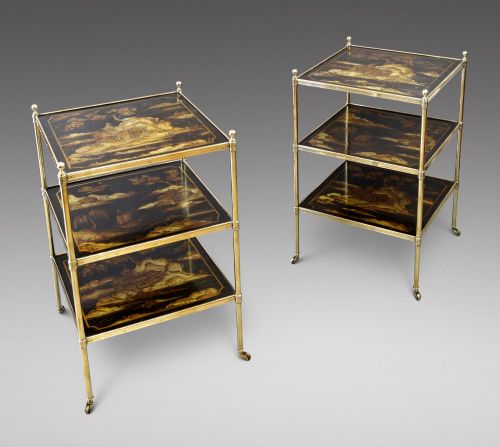
The phrase also captures lacquered wood forms and decorated side cabinets that double as lamp supports, reflecting varied interpretations of Chinese and Japanese aesthetics across the decades.
Materials and construction
Potters and artisans utilised high-fired porcelain, earthenware, and ironstone as the primary bodies, decorating them with intricate hand-painted enamels, underglaze blue, or crackleware glazes. Metalwork plays a structural and decorative role, with brass, bronze, and ormolu mounts fitted to secure the bases and accommodate electrical conversions.
Conversion from oil lamps, vases, or ginger jars to electricity represents a standard chapter in the physical history of these pieces, often retaining original metal collars and mounts.
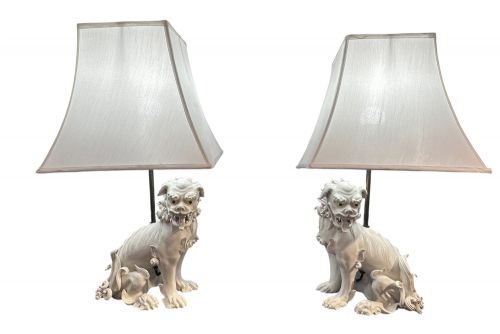
Several pairs incorporate fierce Foo dogs and imperial lions originally intended to guard domestic thresholds.
Separating the ordinary from the exceptional
Quality rests in the crispness of the hand-painting on the ceramic bodies and the depth of the enamel colours, where finely detailed figures and floral panels outshine repetitive stencilling. The integration of metal mounts also dictates standard; heavy cast ormolu and finely chased brass elevate a piece far above simple utilitarian wiring.
The symmetry of the pair matters significantly, as true matched counterparts display identical proportions, kiln marks, and decorative layouts rather than assembled approximations. Furthermore, the fidelity of the lacquer work or the weight and resonance of the underlying porcelain or ironstone signal superior workshop output.
Hicks and Meigh
The Chinoiserie Table Lamp Pair Glossary
- Chinoiserie
- European artistic interpretation of Chinese and East Asian artistic traditions, prominent in decorative arts and furniture.
- Famille Rose
- A major palette of Chinese ceramic enamels introduced in the Qing dynasty, distinguished by opaque pink or rose colours.
- Cloisonné
- An ancient technique for decorating metalwork objects with coloured glass paste separated by strips of metal.
- Ormolu
- Gilded bronze applied as mounts, feet, or decorative highlights on ceramics and furniture, particularly during the eighteenth and nineteenth centuries.
- Toleware
- Enamelled or japanned metalware, typically sheet steel, painted and baked with decorative finishes.
Chinoiserie Table Lamp Pair: Frequently Asked Questions
What is a chinoiserie table lamp pair?
A matched pair of lighting fixtures created from Asian or European decorative objects, typically antique vases, ginger jars, or lacquered wood.
They combine historical craftsmanship with modern electrical wiring, designed to sit symmetrically on side tables, cabinets, or desks.
How were antique vases converted into lamps?
Conversion usually involves drilling a discreet hole for wiring or mounting the vessel on a bespoke metal base with a threaded rod through the centre.
Original necks and rims are preserved beneath brass or ormolu collars that hold the lamp fittings and handmade shades.
Where should I place these lamps?
Their balanced height and decorative presence suit placement on side cabinets, console tables, or large bedside tables where symmetry is desired.
Positioning them away from direct sunlight protects hand-painted enamels and delicate lacquered surfaces from fading.
How do I date an antique lamp pair?
Dating relies on examining the ceramic body style, glaze characteristics, and any makers' marks or reign signatures on the base of the vessel.
The style of the metal mounts, such as nineteenth-century ormolu or cast brass, also provides clear chronological indicators.