



Polychrome Porcelain Table Lamps
Polychrome porcelain table lamps bring colourful hand-painted depth to a room, turning antique vases and oil lamps into practical domestic lighting.
Polychrome Porcelain Table Lamps
Polychrome porcelain table lamps transform historic ceramic vessels, including ginger jars, baluster vases, and figural oil lamps, into wired lighting fixtures. These pieces draw heavily on 19th-century Chinese and Japanese traditions, spanning Chinoiserie, Chinese Export, Qing Dynasty, and Japanese Meiji aesthetics alongside Victorian and Art Deco British and French designs.
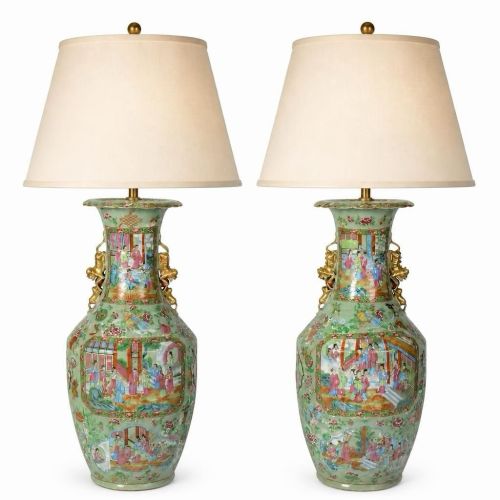
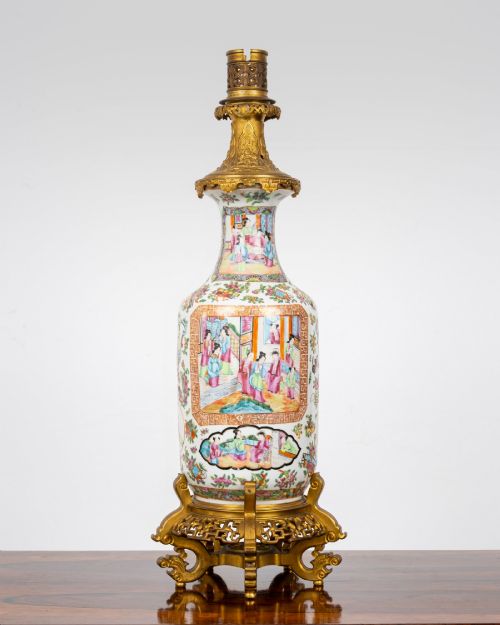
The selections encountered here most frequently include Chinese Famille Rose and Rose Medallion patterns, often adapted from earlier vases or converted from Victorian oil lamps. Buyers frequently encounter matched pairs alongside individual statement pieces featuring elaborate hand-painted motifs.
Origins range across multiple decades from the 1870s through the 1930s, uniting diverse decorative vocabularies under the heading of polychrome porcelain table lamps. Each object preserves the distinct painting style of its period, whether depicting floral bands or figurative scenes.
Materials and construction methods
Makers constructed these lamps by combining fired porcelain bodies with structural metal mounts made from brass or gilt bronze. Ceramic elements received hand-painted polychrome enamel decoration, utilising vibrant palettes of pinks, greens, and gilt highlights.
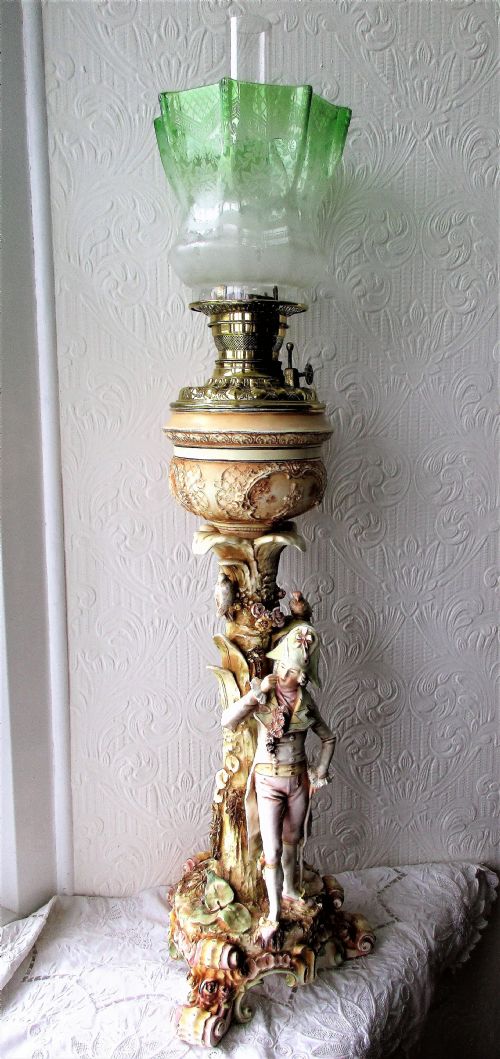
Many items originated as oil lamps or decorative display vases before conversion into table lamps, incorporating wooden bases or fabric elements during later adaptation. Artisans secured electrical fittings through drilled vessels or custom metal collars designed to support shades.
Listings feature ceramics spanning the 1870s to the 1930s, incorporating brass, gilt bronze, and fabric components.
Assessing quality in ceramic lighting
Quality rests upon the precision of the hand-painted enamel work and the artistic merit of the original porcelain vessel. Finer examples display crisp detail in multi-coloured floral panels and figurative scenes, whereas simpler pieces show broader brushwork.
The integration of mounts also separates standard conversions from superior creations. Heavy cast brass or gilt bronze collars, alongside well-balanced wooden elements, elevate the overall construction of the lamp.
The Polychrome Porcelain Table Lamps Glossary
- Famille Rose
- A prominent palette of Chinese porcelain decoration distinguished by opaque pink or rose enamel, introduced during the Qing dynasty. This coloration frequently defines floral and figural motifs on 19th-century lamp conversions.
- Rose Medallion
- A distinct Canton style featuring panels of figures alternating with birds, butterflies, and flowers, arranged in geometric registers. These vibrant designs appear commonly on large vases adapted into table lamps.
- Meiji Period
- The era of Japanese history spanning from 1868 to 1912, known for export wares such as Satsuma pottery. Pieces from this era often feature intricate crackle glaze and dense gilding.
- Baluster Vase
- A decorative vessel characterised by a rounded body, narrow neck, and flared rim, shaped like an architectural baluster. This form serves as a frequent structural base for table lamps.
Polychrome Porcelain Table Lamps: Frequently Asked Questions
What are polychrome porcelain table lamps?
Polychrome porcelain table lamps are functional lighting fixtures created from historic ceramic vessels, including ginger jars, oil lamps, and decorated vases. They combine centuries-old ceramic artistry with modern electrical wiring to serve as domestic illumination.
These pieces span various global traditions, prominently featuring Chinese export porcelain and Japanese Satsuma wares alongside European interpretations from the Victorian and Art Deco eras.
Were these always lamps originally?
Many of these objects started life as decorative vases, ginger jars, or functional oil lamps before being converted into modern table lighting. Adapting historic ceramics allowed makers to preserve painted artistry while repurposing vessels for interior illumination.
Conversion methods typically involved adding custom brass or gilt bronze mounts, wooden bases, and internal wiring while maintaining the structural integrity of the original porcelain.
How do I date a porcelain lamp?
Dating relies on examining the painting style, glaze characteristics, and associated metal mounts rather than just the electrical components. Pieces from the 19th century often display hand-applied Famille Rose or Rose Medallion enamel work typical of the Qing Dynasty.
Later items from the early 20th century may reflect Art Deco geometric influences or distinct French and Japanese production methods. Comparing the ceramic body and decorative palette to documented historical periods helps establish an approximate timeframe.
How do I style these lamps at home?
These lamps function effectively as focal points on sideboards, consoles, or bedside tables, where their hand-painted colours can complement existing interior palettes. Paired items work well placed symmetrically on either side of a mantelpiece or large piece of furniture.
Selecting fabric shades that pick up secondary tones from the polychrome enamel helps unify the lamp with surrounding textiles and furnishings in the room.