


Chinese Porcelain Bedside Lamps
Chinese porcelain bedside lamps bring character and rich colour to a room, turning antique vases into practical lighting.
Chinese Porcelain Bedside Lamps
Chinese porcelain bedside lamps transform antique vessels, ginger jars, and baluster forms into functional table lamps for the home.
The pieces appearing here stem primarily from the nineteenth century, alongside examples from around nineteen-twenty.
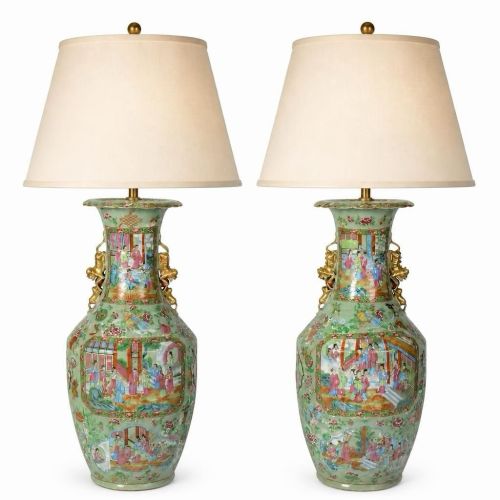
Visually, these items draw on styles such as Famille Rose, Famille Verte, blue and white, crackleware, and Rose Medallion.
Materials and construction
Makers utilised porcelain as the primary body, shaping vases, ginger jars, and baluster forms to serve as lamp bases.
Fittings incorporate brass, metal, gilt bronze, and ormolu to secure the ceramic components and hold electrical fixtures.
Completing the construction, shades of fabric, silk, and wood elements frequently accompany these mounted porcelain vessels.
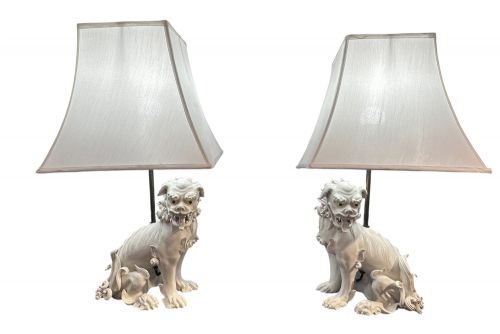
Dogs of Fo guard the bedside in porcelain form, standing watch over nineteenth-century chambers.
Quality and manufacture
Quality rests in the crispness of the hand-painted enamel decoration, whether in the green palettes of Famille Verte or the rich pinks of Rose Medallion.
The finesse of the ceramic body itself, from delicate celadon to robust crackleware, dictates the distinction of individual pieces.
Metal mounts in brass, ormolu, or gilt bronze show varying degrees of chasing and finish where they secure the porcelain.
The Chinese Porcelain Bedside Lamps Glossary
- Famille Rose
- A palette of opaque enamels dominated by pink, introduced during the Qing dynasty. It appears frequently on nineteenth-century vases converted into lamps.
- Famille Verte
- A ceramic palette defined by green enamels, often combined with iron red, blue, and yellow. It decorates many nineteenth-century vase lamps.
- Rose Medallion
- A distinct style of Canton porcelain featuring panels filled with figures, birds, and flowers, arranged around a central medallion.
- Ginger Jar
- A broad-shouldered ceramic jar with a domed cover, originally used for storage. These jars form popular bodies for table lamps.
- Cloisonne
- An ancient metalworking technique using wire partitions filled with enamel pastes. Pieces in this style appear among the mounted lamp selections.
Chinese Porcelain Bedside Lamps: Frequently Asked Questions
How do I wire a ceramic lamp?
Wiring generally involves running a cord through the centre of the porcelain body, secured with appropriate brass or metal hardware.
Professional rewiring ensures the antique vessel remains undamaged and safe for daily use on a bedside table.
Are these antique vases damaged?
Converting vases into lamps often involves drilling a small hole near the base for the electrical cord to pass through.
Buyers evaluate each piece based on the condition of the porcelain body, glaze, and the quality of the surrounding metal mounts.
How do I choose a lampshade?
Selecting a shade depends on the proportions of the porcelain base and the dominant colours within the painted decoration.
Fabric and silk shades complement the traditional aesthetic of nineteenth-century ginger jars and baluster vases.