





Pair Rose Canton Lamps
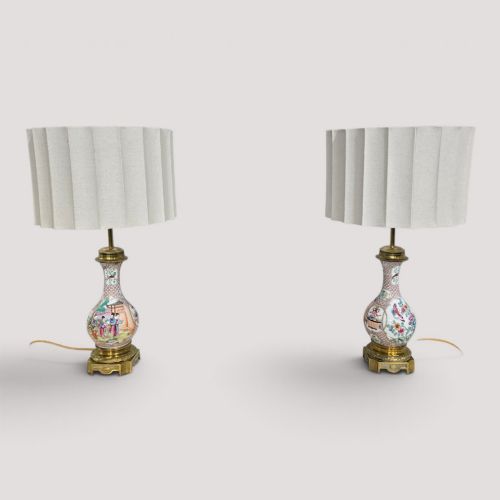
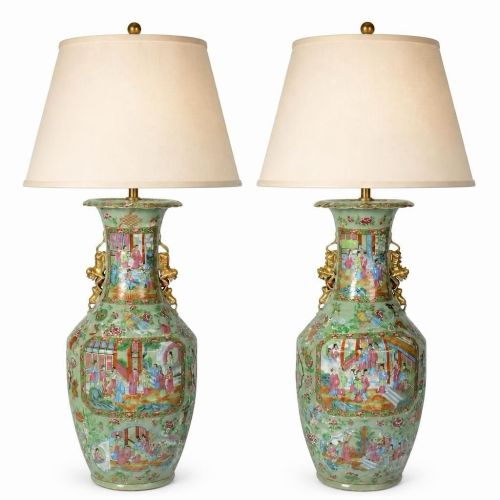
Pair rose canton lamps bring vibrant palettes and intricate figures into a room, offering striking focal points for side tables and consoles.
Pair Rose Canton Lamps
These pair rose canton lamps comprise matched sets of converted vessels, primarily nineteenth century Chinese export porcelain created during the Qing dynasty and Victorian Chinoiserie periods. Buyers encountering these listings will find large table lamps and oil lanterns adapted from decorative vases featuring characteristic medallion designs.
The objects stem from Chinese export production aimed at Western markets, spanning decades such as eighteen seventy, eighteen eighty, and nineteen twenty. Their forms unite traditional Cantonese porcelain bodies with twentieth century or period electrical fittings, brass mounts, and fabric shades.
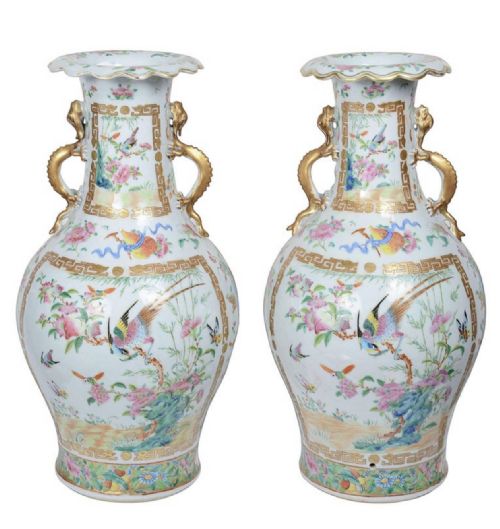
The selection centres heavily on nineteenth century Chinese export styles, specifically Rose Medallion and Famille Rose aesthetics. Each pair demonstrates the symmetrical balance demanded by interior designers seeking traditional lighting with historical depth.
How they were made
Potters shaped the ceramic bodies from fine porcelain before applying detailed enamel decoration by hand, incorporating gilt bronze, ormolu, and brass mounts. Artisans frequently mounted these vases onto wooden or metallic bases to stabilise them for electrical conversion.
The surface decoration relies on polychrome enamel painting, often featuring narrative panels surrounded by floral and bird motifs. Subsequent wiring additions integrate fabric components and glass elements to transform decorative vases into functional table lamps.
Pair Rose Canton Lamps Retail Price Guide 2026
Typical asking prices for pair rose canton lamps among the pieces listed under this phrase on Sellingantiques today, from the lower quarter to the upper quarter. They describe what is for sale here now, not the wider market.
Listings feature periods spanning the nineteenth century, eighteen seventy, eighteen eighty, eighteen ninety, and nineteen twenty, utilising materials like porcelain, brass, ormolu, and gilt bronze.
What varies in quality
The precision and density of the hand painted enamel panels distinguish finer examples from simpler production pieces. Crisp delineation within the Rose Medallion borders and well preserved gilding elevate the visual impact of a pair.
Integration of the mounts determines the structural harmony of the conversion. Ormolu and brass fittings that respect the original porcelain contours without damaging the ceramic body represent superior craftsmanship in the lamp adaptation.
The Pair Rose Canton Lamps Glossary
- Canton
- Referring to the port of Guangzhou, this term describes porcelain decorated locally and exported to Western markets during the Qing dynasty. The style is recognised by its crowded, colourful compositions.
- Rose Medallion
- A distinct pattern featuring alternating panels of figures and birds, bordered by floral enamel work and gold details. This motif defines the majority of nineteenth century examples.
- Famille Rose
- A major palette of opaque enamel colours dominated by pink, introduced to Chinese ceramics during the Qing dynasty. It forms the basis of the bright floral and figurative scenes seen on these lamps.
- Ormolu
- Gilded bronze applied as decorative mounts, bases, or handles on nineteenth century decorative objects. It adds weight and a warm metallic sheen to the porcelain bodies.
- Chinoiserie
- European decorative style reflecting Chinese artistic influences, popular during the Victorian period. It often accompanies genuine Chinese export pieces adapted for Western interiors.
Pair Rose Canton Lamps: Frequently Asked Questions
Are these lamps converted from old vases?
Most pairs begin life as nineteenth century Chinese export vases or oil lanterns before receiving professional electrical conversion. The original ceramic bodies retain their historical character while incorporating modern wiring and lamp hardware.
Buyers should expect to see drill holes or mounting brackets fitted to secure the bases and stems. These adaptations allow fragile antique porcelain to function safely as everyday table lighting.
How do I clean canton porcelain lamps?
Gentle dusting with a soft, dry cloth preserves the delicate enamel and gilt decoration found on nineteenth century surfaces. Avoid abrasive cleaners or soaking the ceramic components near the electrical fittings.
Take care around the brass or ormolu mounts, using specialised metal polish only where it will not touch the porous porcelain glaze. Fabric shades should be brushed lightly or vacuumed with a low suction attachment.
What is the difference between rose medallion and rose canton?
Rose Medallion specifically describes porcelain featuring distinct alternating panels enclosing figures, birds, and flowers around a central medallion. Rose Canton is a broader term encompassing various colourful floral and figurative export styles produced in the same region.
Both categories fall under the larger Famille Rose umbrella due to their shared reliance on opaque pink enamels. On this marketplace, the terms frequently overlap within nineteenth century listings.
How do I style pair rose canton lamps?
These tall lamps require sturdy side tables, sideboards, or console tables where their colourful enamel work can catch the light. Placing them symmetrically creates a formal focal point in drawing rooms or dining spaces.
Pair them with neutral walls to let the intricate patterns stand out, or echo the pink and green enamel tones in nearby textiles. Ensure the shade proportions complement the substantial width of nineteenth century vase bodies.