


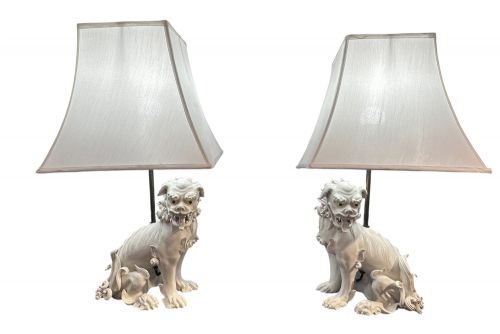


Chinese Ceramic Lighting
Chinese ceramic lighting brings centuries of export porcelain and hand-painted glazes into domestic interiors as functional table lamps and candelabras.
Chinese Ceramic Lighting
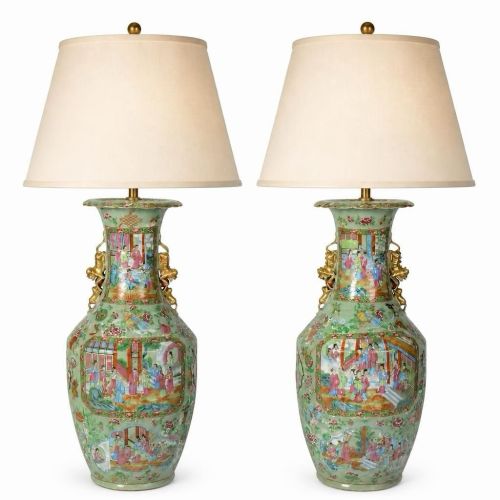
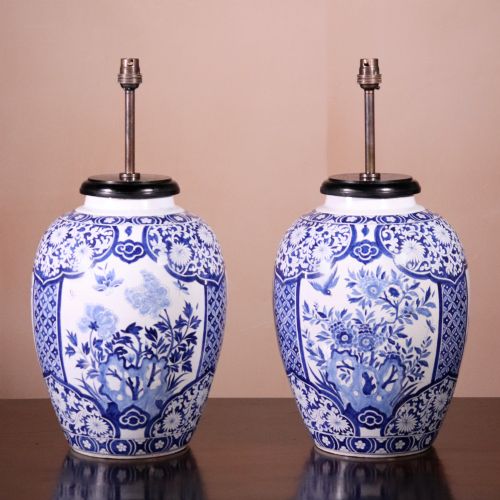
When buyers search for chinese ceramic lighting, they encounter converted vessels ranging from nineteenth-century ginger jars to eighteenth-century lidded vases. The most common forms on this page are pairs of table lamps fashioned from porcelain bodies, frequently paired with fabric or silk shades.
The selection draws heavily on nineteenth-century production, alongside earlier eighteenth-century examples and twentieth-century interpretations. Vases, candelabras, and figural models such as Shi Lions provide the structural foundation for these repurposed decorative objects.
Assessing quality and craftsmanship
Quality rests in the precision of the hand-painted enamel detail and the harmony of the metal mounts attached to the porcelain body. Superior examples display crisp cobalt blue underglazes or richly layered polychrome pigments without smudging.
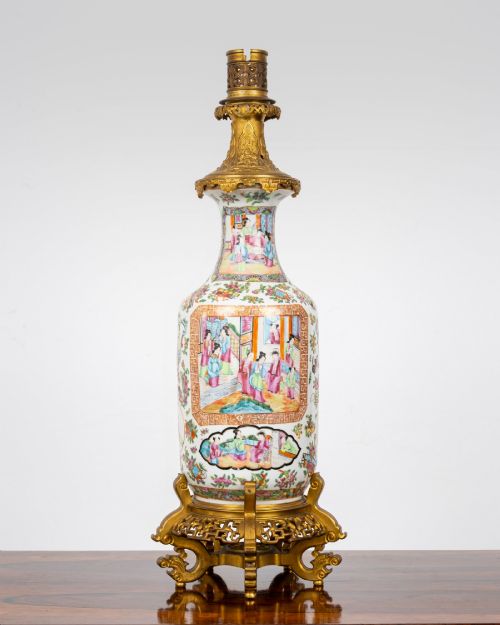
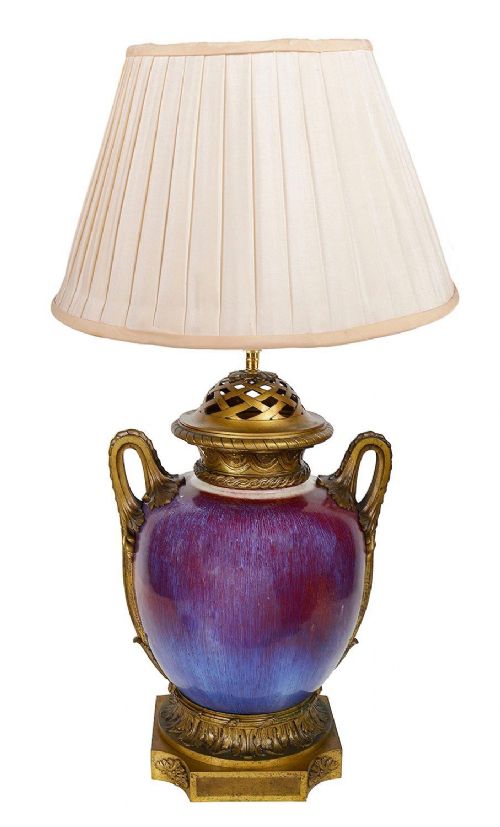
The integration of brass or ormolu mounts distinguishes finer conversions, where metalwork conforms precisely to the contours of the ceramic vessel rather than obscuring its form.
A porcelain elephant stands ready to hold a candle, proving that nineteenth-century artisans enjoyed practical illumination with a touch of fauna.
The Chinese Ceramic Lighting Glossary
- Famille Rose
- A palette of opaque enamels dominated by pink or rose colours, introduced during the Qing dynasty. This technique allowed for nuanced shading and detailed floral motifs on porcelain lamps.
- Famille Verte
- A classification of porcelain decoration utilising a dominant green enamel palette alongside iron red and other colours. It creates vibrant, complex scenes across nineteenth-century vase bodies.
- Celadon
- A term for pottery denoting both wares glazed in jade green and the specific translucent green glaze itself. It appears frequently on nineteenth-century vessels adapted for lighting.
- Ginger Jar
- A wide-shouldered storage jar with a domed lid, commonly adapted into a table lamp. These jars often feature blue and white or Famille Rose designs.
- Ormolu
- Gilded bronze used for decorative mounts and fittings on nineteenth-century vases. It provides structural support and ornate trimming for converted lamps.
Chinese Ceramic Lighting: Frequently Asked Questions
How are these lamps wired?
Most antique porcelain lamps are adapted for modern electrical standards by passing a cord through a drilled base or fitted top. Many retain professional rewiring from their time in European or British interiors.
Buyers should inspect the existing flex and plug to ensure compliance with current safety regulations upon arrival.
Can I find matching pairs?
This selection includes numerous matched pairs of vase and ginger jar lamps originating from the nineteenth century. These symmetrical sets suit placement on sideboards or mantelpieces.
Individual lamps also appear frequently for single-point accent lighting in smaller rooms.
What periods do these pieces date from?
The inventory spans from the mid-eighteenth century through the nineteenth century and into the early twentieth century. Nineteenth-century production forms the core of the available items.
Earlier eighteenth-century specimens and twentieth-century blanc de chine figures provide variety in age and glaze type.
How do I care for antique ceramic lamps?
Dust the porcelain and metal mounts gently with a soft, dry cloth to prevent the accumulation of grime. Avoid chemical cleaners that might damage delicate enamel work or patinated brass.
Check the stability of the mountings periodically where brass meets the ceramic body.