
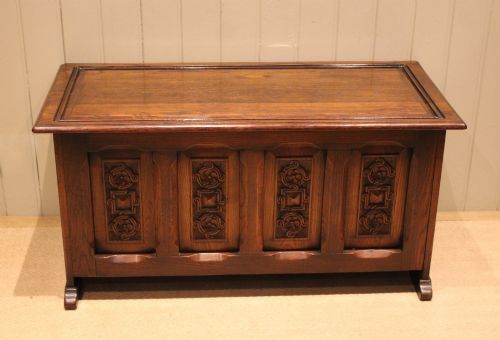
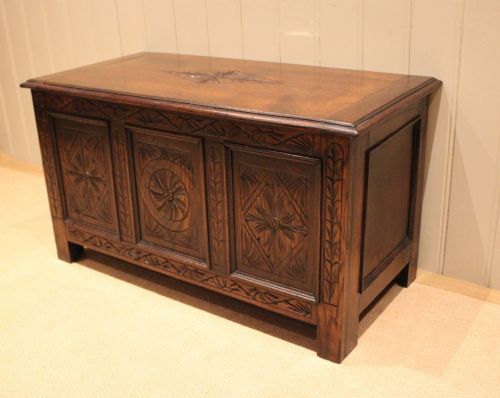
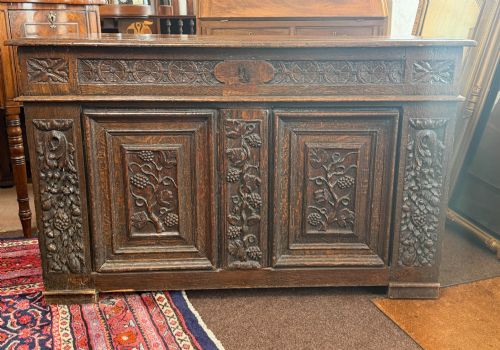
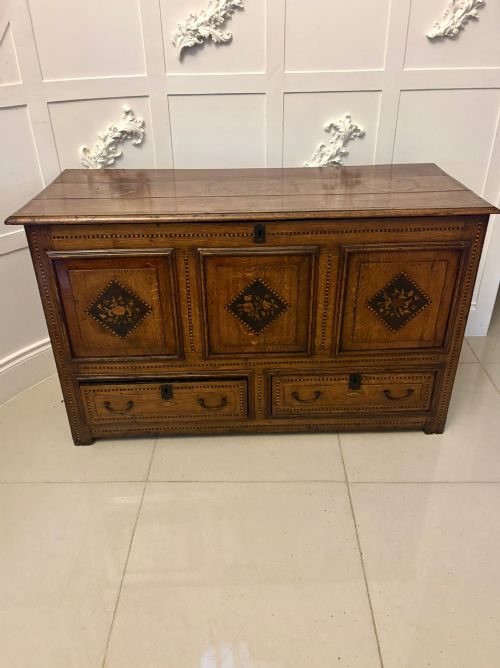
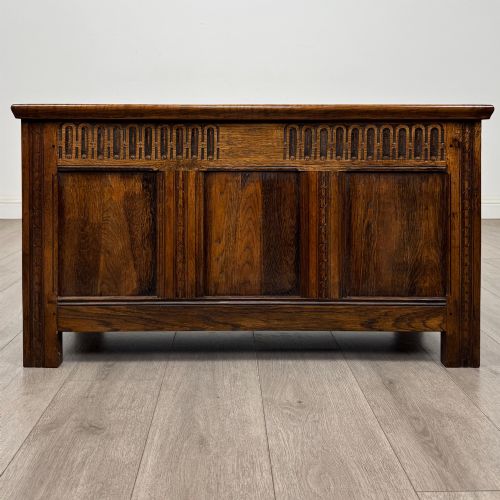

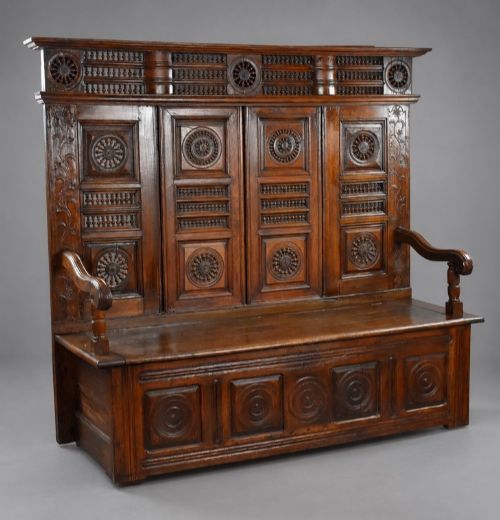
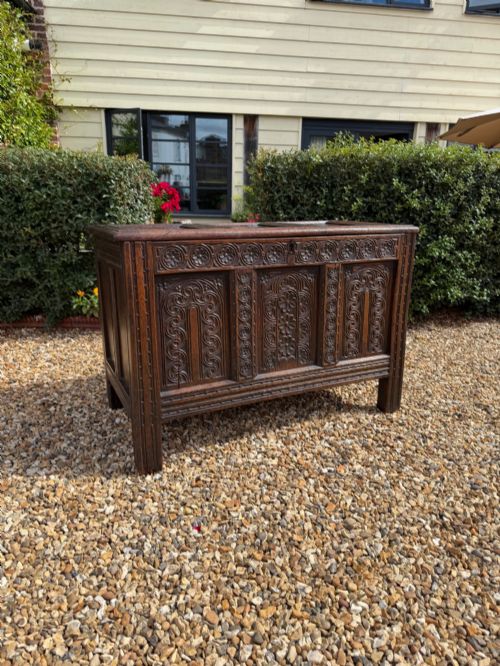
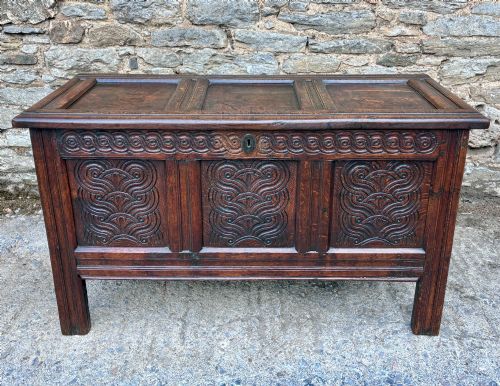
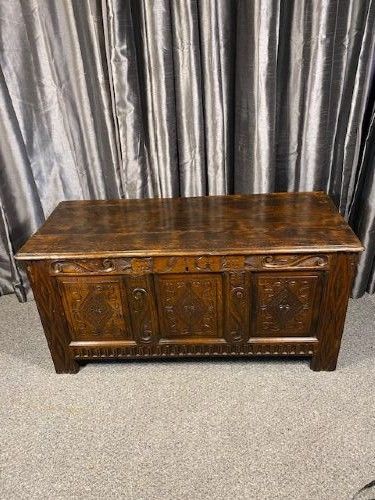
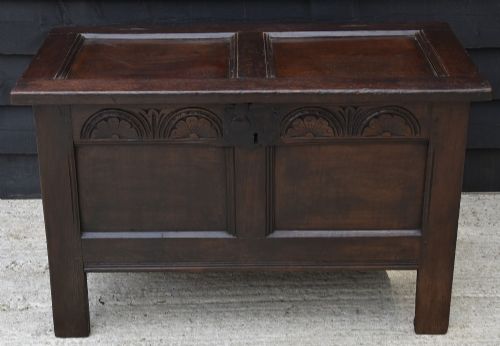
Jacobean Carved Coffer
A jacobean carved coffer is a heavy timber storage chest built for domestic utility and ornament, holding centuries of textiles and documents.
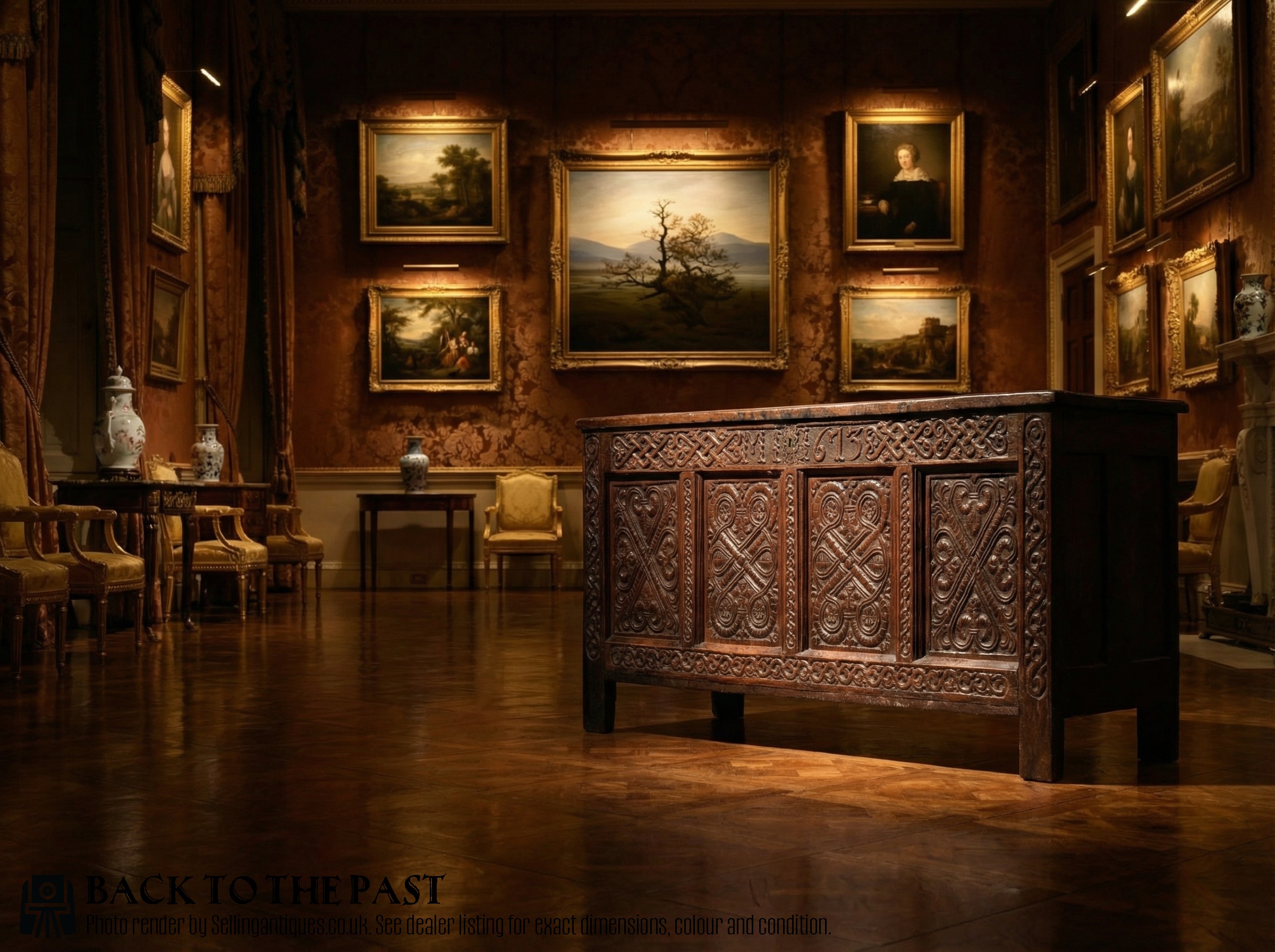
Jacobean Carved Coffer
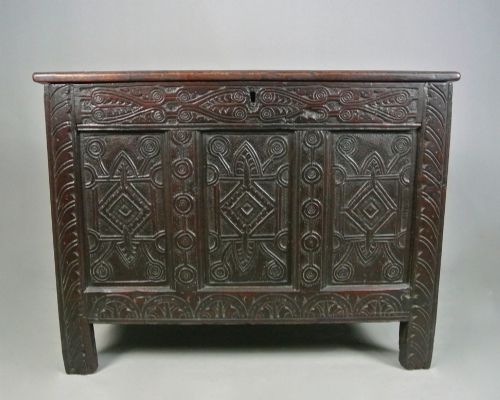
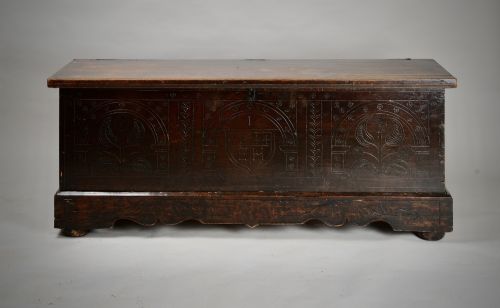
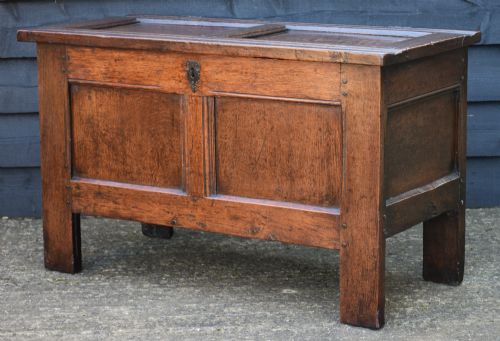
When buyers search for a jacobean carved coffer, they encounter substantial wooden storage chests designed during the seventeenth century alongside revival pieces produced in the twentieth century. These objects function primarily as secure storage for household linens, clothing, and valuables while serving practical roles as seating or tables within the domestic interior.
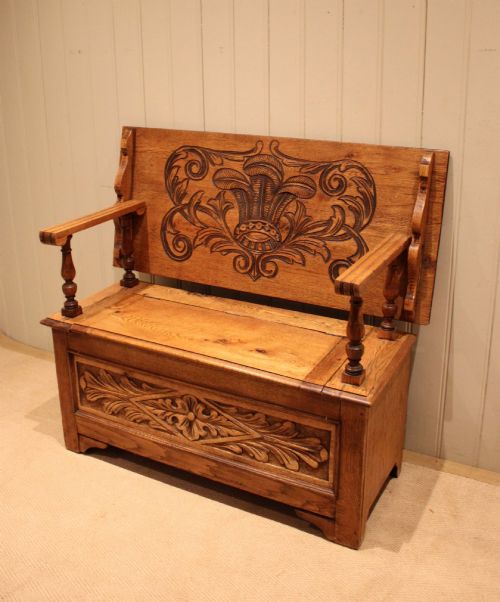
The pieces on this page span genuine seventeenth-century examples originating from the Jacobean, Charles II, and Cromwellian periods, alongside later revival interpretations dated to the Edwardian era and the 1920s and 1930s. Forms range from simple boarded boxes to joined panel construction, sometimes incorporating drawers beneath the main compartment as seen in mule chests.
Originating predominantly from English workshops, these items demonstrate regional variations in carving depth and structural layout. Alongside standard coffers, related forms such as settlers, court cupboards, and bible boxes appear within the selection, reflecting the broader domestic furniture output of the period.
What determines quality
The integrity of the original timber frame establishes the baseline for evaluation, distinguishing pieces with intact original panels and boards from those altered by extensive later restoration or timber replacement. Crispness and depth in the carved ornament reveal the skill of the original carpenter, separating standard workshop output from exceptional examples.
Proportion and scale influence desirability, as smaller coffers and pieces displaying balanced architectural detailing command greater attention from collectors. The survival of original surface patination, ironwork hinges, and internal till compartments further separates standard utilitarian boxes from superior survivals.
Several small-proportion coffers were built low enough to double as seating for children learning to read by the hearth.
The Jacobean Carved Coffer Glossary
- Coffer
- A large wooden chest used for storage and transport of valuables. These items usually feature a hinged lid and robust boarded or panelled construction.
- Mule chest
- A storage chest fitted with one or more drawers beneath the main compartment. This form bridges the traditional coffer and the chest of drawers.
- Joined oak
- Furniture construction utilising closely fitted mortise and tenon joints secured by wooden pegs. This method replaced earlier boarded construction and provided greater structural stability.
- Marquetry inlay
- The technique of inserting contrasting pieces of wood into prepared recesses to form decorative patterns. This ornament appears on select panels of seventeenth-century and revival pieces.
- Revival
- Furniture produced in a later era imitating the style of an earlier historical period. Examples on this page include twentieth-century pieces emulating seventeenth-century design.
Jacobean Carved Coffer: Frequently Asked Questions
What is a jacobean carved coffer used for?
Historically, these chests served to store valuable textiles, garments, blankets, and household documents away from damp floors and pests. Their flat lids also allowed them to function as tables, benches, or beds within domestic rooms.
Today, owners utilise them in hallways or living spaces for practical storage while displaying decorative objects on the top surface.
How do I date a jacobean carved coffer?
Dating relies on examining construction methods, tool marks, timber shrinkage, and stylistic indicators such as carved strapwork or panel layouts. Seventeenth-century examples display hand-split oak boards, pegged joints, and characteristic period motifs.
Revival pieces from the Edwardian era or the twentieth century often exhibit modern mechanical saw marks, standardised screws, or machine-cut joinery beneath the exterior surface.
Are these chests made of solid oak?
The pieces listed across this selection are constructed from solid oak timber, frequently augmented with mixed woods for marquetry inlay details. Carpenters relied on solid heartwood and quarter-sawn boards to ensure durability and structural strength.
Secondary woods sometimes appear in internal partitions or drawer linings on later variants, but the primary exterior surfaces remain solid oak.
What is the difference between a coffer and a chest?
While the terms are often used interchangeably, a coffer traditionally denotes a heavy box with boarded or panelled sides designed for secure storage. Chests can encompass a broader range of lidded boxes and frequently evolved to include lower drawers, as seen in mule chests.
Both forms utilise hinged lids and heavy timber construction suited to domestic storage needs.