

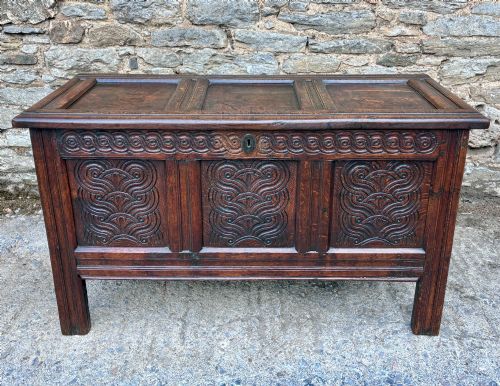
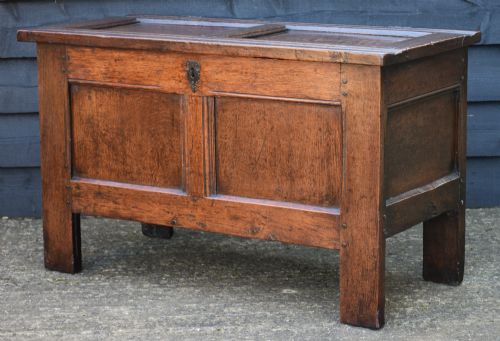
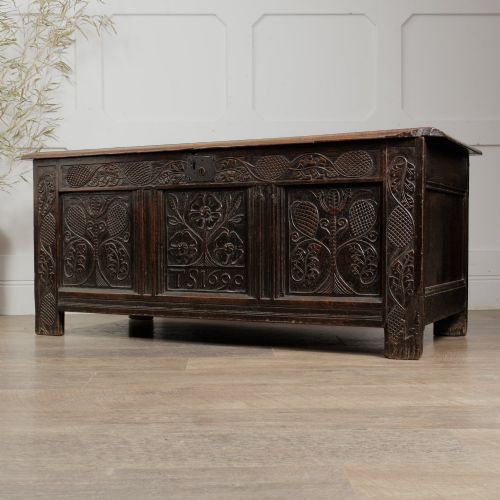
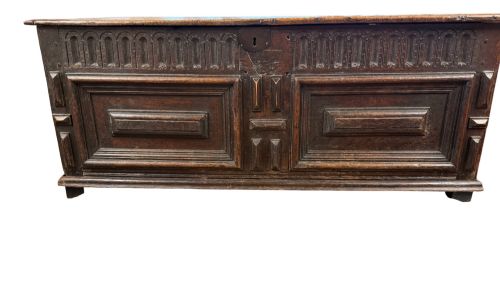
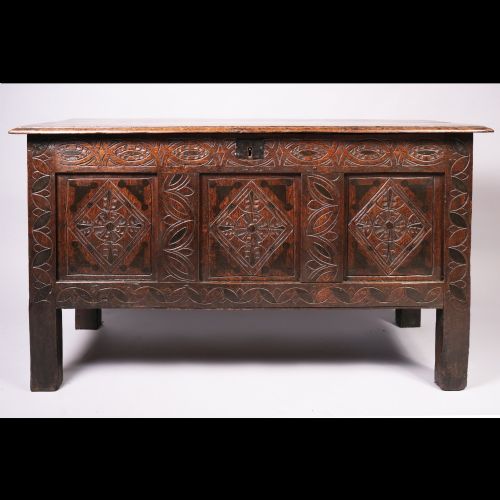
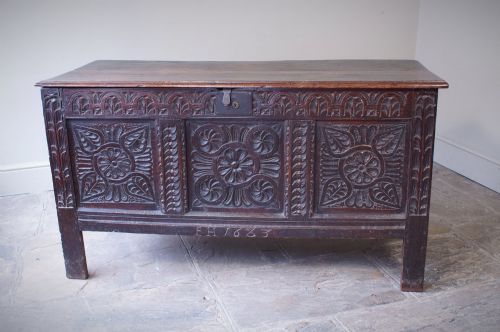
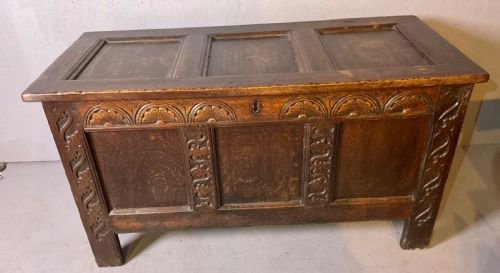
Seventeenth Century Oak Trunk
A seventeenth century oak trunk anchors a room with dense timber and centuries of domestic history.
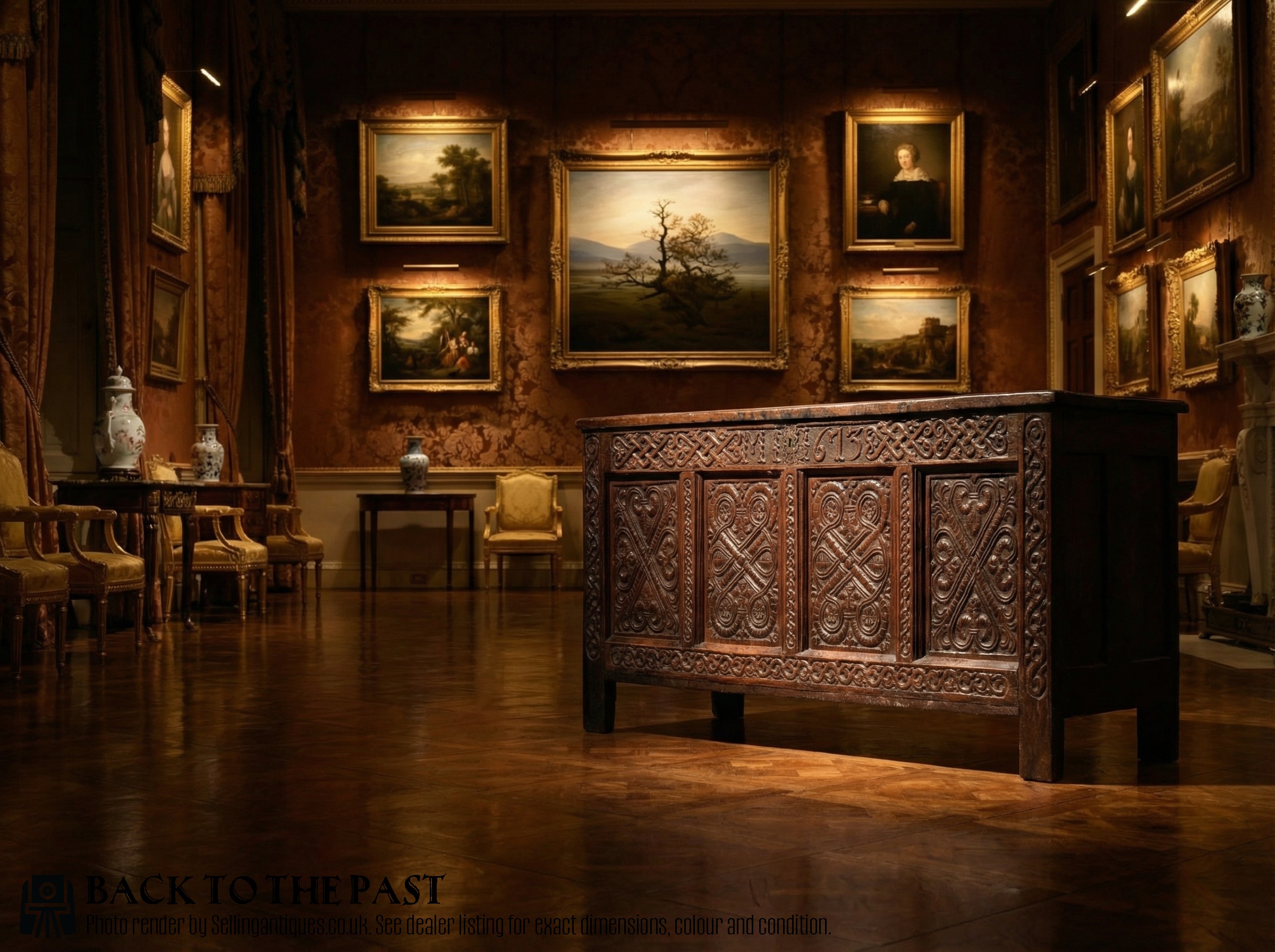
Seventeenth Century Oak Trunk
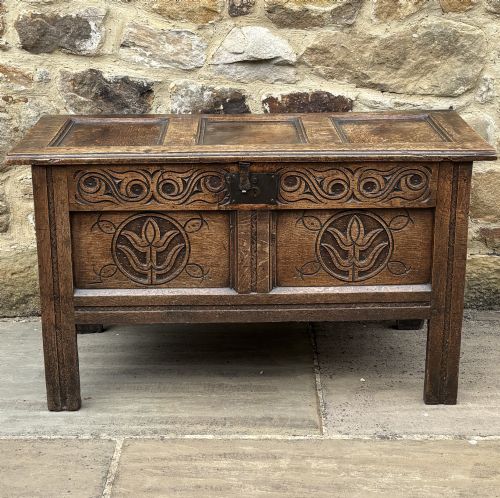
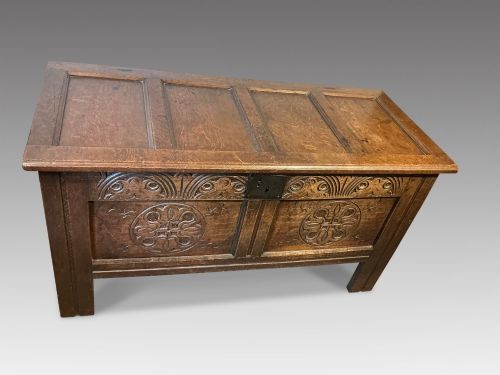
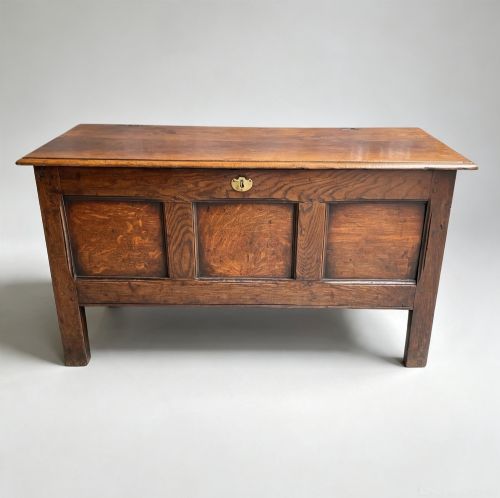
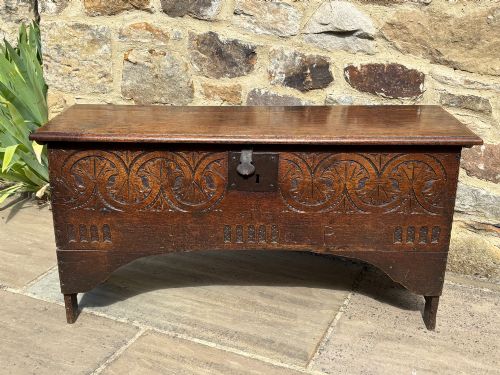
A seventeenth century oak trunk is a heavy storage piece that appears in formats such as coffers, blanket boxes, sword chests, and mule chests. These items date primarily from the seventeenth century and Jacobean, Charles I, or Charles II periods, though occasional later interpretations and regional pieces also emerge.
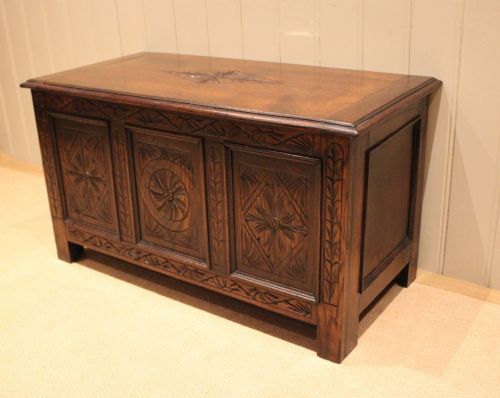
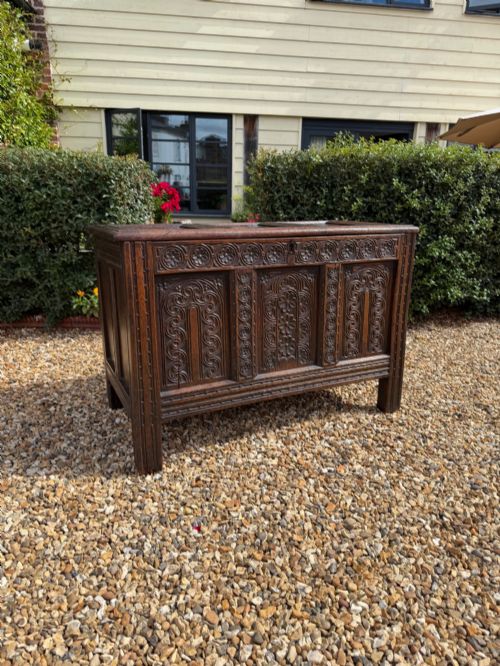
Most examples function as panelled storage coffers, sometimes featuring carved decoration, linen fold panels, or arcaded fronts. Regional English variations originate from locations such as Dorset, Wales, Devon, and the Lake District, showing local design traits in their construction.
While many listings belong strictly to the seventeenth century, buyers will also encounter later pieces from the eighteenth and nineteenth centuries, alongside twentieth-century reproductions, all built to serve the same utilitarian storage role.
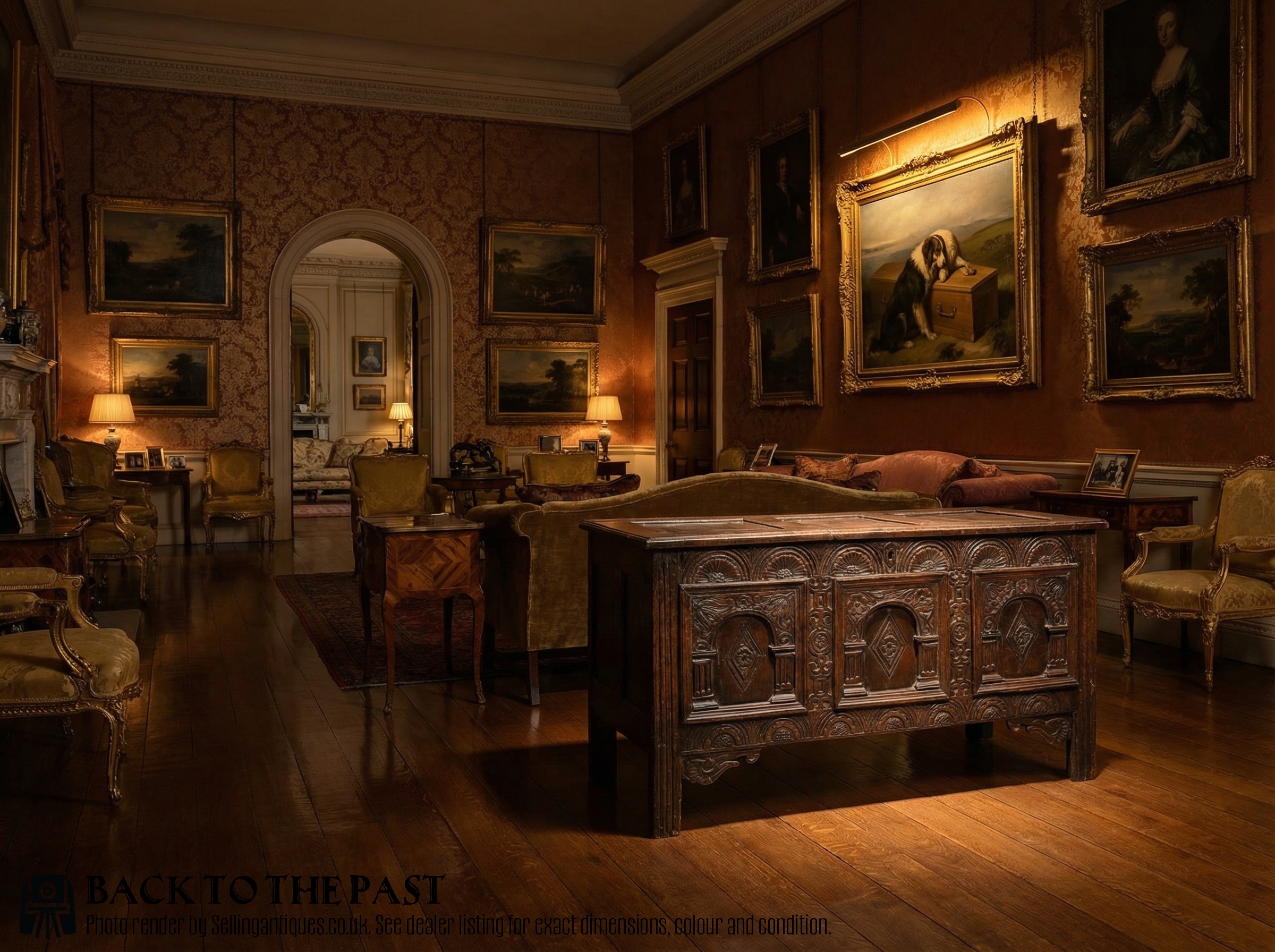
Materials and Construction
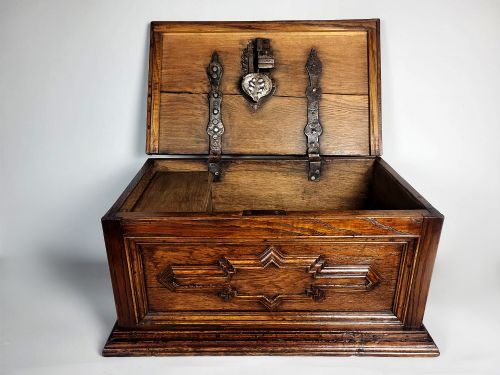
These pieces rely on solid oak timbers, joined using traditional framing techniques and held together with wooden pegs rather than modern fasteners. Iron, brass, wrought iron, and steel appear in hinges, lock plates, and complex original locking mechanisms.
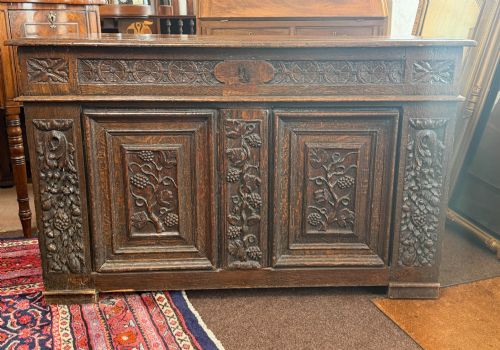
Surface decoration involves hand carving, panel moulding, and occasional wood inlay or ebonised wood details. Many examples display panelled fronts with architectural arcading or geometric patterns cut directly into the dense wood.
Listings feature oak, iron, brass, wrought iron, steel, and ebonised wood across seventeenth-century and later periods.
Design and Preservation
Quality separates by the depth and clarity of the original hand carving, the presence of regional architectural details like arcading, and the survival of secondary materials such as iron locks and hinges. Pieces retaining their structural integrity and untouched timber surfaces hold greater interest.
Proportion and scale also define the hierarchy, with smaller proportions or specialised forms like sword chests and dated boxes commanding distinct attention compared to standard utility chests.
Thomas Dennis
The Seventeenth Century Oak Trunk Glossary
- Coffer
- A heavy wooden chest used for domestic storage, often fitted with a hinged lid. These form the primary category within seventeenth century oak trunk selections.
- Arcaded
- A decorative motif carved into wood panels to resemble a series of arches supported by columns. This style frequently appears on pieces from the Jacobean and Charles periods.
- Mule chest
- A storage chest featuring one or more drawers beneath the main lift-up compartment. They combine the traditional coffer box with drawer storage.
- Linen fold
- A type of panel carving that mimics the appearance of folded fabric or linen cloth. This technique is typical of earlier vernacular woodwork styles.
- Sword chest
- A long, narrow storage box specifically designed to hold long weapons. These pieces have distinct proportions compared to standard blanket boxes.
Seventeenth Century Oak Trunk: Frequently Asked Questions
What did people store inside them?
Households utilised these heavy wooden chests primarily for storing textiles, woollens, and valuable bedding. They kept domestic goods safe from dampness and pests in rooms before fitted wardrobes existed.
Specialised variants like sword chests held specific armaments, while mule chests accommodated both folded garments in the top compartment and smaller items in the lower drawers.
How do I identify a Jacobean piece?
Jacobean and seventeenth-century examples typically display heavy oak construction with pegged joinery and hand-cut panel details. Look for architectural elements such as carved arcading, geometric mouldings, and distinct tool marks on the interior timber.
Later nineteenth-century interpretations or 1910 reproductions often lack the deep surface oxidation and irregular hand-chamfered edges found on authentic period surfaces.
Where were regional chests made?
English regional variations display distinct local craftsmanship, with surviving pieces originating from areas like Dorset, the Gower Peninsula in Wales, and Lakeland workshops. Specific regional characteristics show up in the carving styles and timber selection.
Certain pieces bear direct ties to known regional centres, such as the workshops associated with Exeter cabinet makers from the seventeenth century.
How should I care for old oak?
Keep wooden storage pieces away from direct heat sources and sudden humidity shifts to prevent the dry oak boards from splitting. Regular gentle dusting preserves the natural finish of the timber without stripping surface patination.
Apply traditional beeswax sparingly if the wood appears dry, allowing the wax to absorb fully before buffing the surface lightly.