


Carved Oak Kist
A carved oak kist is a sturdy timber storage chest built to last centuries, prized for its honest craft and rich grain.
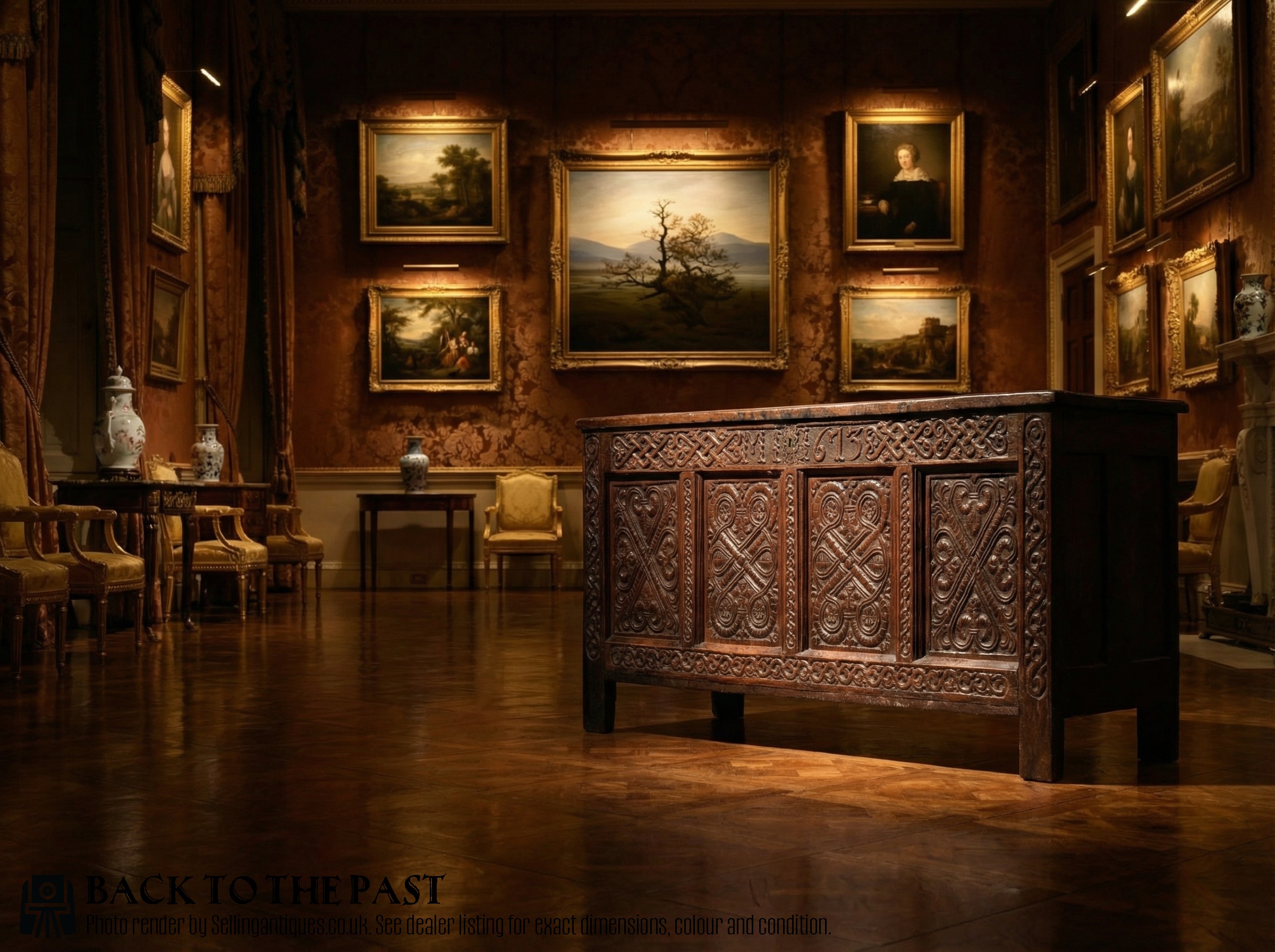
Carved Oak Kist
When you search for a carved oak kist, you encounter robust domestic storage pieces originating primarily from the seventeenth and eighteenth centuries. These items serve as functional furniture that has survived generations of household use, ranging from simple country pieces to elaborately decorated receptacles.
The versions most frequently met on this page span the Jacobean, Georgian, and Queen Anne eras, displaying regional characteristics from English and Welsh workshops. Many take the form of coffers, blanket chests, or mule chests featuring internal candle boxes and lower drawers.
Makers constructed these chests to hold textiles, valuables, and documents securely within the home. The resulting forms demonstrate a direct connection to early British cabinet making traditions, utilising thick timber boards joined by peg and panel methods.

How they were made
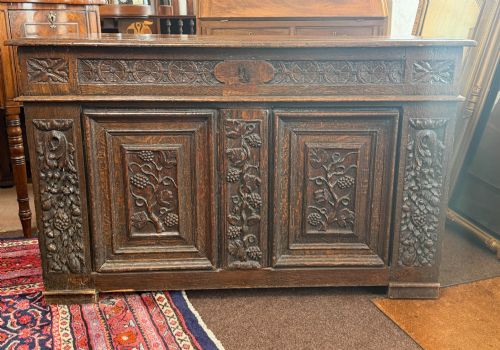
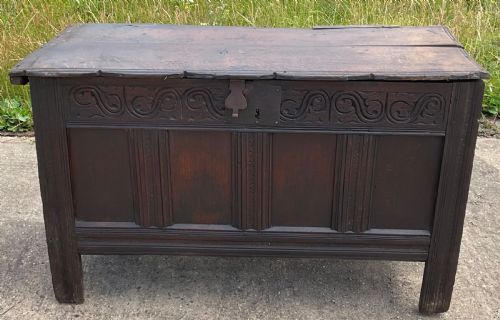
Joiners built these pieces using solid oak boards, frequently reinforced with iron hinges, locks, and corner braces. Wood inlay and deep chisel carving supplied the decorative vocabulary across the panels and rails.
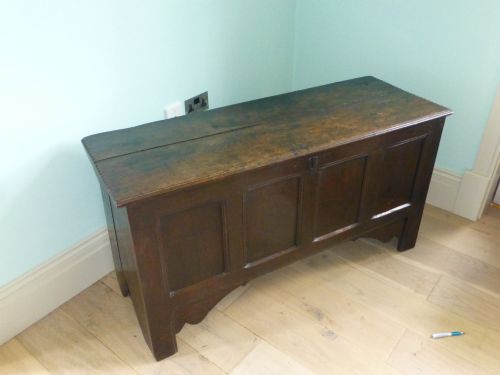
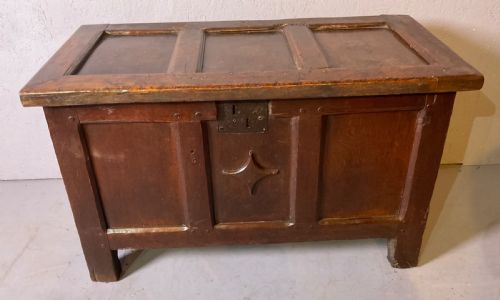
Construction relied on traditional frame and panel techniques that allowed the solid timber to expand and contract with seasonal humidity changes. Pegs secured the joints tightly without relying on modern metal screws or synthetic glues.
Many seventeenth-century chests still show faint scratch marks inside the lid where candles once guttered during hurried evening searches for winter blankets.
What varies in quality
The depth and crispness of the original carving distinguish superior examples from plain utility pieces. Crisp arcade work, well-defined motifs, and untouched surface patination separate finer workshop output from later alterations.
Proportion and scale also dictate distinction, with smaller country pieces and those retaining internal candle boxes holding particular interest. The integrity of the timber, minimal board shrinkage, and surviving original hardware elevate an individual chest above heavily restored counterparts.
The Carved Oak Kist Glossary
- Kist
- A traditional regional term for a chest or trunk used for domestic storage. It usually denotes pieces originating from northern England, Scotland, or Wales.
- Coffer
- A heavy wooden chest traditionally used for holding valuables, money, or precious textiles. These pieces often feature hinged lids and sturdy boarded or panelled construction.
- Mule chest
- A storage chest that incorporates one or more drawers beneath the main lift-top compartment. This form bridges the evolution between the traditional coffer and the modern chest of drawers.
- Jacobean
- The style of English architecture and decorative arts prevalent during the reign of James I. It is characterised by solid proportions, geometric mouldings, and strapwork carving.
- Arcade
- A decorative row of arches supported by piers or columns, frequently carved onto seventeenth-century panel fronts. This architectural motif adds rhythm and depth to flat wooden surfaces.
Carved Oak Kist: Frequently Asked Questions
What is a carved oak kist used for?
These chests originally served to store household linens, valuable woollens, and important family documents away from damp floors. Their heavy lids and sturdy locks provided security in early domestic settings.
Today, they function well as living room coffee tables, blanket boxes at the foot of a bed, or hallway storage. Their robust construction allows them to endure daily domestic use while displaying historic character.
How should I care for an antique oak chest?
Keep the timber away from direct heat sources, radiators, and strong sunlight to prevent the oak boards from splitting or warping. Maintain a stable indoor humidity where possible to preserve the historic wood.
Apply a traditional beeswax polish occasionally to nourish the dry grain and protect the surface patination. Avoid modern silicone sprays or harsh chemical cleaners that can damage the historic finish.
What is a mule chest?
A mule chest is a hybrid furniture form that combines a traditional lift-top storage compartment with one or more drawers built into the base. This design allowed easier access to frequently used items without lifting the heavy lid.
Cabinet makers developed this form during the late seventeenth and eighteenth centuries as domestic storage needs expanded. They remain popular for their practical combination of trunk space and drawer organisation.