


Dated Oak Chest
A dated oak chest carries the tangible marks of a specific year, anchoring centuries of domestic history in solid timber.
Dated Oak Chest
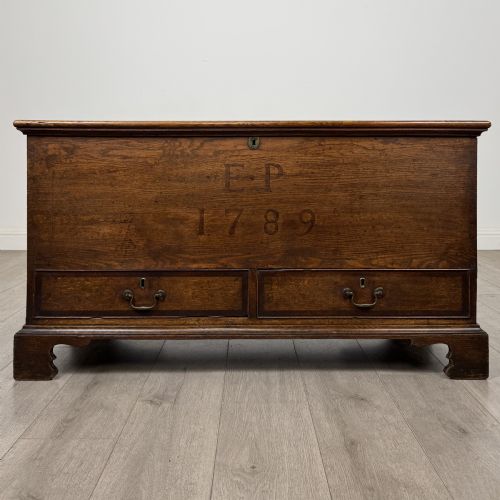
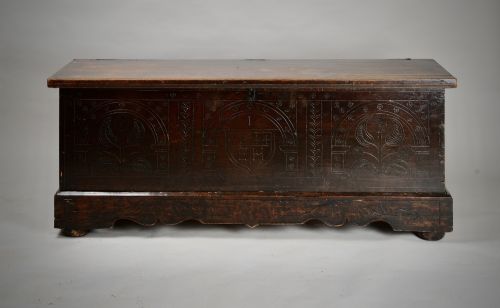
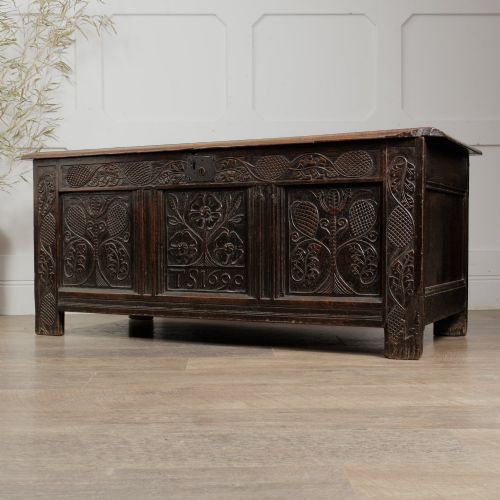
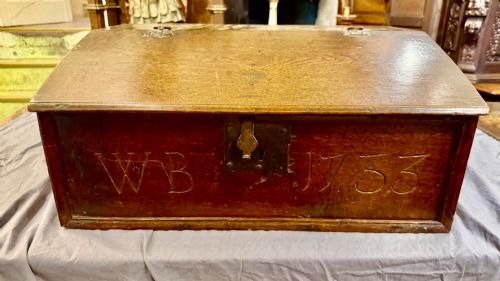
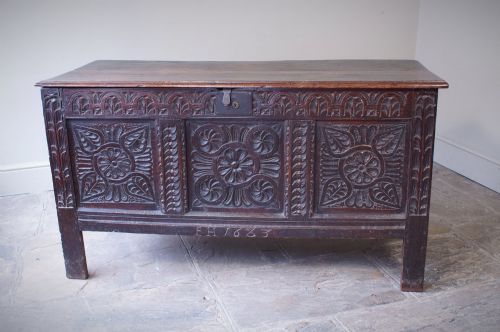
A dated oak chest is a functional receptacle bearing carved, inlaid, or painted inscriptions of specific years, initials, or names. Buyers searching for a dated oak chest seek tangible historical benchmarks, often encountering sturdy coffers, mule chests, and bible boxes spanning the sixteenth through the nineteenth centuries.
The pieces appearing here range from late sixteenth-century Elizabethan examples to twentieth-century revival works. Storage forms dominate the selection, including joined coffers from regional English traditions such as Lancashire, Westmorland, and Wales, alongside smaller document boxes and larger chest-on-chest drawers.
Regional variations shape the selection significantly, with distinct craftsmanship found in Welsh, Lakeland, and continental Westphalian pieces. Buyers frequently encounter domestic storage solutions that served families for generations before entering the antique market.
Materials and construction methods
Construction relies heavily on sturdy oak timbers, joined using traditional pegged mortise and tenon joints that provide structural integrity without modern adhesives. Workshops utilised local hardwoods alongside supplementary materials such as iron hinges, brass lockplates, and occasional mixed inlay woods to embellish the primary carcass.
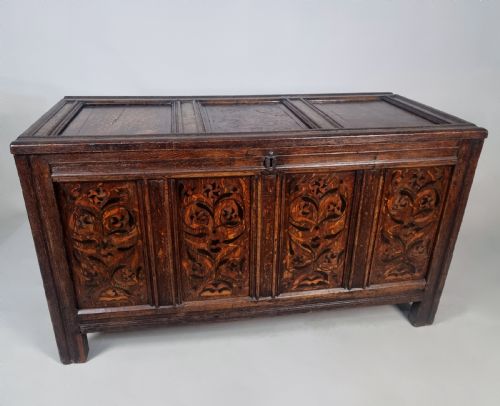
Surface ornamentation combined hand-carving with incised lettering, utilising gouges and chisels to carve dates, initials, and geometric or mythical beast motifs directly into the timber. Ironbound reinforcements and wrought iron hardware offered both security and structural support to heavy storage furniture intended for daily household use.
Listings feature oak as the primary material, supplemented by iron, brass, and mixed inlay woods across periods spanning the sixteenth to the twentieth century.
Assessing quality and authenticity
Quality rests upon the crispness of the original hand-carved inscriptions and the integrity of the primary timber construction. Pieces retain greater merit when the dated elements, initials, and structural panels remain undisturbed by later alterations or heavy surface restoration.
The sophistication of the joinery and the survival of original iron or brass hardware distinguish superior examples from standard utility pieces. Regional vernacular nuances, such as intricate panel carving or integrated drawers in mule chests, elevate the interest and historical standing of an individual chest.
Heals of London
The Dated Oak Chest Glossary
- Coffer
- A large wooden chest used for storing valuables, linen, or documents. These sturdy receptacles typically feature hinged lids and front panels ornamented with carving or panel work.
- Mule chest
- A storage chest featuring one or more drawers at the base beneath the main compartment. This form bridges the traditional coffer and the modern chest of drawers.
- Bible box
- A small tabletop or desk box historically utilised for storing sacred texts and writing materials. Many examples feature sloping lids and dated inscriptions associated with domestic ownership.
- Joined oak
- Furniture constructed using interlocking framework of mortise and tenon joints secured with wooden pegs. This method superseded board-built construction and defined seventeenth-century cabinet making.
- Cassone
- An Italian-style large painted or carved chest often adapted in terminology for decorative storage trunks. These pieces serve as striking focal points in traditional interiors.
Dated Oak Chest: Frequently Asked Questions
What were dated oak chests used for?
These pieces served as secure domestic storage for valuable household textiles, family silver, important documents, and personal clothing. In many households, they functioned as marriage chests commissioned to mark matrimonial alliances.
Over generations, their primary role shifted from utilitarian storage to treasured family heirlooms displaying significant genealogical markers and commemorative dates.
How do I live with an oak chest?
Position your chest away from direct heat sources and strong sunlight to prevent the timber from drying out and splitting. Maintain a stable room temperature to protect the antique wood and historic ironwork.
Utilise the surface for displaying lamps or books while keeping the interior clear for lightweight storage, ensuring the lid opens freely without obstruction.
How can I tell the period of a chest?
Examine the construction joints, timber grain, and style of carving to determine the era of manufacture. Seventeenth-century examples often display pegged mortise and tenon framing with geometric panels, while later eighteenth-century pieces frequently incorporate drawers and softer mouldings.
Inscribed dates and initials provide a direct chronological anchor, though collectors must compare the lettering style and hardware against known period exemplars to confirm authenticity.
What is a mule chest?
A mule chest is a hybrid storage form that combines the deep trunk of a traditional coffer with one or more functional drawers built into the base. This design evolved to provide easier access to stored clothing without requiring items to be lifted entirely out from the top.
They frequently feature carved panels and inscribed dates that record the commissioning year or the initials of the original owners.