






Early English Oak Desk
An early english oak desk offers rugged utility and rich grain, bringing centuries of history straight into a modern study.
Early English Oak Desk
An early english oak desk encompasses sturdy writing pieces and receptacles designed for storage and correspondence, dating from the seventeenth century through the Georgian era. Buyers seeking this phrase typically encounter robust boxes, lowboys, and bureau forms constructed from dark, figured timber.
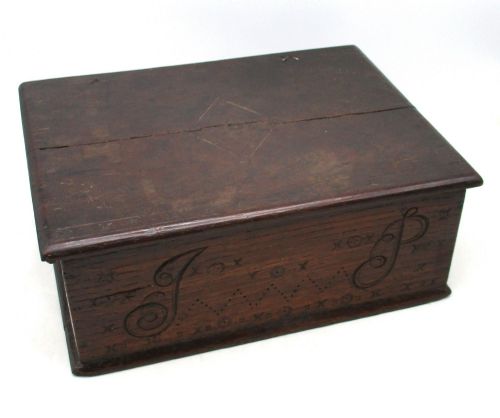
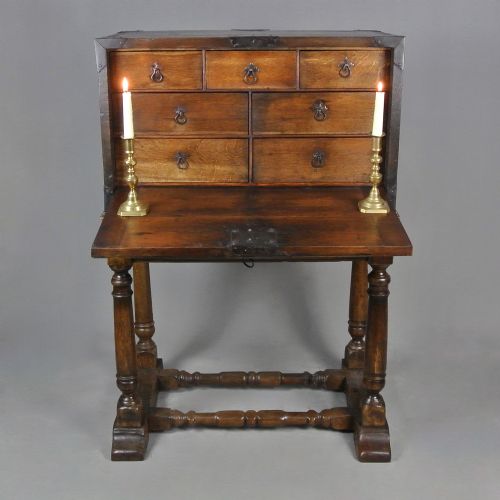
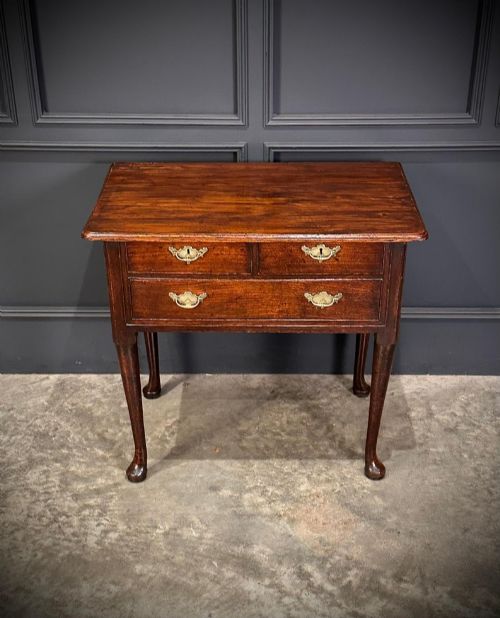
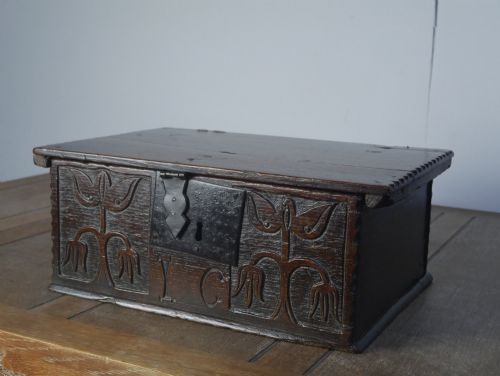
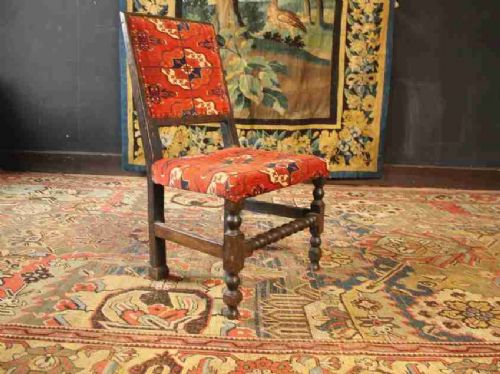
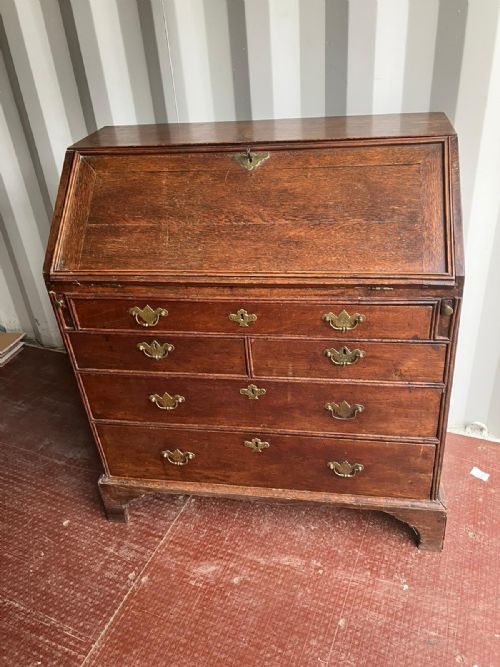
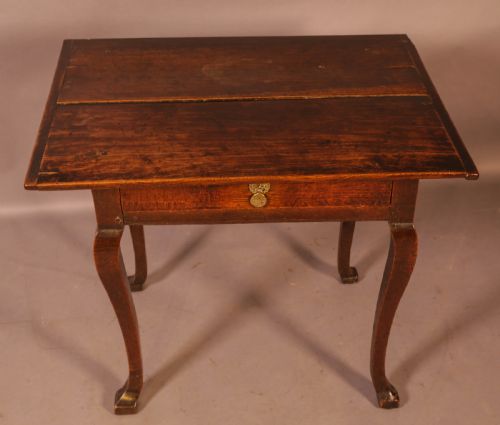
The pieces appearing on this page span several centuries, including seventeenth-century strong boxes and writing boxes alongside eighteenth-century lowboys and early bureaus. Provincial examples and country items frequently feature alongside more formal styles such as Jacobean and Queen Anne.
While tables and chairs occasionally mingle with the writing furniture, the core of the selection remains centred on compact desks, storage boxes, and bureaus. These utilitarian objects reflect the changing domestic habits of early households requiring secure places for documents.
Construction and materials
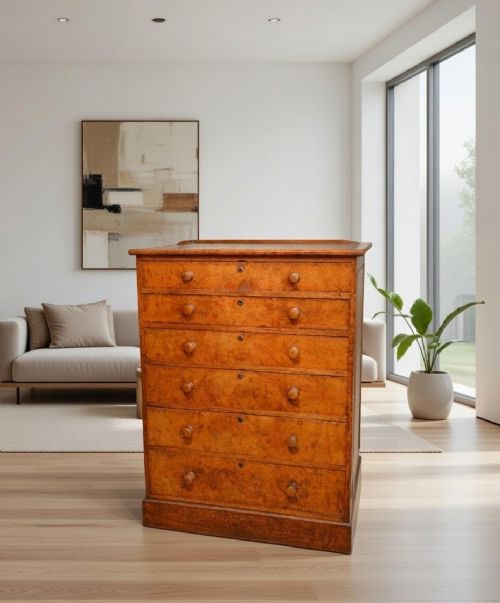
Makers utilised solid oak timber as the primary structural material, frequently complemented by secondary woods and decorative veneers like pollard oak. Iron and steel hardware, including complex original locks, provided both structural reinforcement and security.
Traditional joinery techniques governed the assembly of these boxes and desks, relying on pegged joints and hand-carved panels rather than modern adhesives. Brass fittings and textile linings such as velvet appear on select items, adding refined detail to the robust timber construction.
Object forms span side tables, document boxes, strong boxes, lowboys, armchairs, and bureau desks.
Assessing quality
Quality rests upon the integrity of the timber, the crispness of any hand-carved ornamentation, and the survival of original working hardware such as steel locks. Superior pieces retain their authentic surface patination and uncompromised structural proportions.
Distinctions emerge between provincial vernacular work and pieces executed by more accomplished metropolitan workshops. The presence of original mounts, unaltered surfaces, and integrated stands elevates the standing of any bureau or lowboy.
Early Heals of London
The Early English Oak Desk Glossary
- Lowboy
- A small side table equipped with one or more drawers, commonly utilised as a dressing table or writing surface during the eighteenth century.
- Bureau
- A sloping writing cabinet enclosing a fitted interior of small drawers and pigeonholes above a set of larger drawers.
- Safe Box
- A heavy storage chest reinforced with iron straps and equipped with a complex internal steel lock for securing valuables.
- Pollard Oak
- Timber taken from trees that have been pollarded, producing a dense, highly figured grain prized for decorative cabinet work.
Early English Oak Desk: Frequently Asked Questions
How do I date an early oak desk?
Dating relies upon examining construction methods, tool marks, and the style of any carved ornamentation. Seventeenth-century pieces typically display pegged frame-and-panel construction and hand-wrought iron hardware.
Later pieces from the eighteenth century introduce refined drawer linings and dovetailed joints. Comparing the form against dated examples helps establish the correct period.
Were these desks used for writing?
Many early pieces designated as desks were actually portable writing boxes or storage chests placed upon tables for use. Dedicated writing furniture like the bureau emerged more fully in the late seventeenth and early eighteenth centuries.
Owners sat at these compact surfaces to manage household accounts and compose letters by candlelight.
How should I care for antique oak?
Maintain a stable indoor climate away from direct sunlight and strong heat sources to prevent the solid oak from splitting. Apply traditional beeswax sparingly to nourish the wood and preserve the historic surface sheen.
Avoid modern liquid polishes that can penetrate open timber pores and damage the historic patination.
What is the difference between a lowboy and a desk?
A lowboy is a low table with drawers primarily designed as a dressing or side table, though it often doubled as a writing surface. A desk or bureau incorporates specific compartments, slots, and a dedicated writing flap or slope.
Both forms utilise heavy oak construction in early vernacular English pieces.