
Inlay Mahogany Server
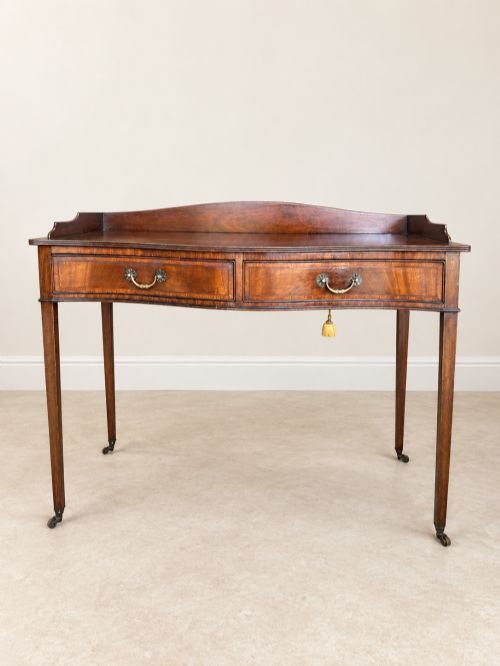
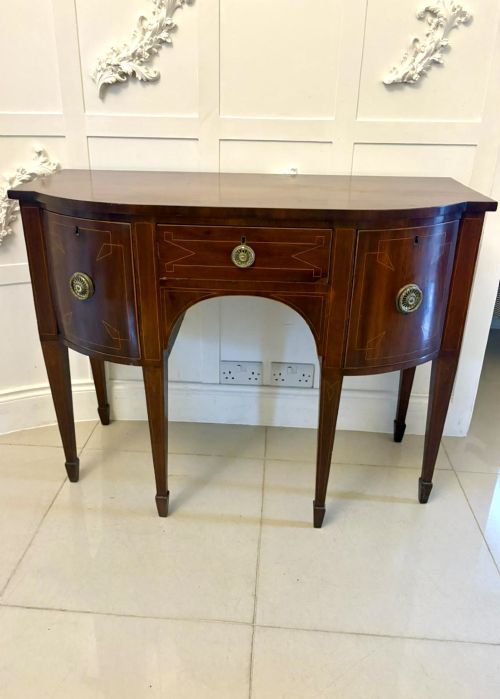
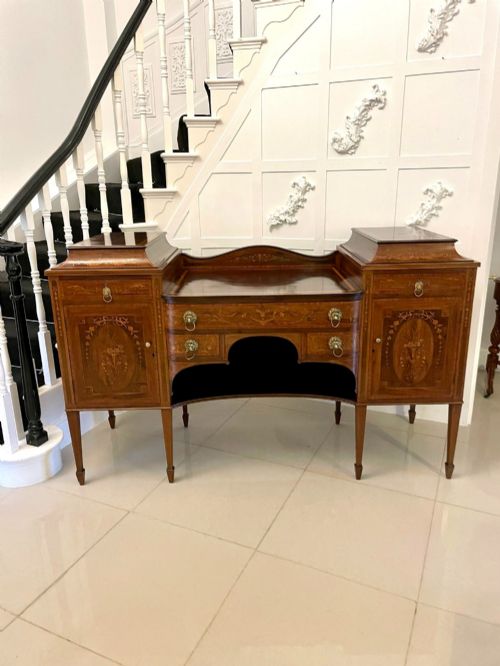
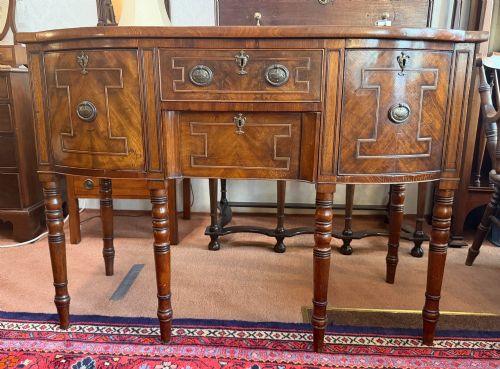
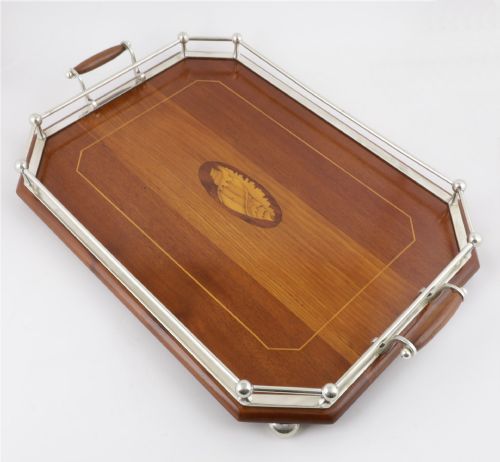
An inlay mahogany server brings refined dining room utility, combining rich timber with delicate contrasting wood details.
Inlay Mahogany Server
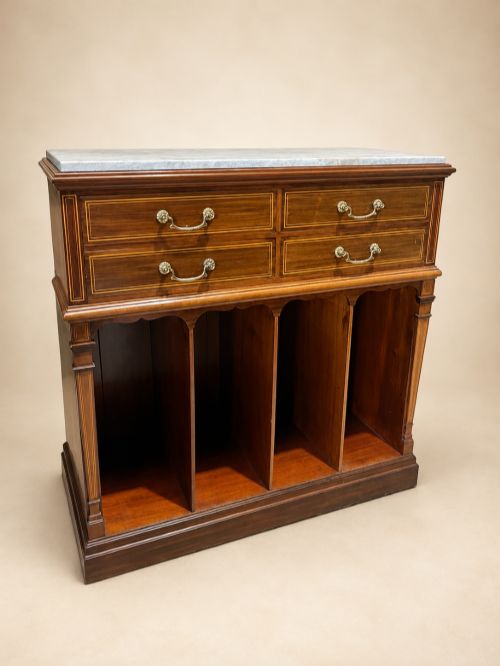
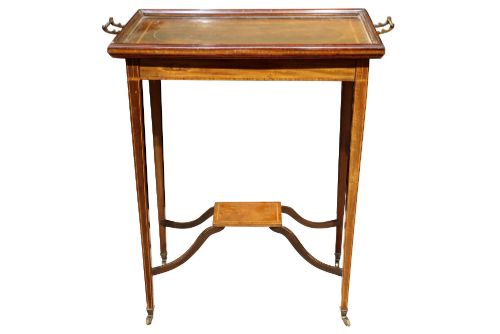
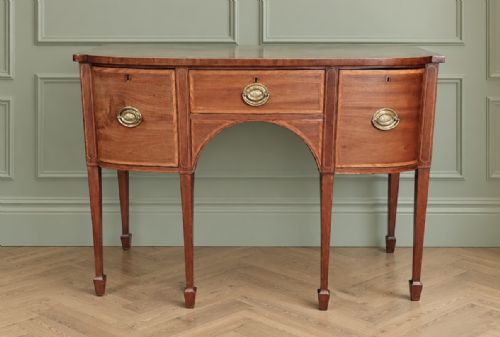
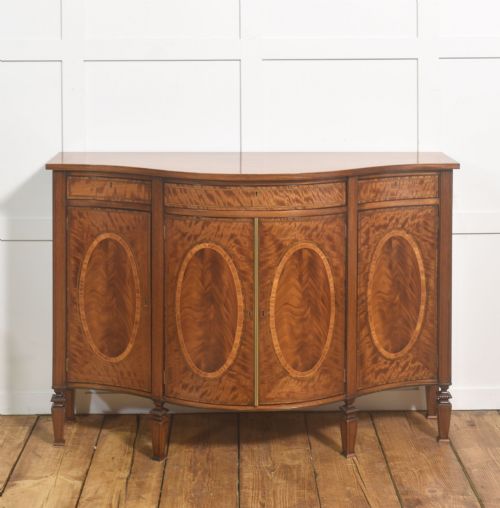
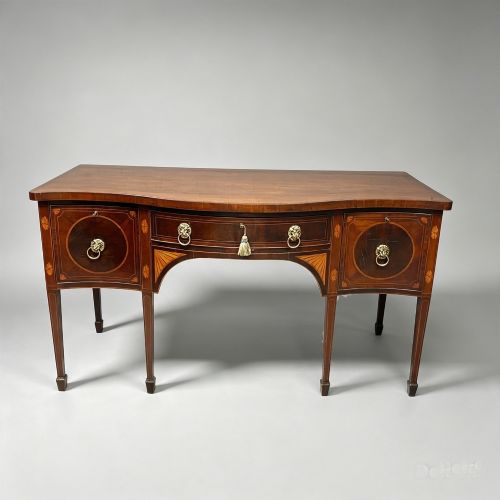
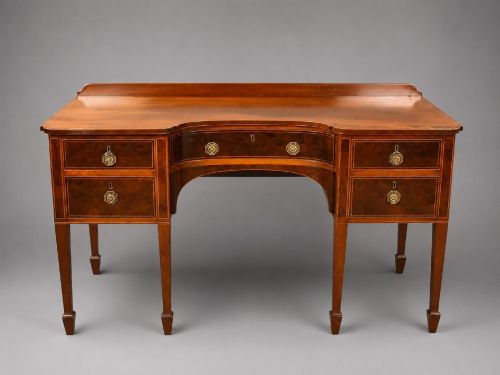
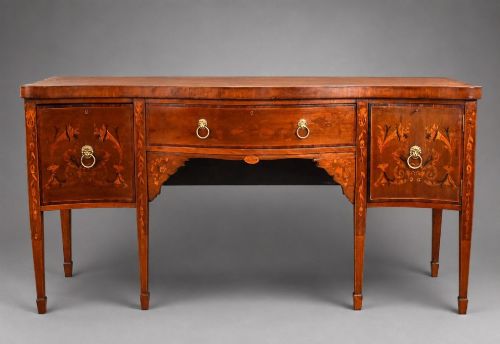
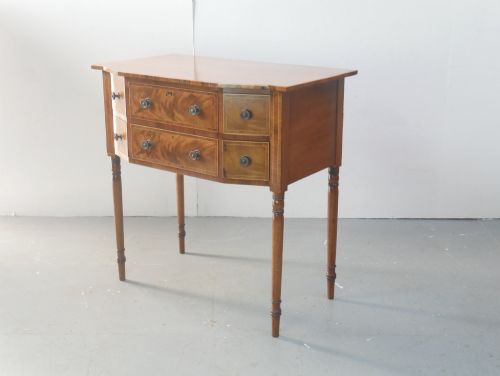
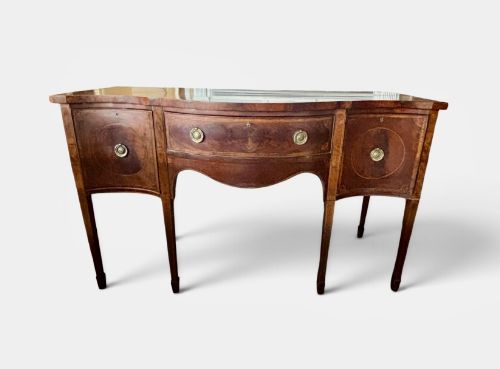
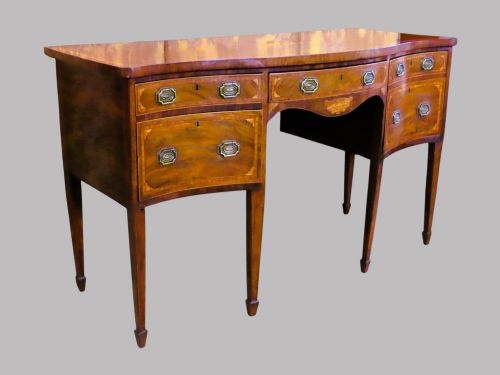
An inlay mahogany server spans formal dining furniture formats including sideboards, side cabinets, and serving tables from Georgian, Regency, and Edwardian periods. Buyers searching for an inlay mahogany server encounter case furniture designed for dining spaces, featuring rectilinear, bow-front, and serpentine shapes.
The selection ranges from George III and Regency originals to later Sheraton Revival pieces from the 19th and early 20th centuries. Sideboards and sideboards with buffet or server formats dominate the selection, often incorporating drawers and cupboards for dining storage.
Materials and construction
Cabinetmakers built these pieces using solid mahogany and flame mahogany veneers over secondary timbers, selecting stock for deep grain figure. Construction involved dovetailed drawer boxes and mortise and tenon framing for structural stability.
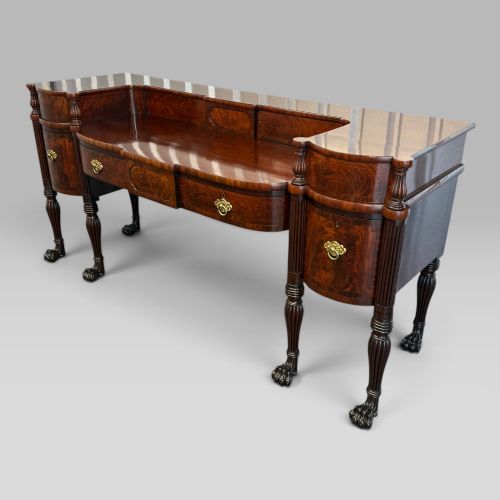
Surface enrichment relied on contrasting timbers such as satinwood and boxwood for stringing, banding, and marquetry motifs. Brass hardware, including handles and sometimes lion paw feet, completed the structural assembly.
Several servers stand proudly upon carved lion paw feet, ready to pounce on the evening roast.
Evaluating craftsmanship and proportion
Quality reveals itself in the choice of mahogany veneers and the precision of the contrasting inlay work. Crisp execution of boxwood and satinwood stringing distinguishes finer examples from simpler production.
Proportion and form dictate the standing of a piece, particularly in serpentine and bow-front profiles where balanced curves require advanced cabinetmaking skill. The integration of original brass hardware and well-fitted drawer construction further separates tiers of execution.
Hewetsons London
The Inlay Mahogany Server Glossary
- Inlay
- The technique of inserting pieces of contrasting wood into a recessed surface to form a decorative pattern. This defines the linear banding and geometric motifs seen on these servers.
- Flame mahogany
- A highly figured wood veneer displaying a flame-like grain pattern created by slicing through boughs or branch junctions. It appears frequently on drawer fronts and cabinet doors of better pieces.
- Serpentine
- A front profile characterised by a convex centre flanked by concave curves, or vice versa. This sophisticated shape demands precise carpentry.
- Crossbanding
- A border veneer applied around the perimeter of a top or drawer front where the grain runs perpendicular to the central panel. It provides a neat visual frame to the mahogany field.
- Marquetry
- Elaborate pictorial or geometric inlay work assembled from various tinted woods and veneers. It appears on select sideboard and cabinet surfaces.
Inlay Mahogany Server: Frequently Asked Questions
How do I date an inlay mahogany server?
Dating relies on assessing construction methods, timber choice, and stylistic markers such as leg shapes and brass hardware. Georgian and Regency pieces display hand-cut dovetails and specific proportions, whereas Edwardian Sheraton Revival examples show late-nineteenth or early-twentieth-century manufacturing traits.
Secondary woods and backboards provide additional clues regarding age. Comparing the cabinet's hardware and inlay patterns against established period designs helps narrow the decade of manufacture.
Where should I place a server in a room?
These servers fit naturally against dining room walls to function as serving stations or storage units for tableware. Their shallow depths, particularly in bow-front and serpentine formats, allow them to occupy hallways and reception rooms without obstructing walkways.
Positioning the piece away from direct heat sources and strong sunlight protects the mahogany finish and delicate satinwood or boxwood inlays. Adequate clearance ensures cupboard doors and drawers open fully during daily use.
What is the difference between a server and a sideboard?
Sideboards generally offer larger storage capacities with multiple deep drawers and cupboards designed for holding heavy dining service items. Servers and buffet formats often present slightly lighter proportions, sometimes functioning as smaller side tables or serving surfaces.
Both forms utilise mahogany and share similar inlay vocabularies, but the term server often denotes a slightly more compact footprint suited to serving food.
How do I care for antique mahogany and inlay?
Maintenance involves applying appropriate beeswax polish sparingly to nourish the timber and maintain a soft sheen. Avoid silicone-based sprays and keep the surface free from abrasive materials that could scratch the delicate boxwood or satinwood stringing.
Maintaining stable indoor humidity prevents the mahogany veneers and inlays from lifting or cracking over time. Gentle dusting with a soft, dry cloth preserves the original polish and surface patina.