


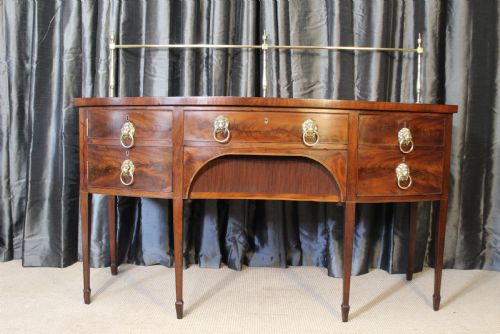
Brass Rail Sideboard
A brass rail sideboard brings together timber and metal to anchor a dining room with practical surface area and structural elegance.
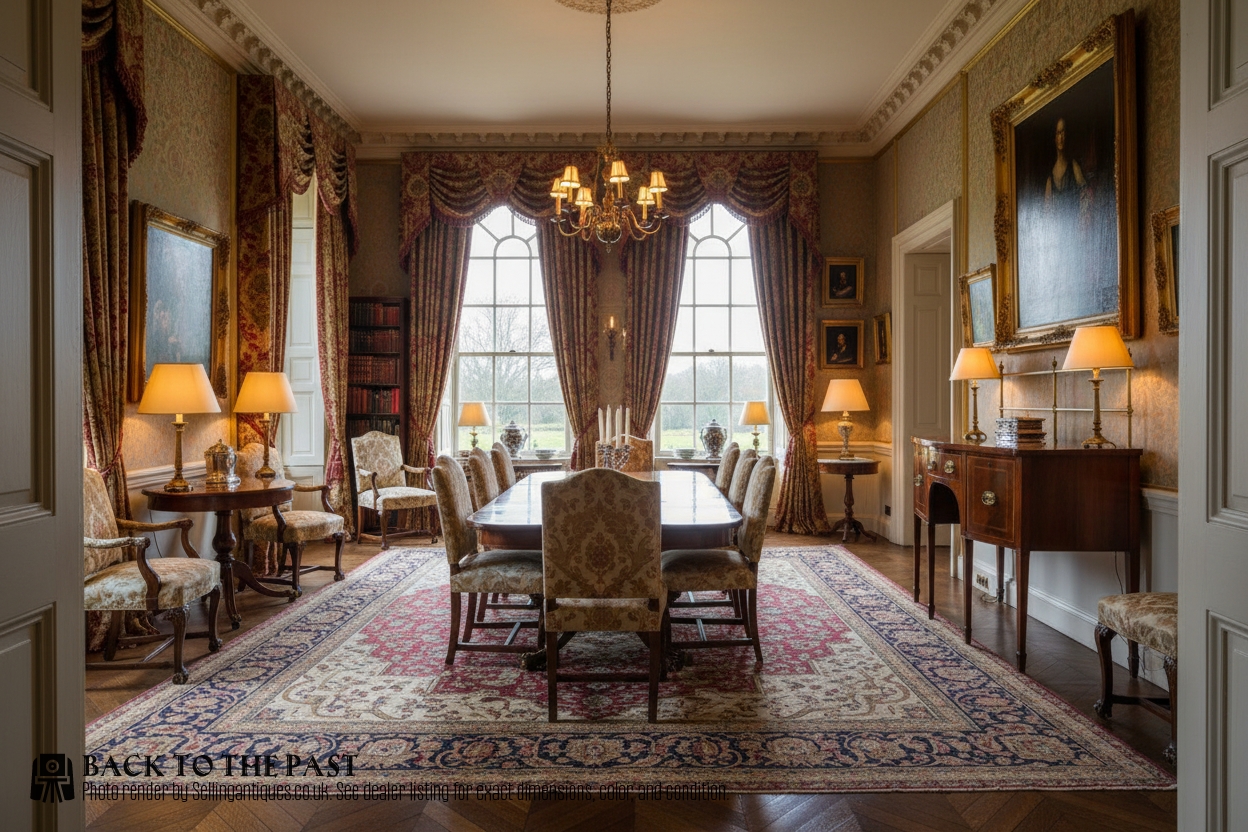
What a brass rail sideboard is
A brass rail sideboard combines a timber serving surface with a gallery or rail positioned along the back edge. These pieces emerge in forms from the Georgian and Victorian eras, including bowfront and serpentine shapes.
The version most commonly met on this page is constructed from mahogany, occasionally enhanced with satinwood or boxwood inlay. These items function as servers and storage furniture within dining spaces.
How they were made
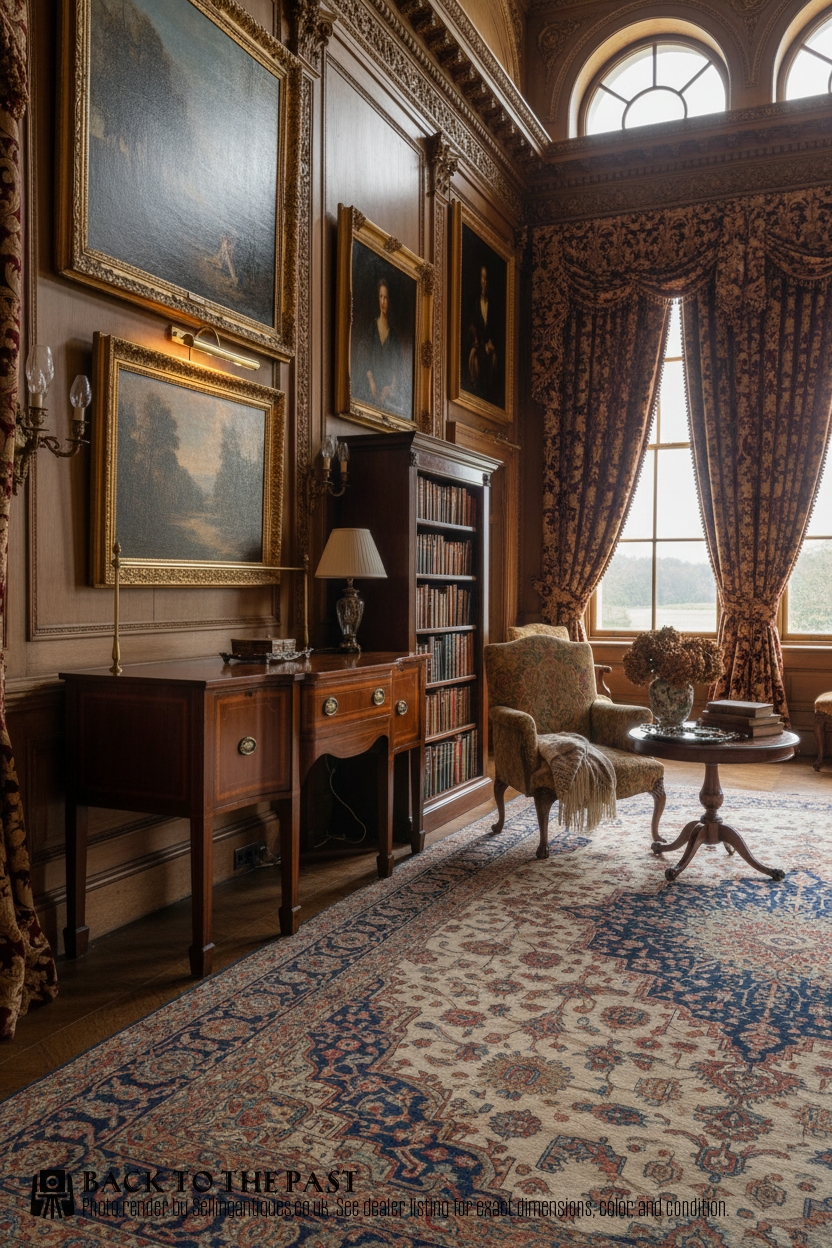
Craftsmen utilised solid mahogany and veneers to build the main body of each sideboard, applying boxwood and satinwood inlay to create decorative border details on the drawer fronts and tops. The timber surfaces received hand-polished finishes to highlight the natural grain patterns.
The brass rail components were cast or shaped and secured to the rear of the timber top to form the gallery. These metal elements complement the darker tones of the wood and complete the structural design.
Retail Price Guide 2026
Typical UK retail prices for brass rail sideboard, calculated from the Sellingantiques database of over a million retail prices indexed since 2003. This retail price guide relies exclusively on Sellingantiques data; no external sources or auction records are used, so the figures do not describe the wider market.
Listings feature mahogany as the primary wood, paired with brass rails across Georgian and Victorian periods.
What varies in quality
The distinction between standard examples and the finest pieces rests upon the precision of the timber selection and the intricacy of the inlay work. Superior items display carefully matched mahogany grain and fine stringing rather than plain surfaces.
The execution of the brass rail and its fixings also separates the tiers of production. Heavier, well-cast brass galleries demonstrate a higher standard of manufacture than lighter, plain alternatives.
Robson and Sons
The Brass Rail Sideboard Glossary
- Bowfront
- A curved cabinet front that swells outward in the centre, common in late eighteenth-century design. This shape softens the profile of a room.
- Serpentine
- A front edge shaped with a concave centre flanked by convex curves, creating a wave-like appearance. It requires skilled carpentry to execute.
- Inlay
- A technique where contrasting woods such as boxwood or satinwood are inserted into recesses in the primary timber. This adds linear detail and visual contrast.
- Gallery
- A raised rail or rim fitted along the back or sides of a piece of furniture to keep items from sliding off. On these sideboards, it typically incorporates brass.
Frequently Asked Questions
What was the brass rail used for?
The brass rail served to hold curtains or display plates above the serving surface during meals in formal dining rooms.
It prevented serving dishes from slipping backward while adding a decorative metal accent to the timber body.
How do I date a sideboard?
Dating relies on identifying timber types, construction methods, and stylistic cues such as inlay patterns and leg shapes.
Georgian and Victorian periods each employ distinct proportions and decorative vocabulary that help determine the era of manufacture.
Where should I place a sideboard?
These pieces fit naturally against a dining room wall where they can function as serving tables during meals.
They also serve in hallways or living spaces to provide surface display area and concealed storage.
How do I care for the mahogany?
Maintenance involves applying appropriate furniture wax to nourish the timber and protect the polished surface from moisture.
Avoiding direct sunlight prevents the mahogany from fading unevenly over time.