
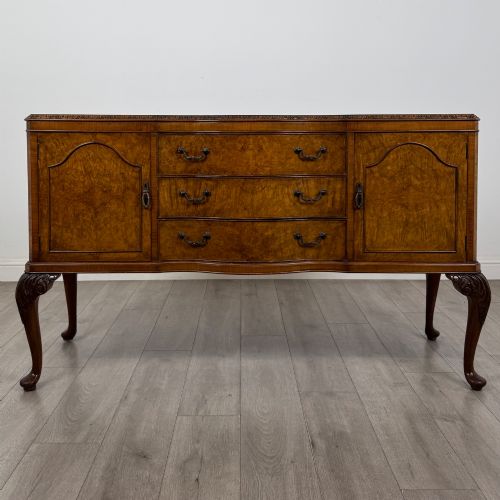
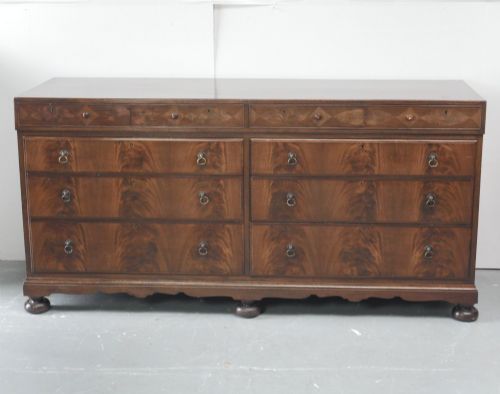
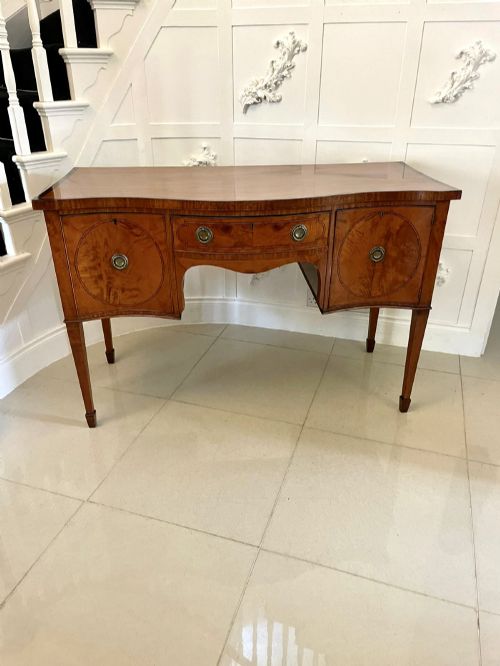
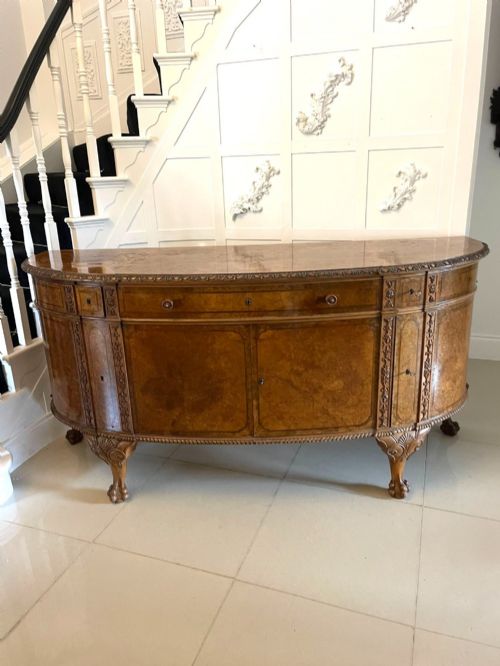
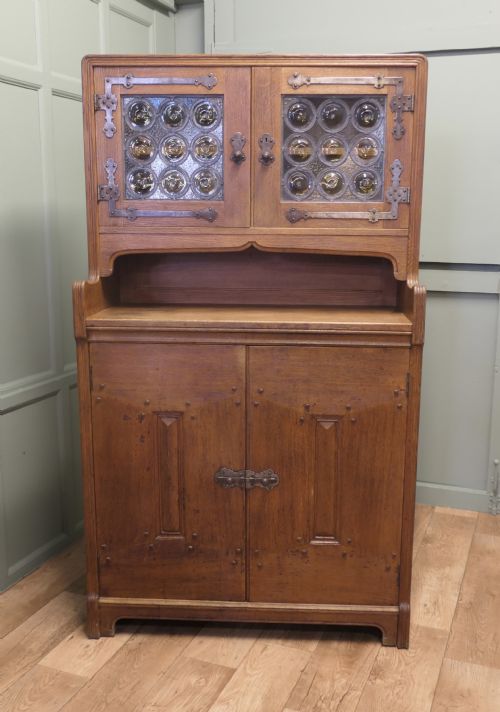
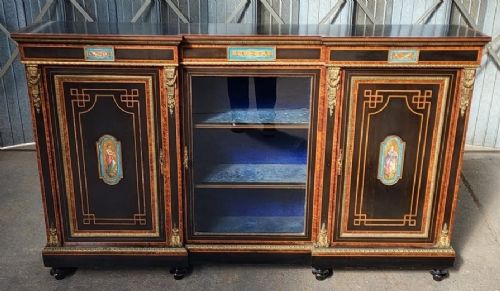
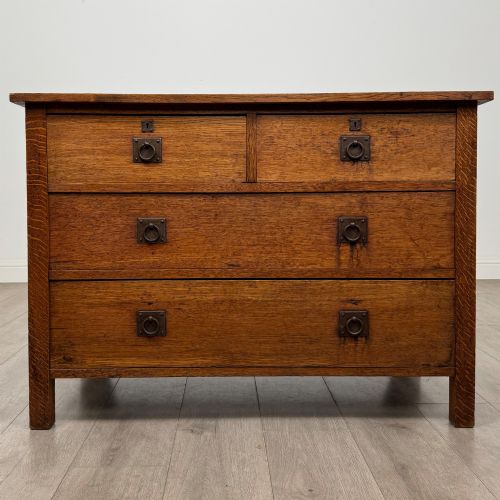
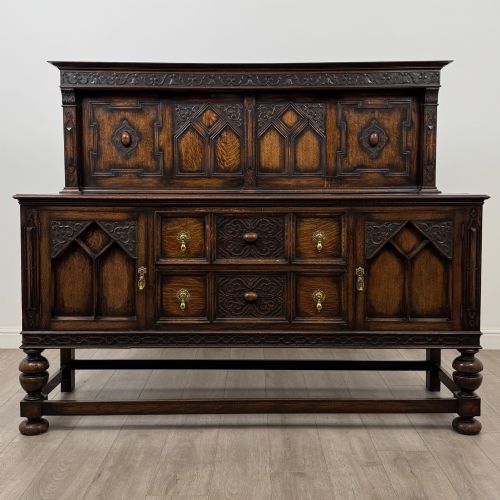
Edwardian Style Sideboard
When you want an Edwardian style sideboard, you are looking for formal dining room storage that balances refined cabinetwork with practical display space.
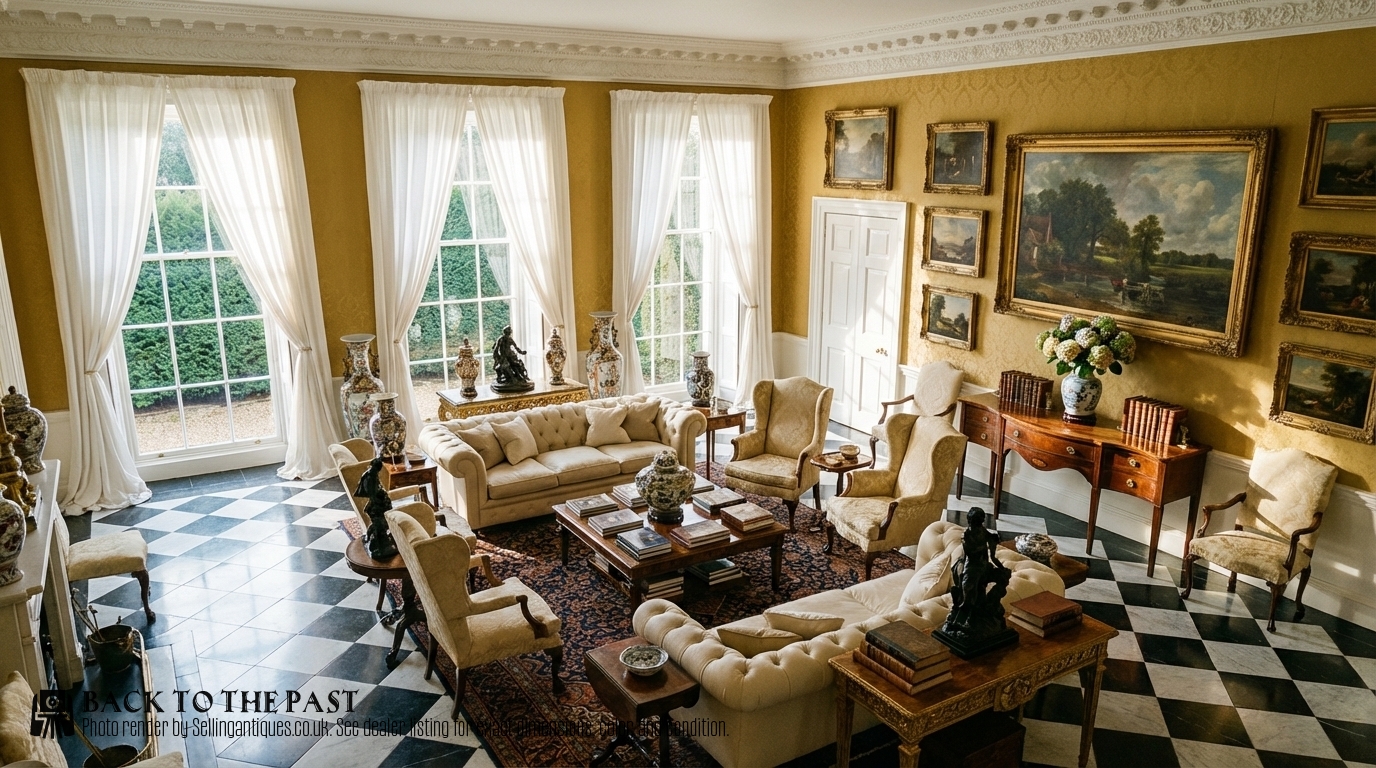
Edwardian Style Sideboard
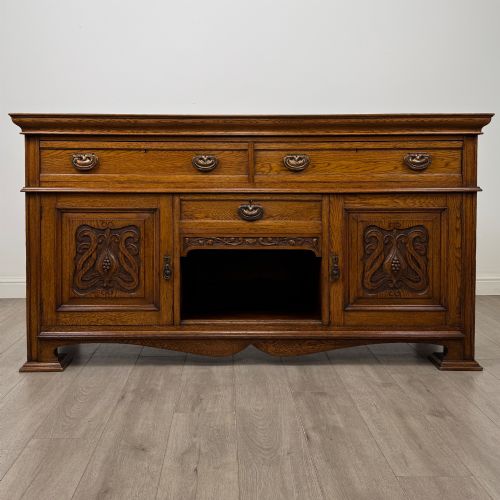
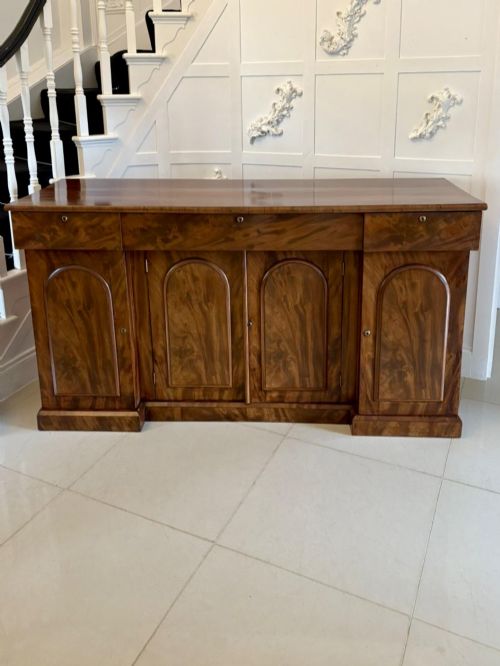
An Edwardian style sideboard brings together storage cabinets, serving surfaces, and deep drawers intended for dining rooms, drawing rooms, and hallways. These pieces appear frequently in mahogany, oak, and walnut, reflecting the domestic needs of their period.
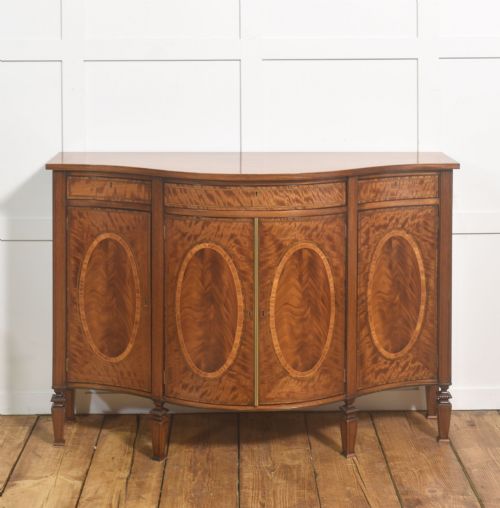
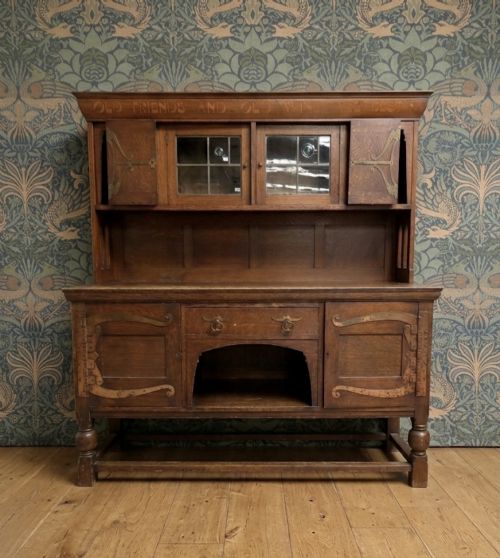
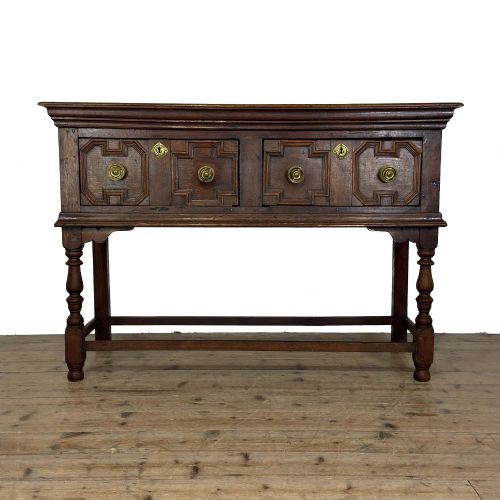
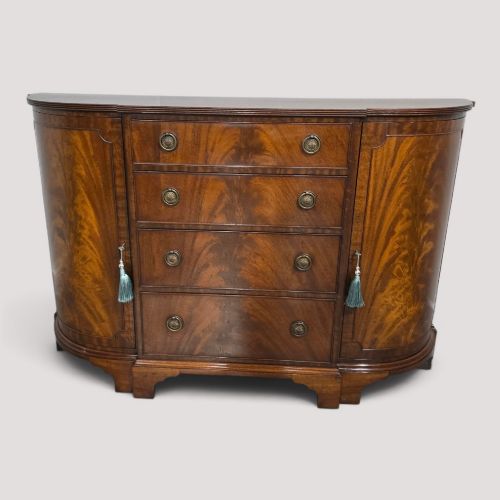
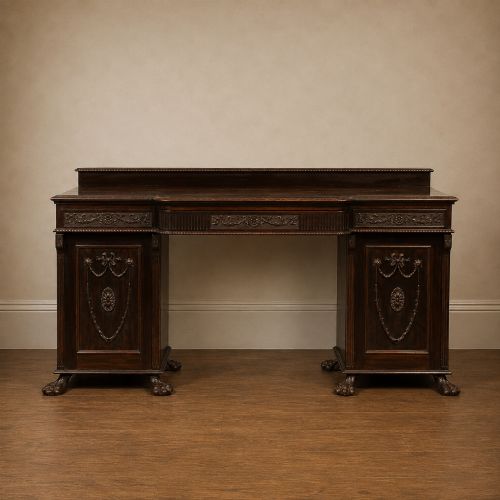
The selections span standard serving sideboards, bow-front cupboards, and low dresser bases. Many examples display revival influences from the Sheraton, Adam, and Jacobean styles, alongside clean-lined Arts and Crafts interpretations.
Makers and designers from the period utilised local and exotic timbers to construct long-lasting furniture for contemporary homes. The resulting forms range from simple panelled oak cabinets to satinwood pieces with detailed stringing.
Materials and Technique
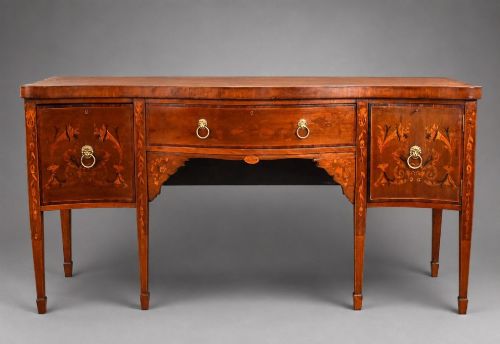
Cabinetmakers worked extensively with solid and veneered timbers, selecting figured mahogany, golden oak, and burr walnut to create patterned surfaces on doors and drawer fronts. Satinwood received contrasting inlay and crossbanding to accentuate geometric or neoclassical motifs.
Hardware played a functional and decorative role, with cast brass handles, escutcheons, and occasional ormolu mounts securing doors and drawer sections. Joinery techniques included dovetailing for drawers and mortise and tenon frames for structural rigidity.
Listings feature items in mahogany, oak, walnut, and satinwood, spanning the Victorian, Edwardian, and Arts and Crafts periods.
Standards of Execution
Quality rests in the selection of wood veneers and the precision of the underlying cabinet construction. Timber with rich natural figuring and book-matched grain patterns elevates a piece far above plain stock.
Refined execution appears in smooth drawer actions, tight joints, and crisp execution of inlaid stringing or carved panels. The care taken with interior fittings and secondary timbers demonstrates the skill applied during manufacture.
Whytock & Reid·Heal & Son·Liberty & Co.·M. D. Miller & Sons
The Edwardian Style Sideboard Glossary
- Crossbanding
- A narrow strip of veneer laid across the grain of the primary panel to form a contrasting border. This technique frames drawer fronts and cabinet doors on formal revival pieces.
- Bow-front
- A convex, curved cabinet front that swells outward toward the centre. It softens the linear appearance of dining room storage.
- Serpentine
- A horizontally undulating front edge featuring a central convex curve flanked by concave sweeps. This shape requires advanced woodworking skill to execute cleanly.
- Stringing
- Thin lines of contrasting light or dark wood inlaid into shallow channels on the surface. It defines panels and borders on satinwood and mahogany furniture.
- Credenza
- A low cabinet or sideboard designed for display and serving, often standing on short legs. Examples frequently incorporate glass doors or open shelving.
Edwardian Style Sideboard: Frequently Asked Questions
What is an Edwardian style sideboard?
These items are large timber storage units built to hold dining room linen, cutlery, and serving dishes while providing a top surface for food presentation.
They combine cupboards and drawers, frequently drawing design inspiration from earlier Georgian, Sheraton, and Jacobean aesthetics.
How do I identify a revival style?
Revival pieces borrow decorative motifs, silhouettes, and inlay patterns from preceding centuries while utilising the manufacturing methods of the early twentieth century.
Look for specific details like neoclassical urns, heavy oak linen-fold panels, or delicate satinwood stringing that point to historical design revivals.
Where should I place a sideboard?
They suit dining rooms, large hallways, and living spaces where generous surface area and enclosed shelving are useful.
Their substantial footprints require adequate floor space to allow doors and drawers to open fully without obstruction.
What timber finishes are common?
Mahogany, oak, and walnut dominate the construction, appearing either in solid form or as decorative veneers over secondary woods.
Finishes range from dark, polished mahogany to golden oak and pale satinwood, often enhanced with natural wax.