
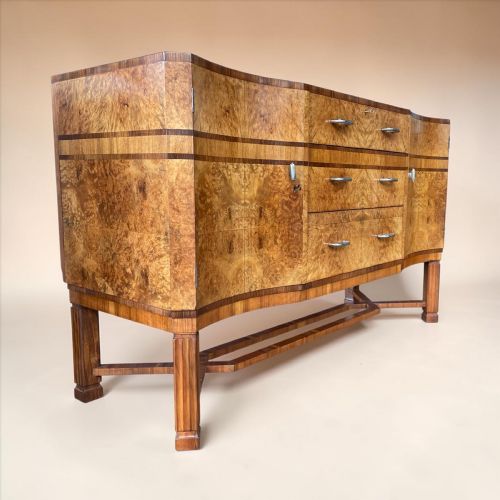
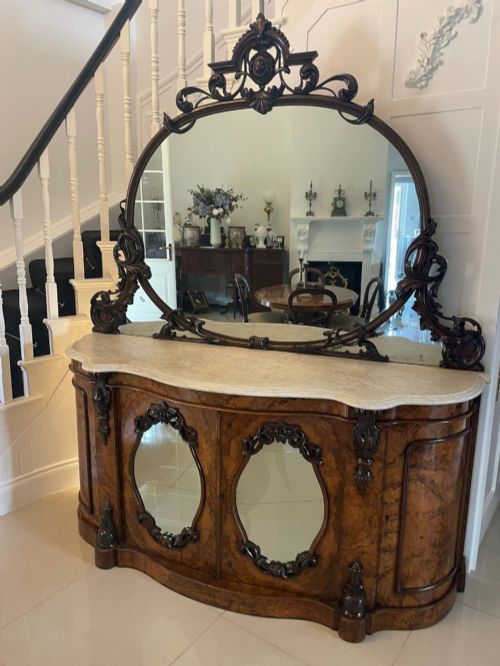
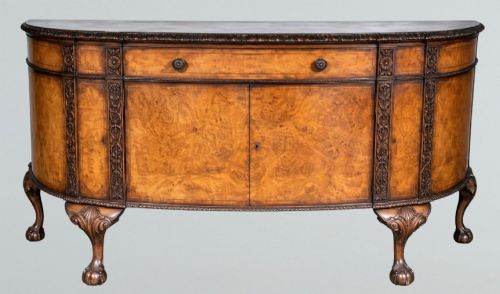
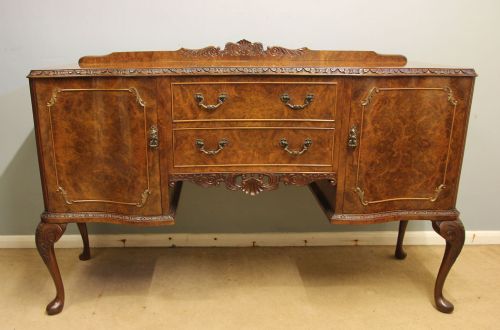


Serpentine Front Server
A serpentine front server brings flowing curves to the dining room, combining practical storage with remarkable cabinetwork.
Serpentine Front Server
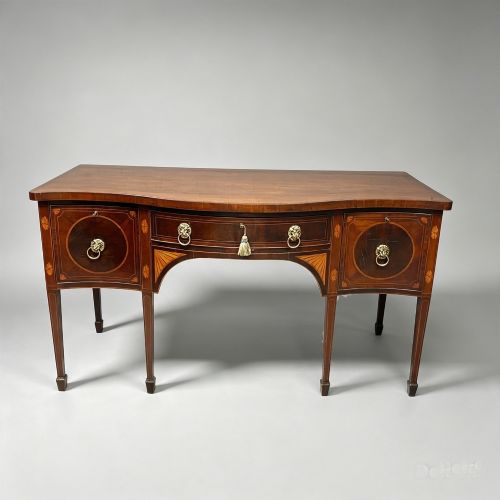
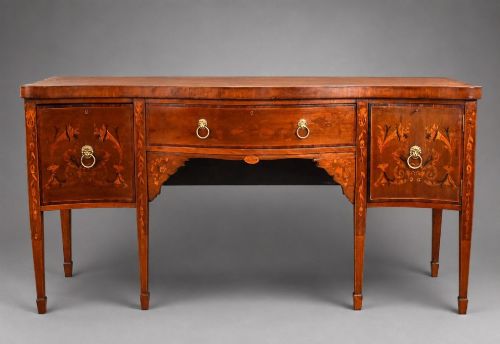
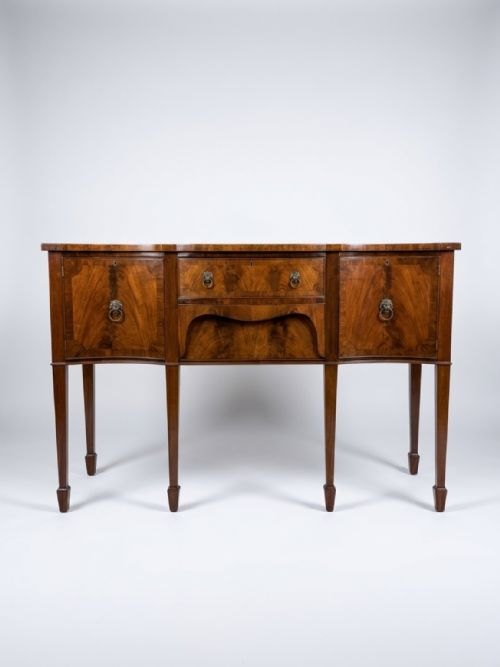
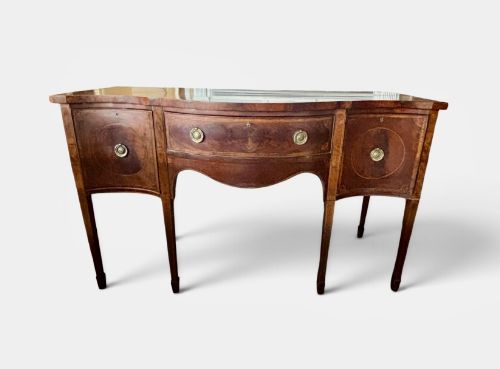
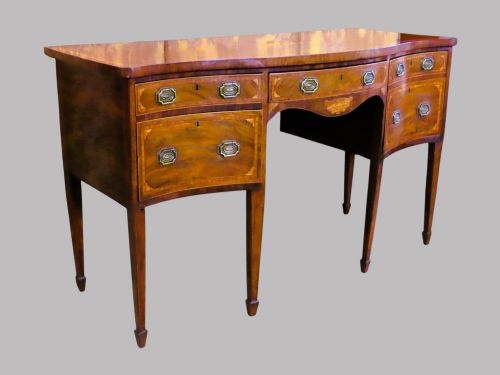
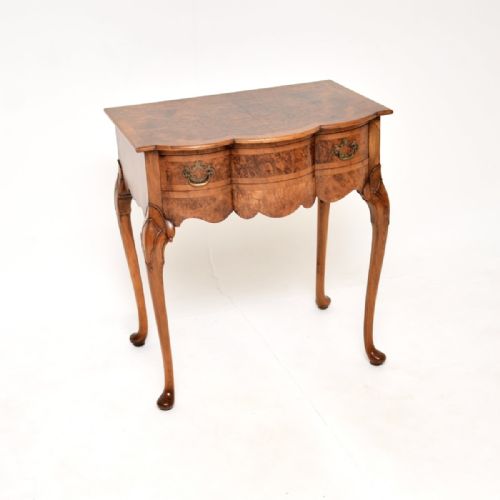
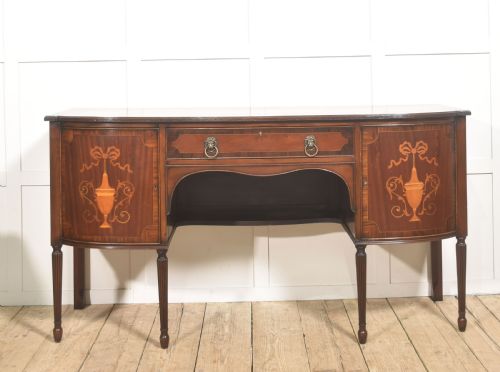
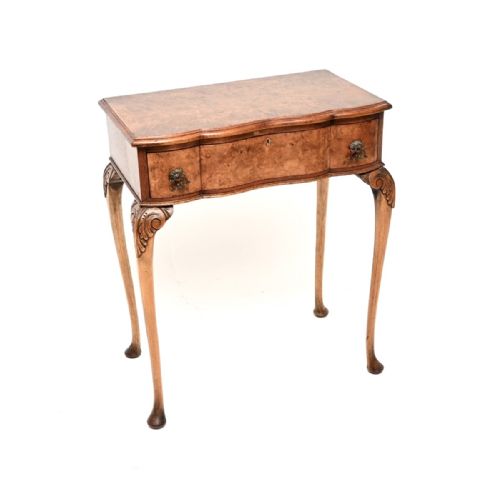
A serpentine front server is a specialised dining room piece characterised by its undulating convex-and-concave front profile, designed for holding porcelain, silver, and serving dishes. These items appear primarily as sideboards, serving tables, and console tables originating from the Georgian period through the Edwardian era and into the 1930s. The most frequent examples encountered on this page are Georgian and George III mahogany pieces alongside later Edwardian and 1930s burr walnut variants.
The form evolved during the eighteenth century from standard rectangular sideboards into sophisticated curved designs that softened the rigid lines of the dining room. Makers utilised the serpentine shape to create visual depth and movement across the front elevation while maintaining deep interior storage behind flanking doors and drawers. Buyers look for this silhouette to introduce architectural interest and traditional craftsmanship into domestic interiors.
Materials and construction
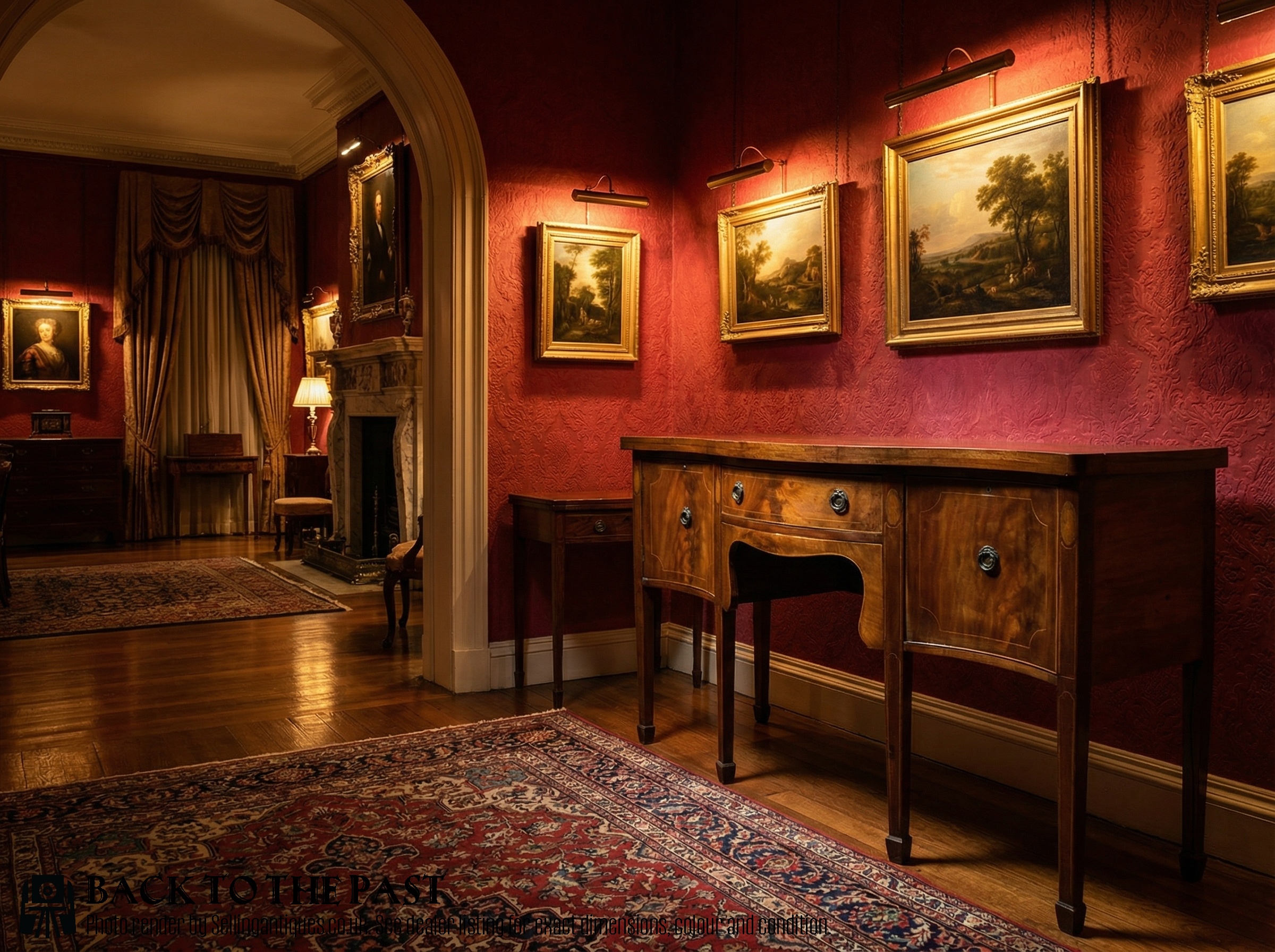
Construction relies heavily on solid timber framing paired with figured veneers, utilising mahogany, burr walnut, and satinwood to create striking surface patterns. Cabinetmakers applied flame mahogany veneer and boxwood stringing to accentuate the undulating curves of the front profile, often incorporating contrasting inlay work along the borders and friezes.
Hardware and structural detailing include brass fixtures, carved mirror backs, and three-quarter gallery surrounds on early nineteenth-century serving tables. Joinery techniques ensured that the complex curved drawer fronts and side cabinets maintained structural stability across seasonal changes in humidity.
Serpentine Front Server Retail Price Guide 2026
Typical asking prices for serpentine front server among the pieces listed under this phrase on Sellingantiques today, from the lower quarter to the upper quarter. They describe what is for sale here now, not the wider market.
The selection spans pieces from the eighteenth-century Georgian era through the Edwardian period to 1930.
Quality and craftsmanship
Quality in a serpentine front server reveals itself in the handling of the timber and the precision of the curved joinery. Superior pieces display continuous grain matching across the undulating drawer fronts and cabinet doors, demonstrating the maker's skill in selecting and cutting veneers to follow the complex silhouette.
The refinement of the inlay work, the crispness of any carved detailing, and the depth of the natural wood colour further separate standard production from exceptional examples. Finer servers retain their original brass hardware, structurally sound internal framing, and well-fitted drawers that operate smoothly within their curved housings.
Epstein
The Serpentine Front Server Glossary
- Serpentine
- A furniture profile featuring a convex centre flanked by concave curves, creating an undulating wave effect across the front of a cabinet or table. This shape requires advanced woodworking skill to execute properly.
- Flame mahogany
- A highly figured veneer cut from the point where branches join the main tree trunk, displaying distinct flickering flame patterns. It was frequently used by cabinetmakers to decorate the most prominent surfaces of dining furniture.
- Serving table
- An elegant form of dining room furniture designed for holding food and dishes before service, often standing on slender legs without the enclosed cupboards found in full sideboards.
- Inlay
- A decorative technique where contrasting materials such as boxwood or satinwood are inserted into recesses cut into the primary wood surface. This creates geometric or botanical patterns along the edges of tabletops and drawer fronts.
- Credenza
- A sideboard or buffet cabinet used for storage and display in dining spaces, sometimes featuring an attached mirror back in later Victorian examples.
Serpentine Front Server: Frequently Asked Questions
What is a serpentine front server?
A serpentine front server is a traditional dining room storage piece featuring a curved front with a central convex curve flanked by concave sections. These items served as functional surfaces for preparing meals and displaying silver.
They combine practical cabinetry with decorative wood veneers, appearing across various historical periods from the eighteenth century to the twentieth century.
How do I date a serpentine sideboard?
Dating relies on examining the construction methods, timber choices, and overall style characteristics of the piece. Georgian and George III examples typically feature solid mahogany and restrained inlay, while Edwardian and 1930s versions often incorporate burr walnut veneers and lighter decorative stringing.
Hardware styles, timber preparation, and secondary woods used in the interior framing also provide clear indicators of the period of manufacture.
Where should I place a serving table?
A serving table or sideboard naturally belongs in a dining room against a principal wall where it provides accessible surface area during meals. Its shallow depth allows it to sit comfortably in hallways or reception rooms as a console table for display.
Positioning the piece away from direct heat sources and strong sunlight protects the timber veneers and polished finish from drying out over time.
What is the difference between a sideboard and a serving table?
A sideboard generally incorporates enclosed cupboards and multiple drawers designed for storing tableware, cutlery, and linens. A serving table is typically an open-frame table without lower cupboards, intended primarily for holding dishes during a meal.
Over time, terminology has often overlapped, with many larger servers and console tables performing similar decorative and functional roles in the home.