
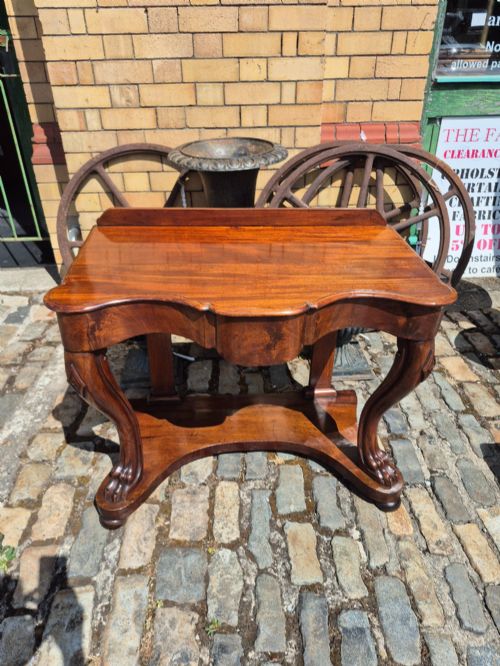
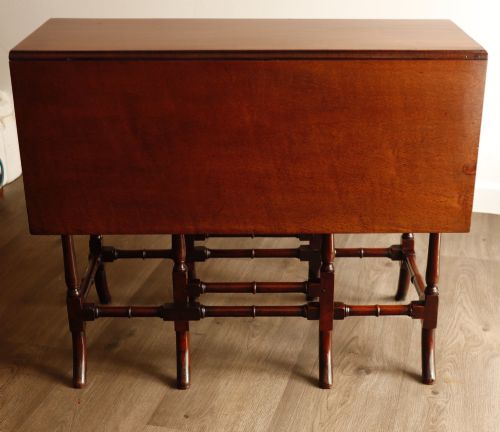
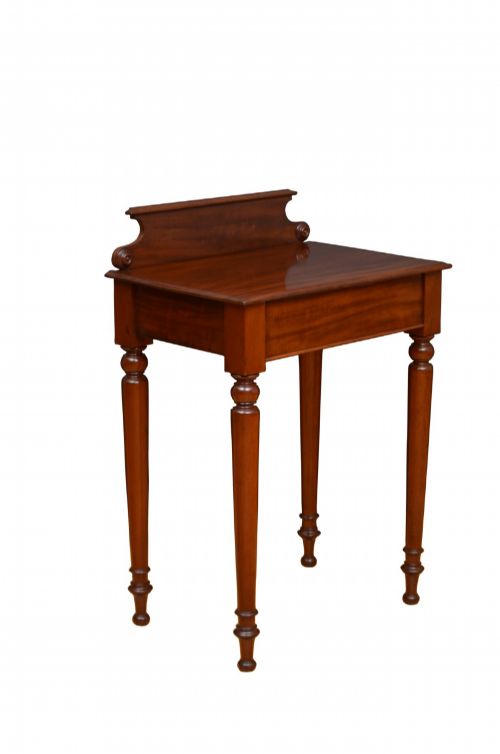
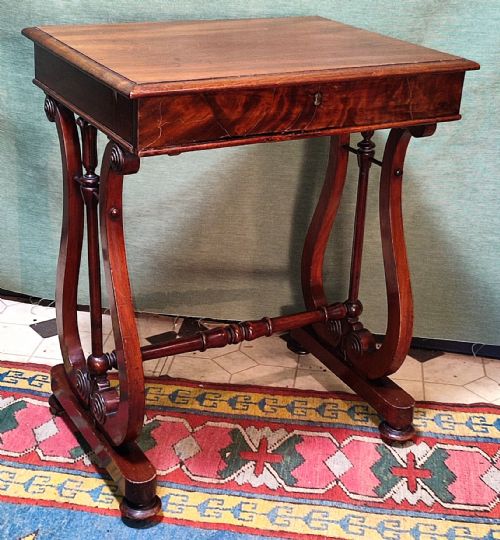


Rich Mahogany Console Table
A rich mahogany console table brings deep timber grain and formal presence to a hallway or drawing room.
Rich Mahogany Console Table
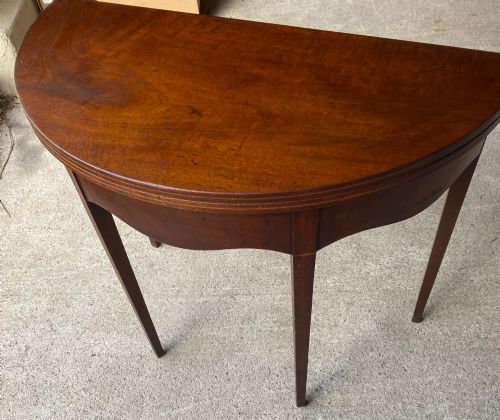
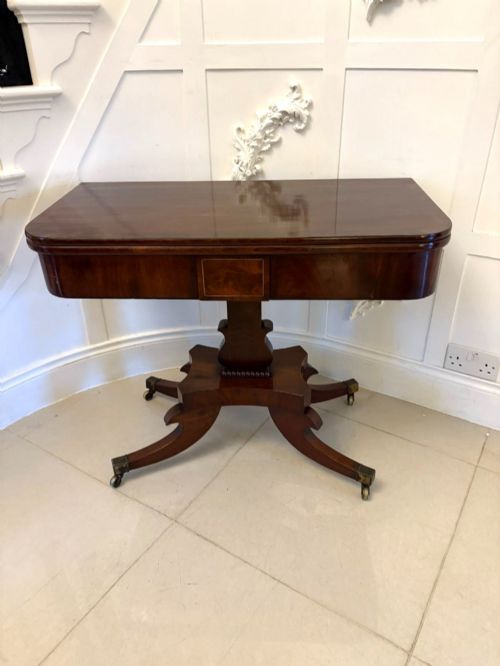
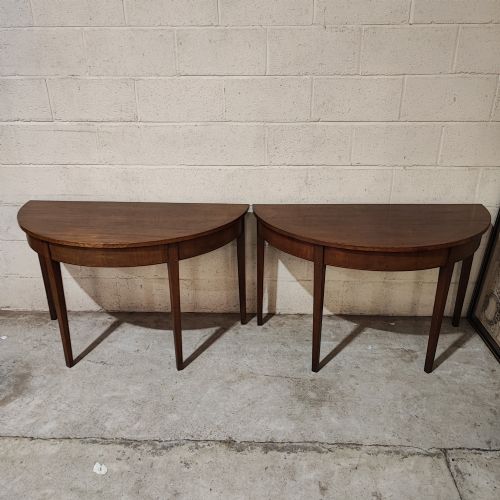
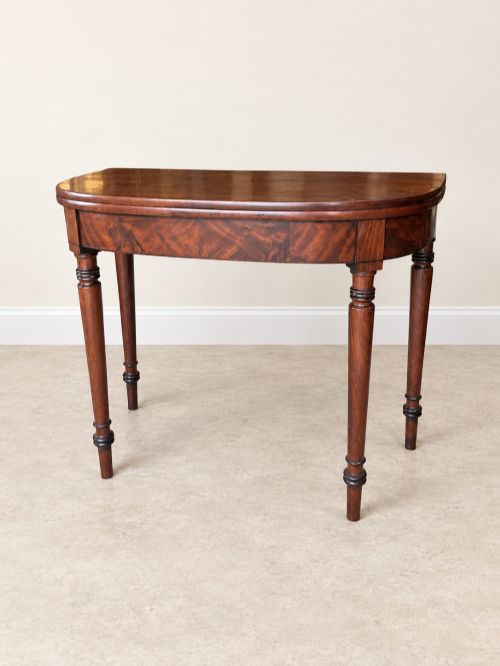
A rich mahogany console table spans several distinct eras of British cabinet-making, with Georgian, Regency and Victorian pieces dominating the selection. Buyers encounter forms ranging from demilune card tables and fold-over tea tables to substantial serving tables and dedicated side pieces. These tables originate primarily from the eighteenth and nineteenth centuries, reflecting shifts in formal entertaining and domestic interior design.
The most common versions on this page are Georgian and Regency examples, often featuring folding tops or slender legs designed to sit flush against a wall. Makers of these periods utilised the natural warmth of the timber to create striking entrance and reception room furniture. Pieces frequently combine practical surfaces with refined proportions, serving both decorative and functional roles in period homes.
Materials and construction
Cabinet-makers relied on solid mahogany and flame mahogany veneer over secondary timbers to construct these pieces, harnessing the rich grain patterns of the wood. Surfaces often incorporate contrasting satinwood inlay or boxwood stringing to frame the primary timber panels. Structural stability was achieved through precise joinery, with folding mechanisms and drawer boxes integrated smoothly into the main frame.
Many tables incorporate brass castors, hinges and handles that complement the dark reddish-brown hue of the polished mahogany. Carved details appear on specific supports and friezes, executed directly into the solid timber or applied as moulded decorative borders. French polishing or traditional wax finishes were applied to protect the wood while deepening its natural lustre.
Listings feature mahogany, boxwood and brass across Georgian, Regency and Victorian eras.
Judging quality
The finest examples display exceptional selection of figured mahogany veneers matched symmetrically across the table top or card leaf. Superior pieces demonstrate crispness in inlaid borders and fluency in any carved mouldings, executed without stiffness or hesitation.
Construction integrity distinguishes workshop standards, evident in the snug fit of drawer linings, the stability of folding leaf joints, and the weight of original brass hardware. Tables that retain their original timber surfaces and patination command greater regard than those stripped and heavily refinished.
Druce and Co·Gillow
The Rich Mahogany Console Table Glossary
- Demilune
- Half-moon shape, commonly applied to the plan of tables designed to stand flat against a wall. These tops often hinge open to reveal a baize-lined playing surface.
- Flame mahogany
- A veneer cut from timber where the grain creates a distinctive flickering, flame-like pattern. Cabinet-makers reserved this timber for prominent surfaces such as table tops and drawer fronts.
- Fold-over table
- A table constructed with a hinged top that doubles the surface area when opened. They served primarily as card or tea tables in formal reception rooms.
- Stringing
- Thin inlay of a contrasting light wood, such as boxwood, used to create decorative borders along table edges and drawer fronts. It provides a sharp visual boundary against dark mahogany.
- Serpentine
- A curved line that undulates inwards and outwards, typically describing the front edge of a serving or side table. This contour requires precise woodworking and adds movement to the piece.
Rich Mahogany Console Table: Frequently Asked Questions
Where should I place a console table?
These tables suit narrow entrance halls, living room perimeters or beneath large mirrors where surface space is required without blocking foot traffic. Their shallow depth allows them to sit neatly against walls.
Because many examples feature finished backs or deliberate wall-facing designs, positioning them properly highlights their grain and proportions within a room.
How do I care for mahogany surfaces?
Maintain the timber by dusting with a soft, dry cloth and applying traditional beeswax periodically to nourish the polished finish. Avoid placing tables in direct sunlight or near heat sources to prevent timber shrinkage.
Using coasters and placemats protects the historical French polish or wax from moisture rings and heat damage during daily use.
Were these tables used for dining?
Most pieces classified as console, side or serving tables provided supplementary surface area for food, silver or decorative objects during large gatherings. Fold-over variants served specifically for card games or social tea drinking.
Dining was typically reserved for dedicated extending tables, whereas these smaller forms filled perimeter spaces in formal rooms.
How do I distinguish Regency from Georgian pieces?
Georgian tables often display classical proportions, subtle carving, and straight or cabriole legs rooted in eighteenth-century design traditions. Regency examples from the early nineteenth century frequently incorporate bolder architectural elements, classical revival motifs and darker brass mounts.
Examining the construction methods, secondary woods and specific inlay styles helps clarify the period of manufacture.