
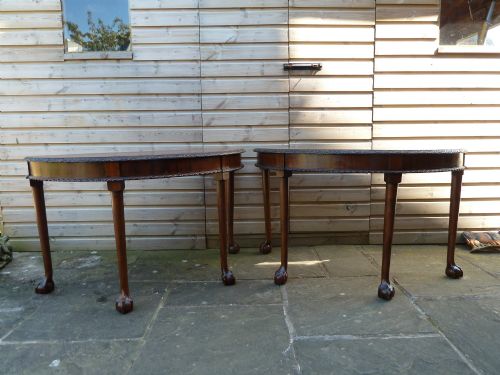


Dark Wood Demilune Table
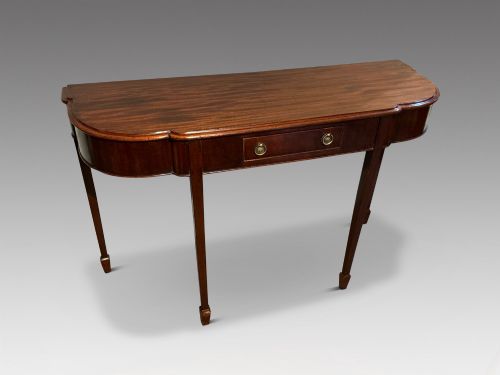
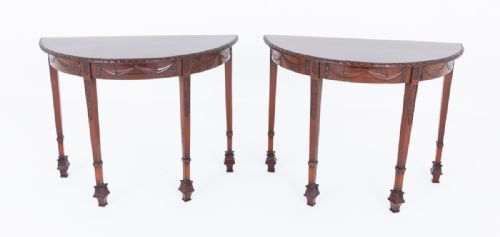
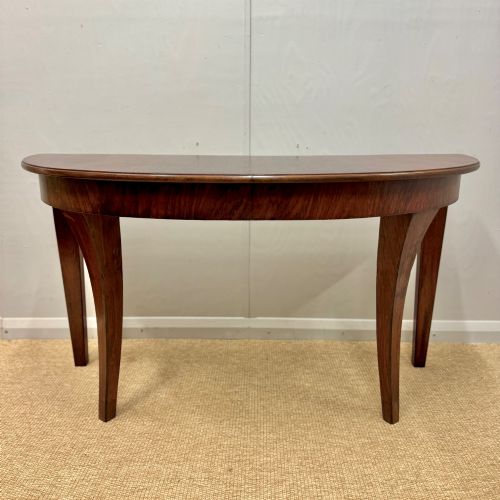
A dark wood demilune table offers a curved half-moon silhouette that fits neatly against a wall while adding classical proportion to a room.
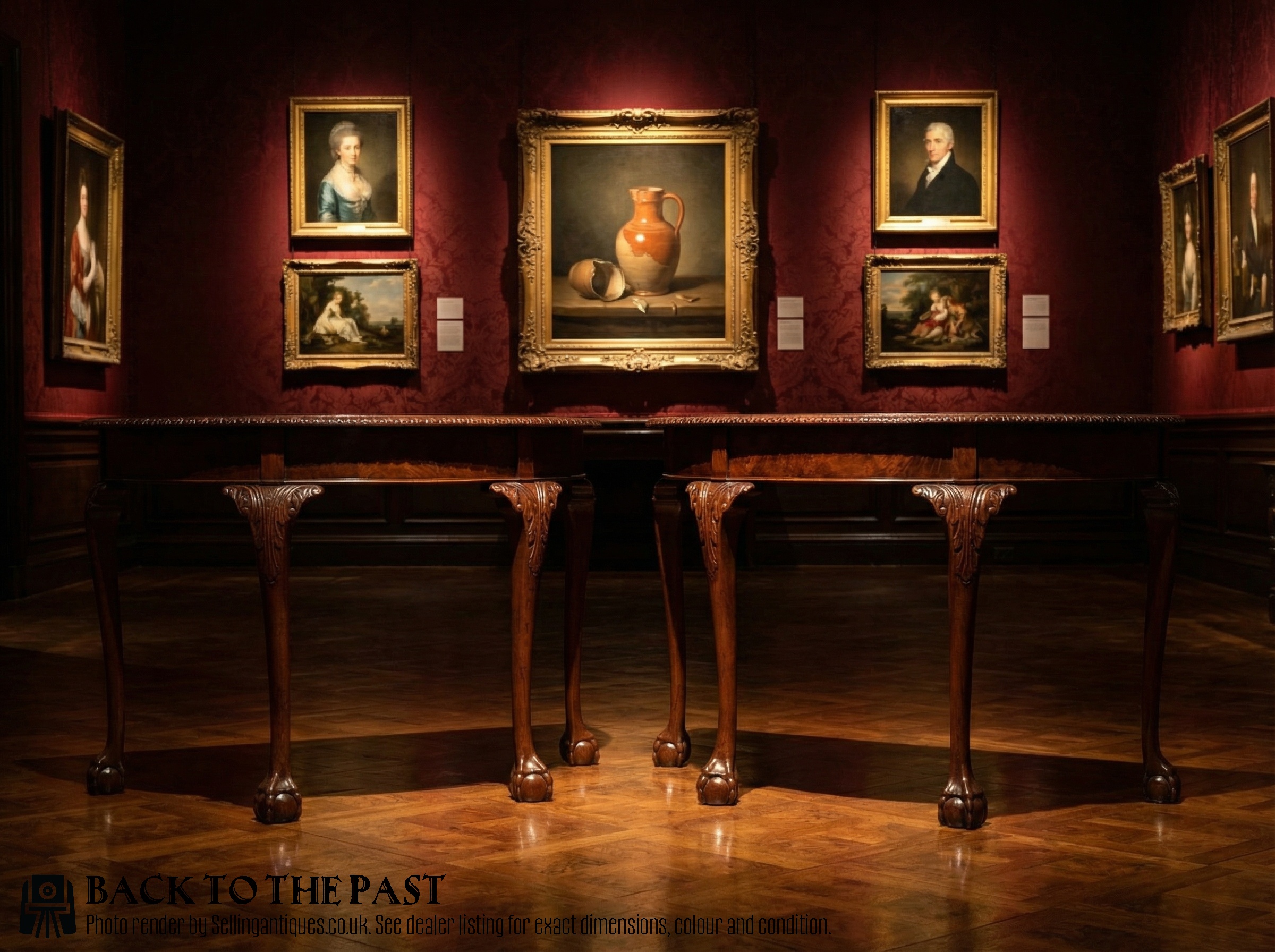
Dark Wood Demilune Table
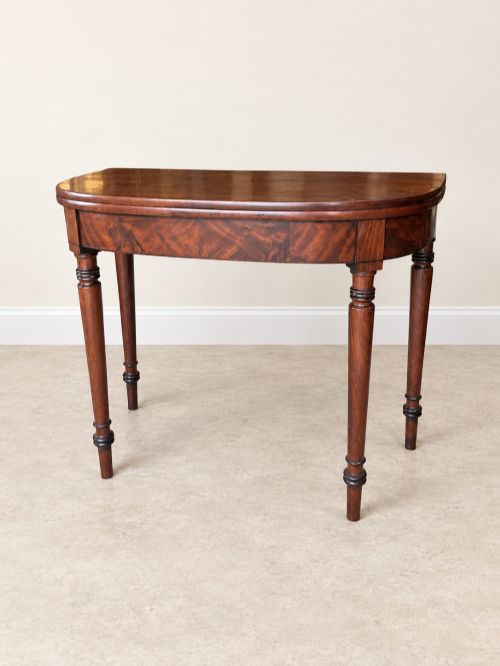
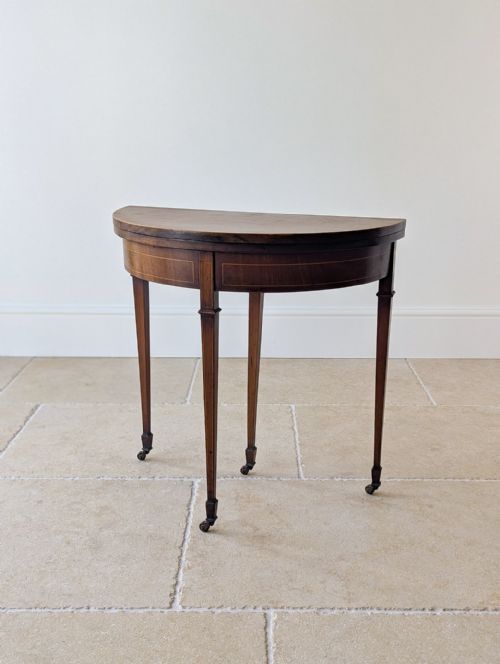
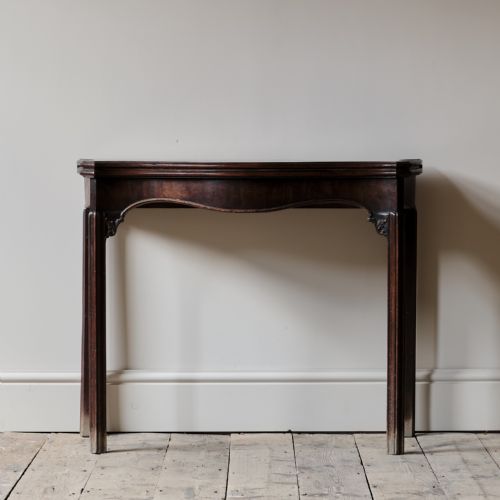
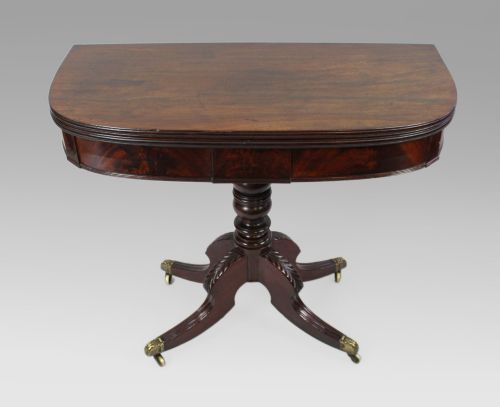
A dark wood demilune table is typically encountered as a console, card, or tea table dating from the eighteenth and nineteenth centuries. These semicircular pieces appear in Georgian, Regency, and Victorian iterations, frequently utilising mahogany, rosewood, or walnut.
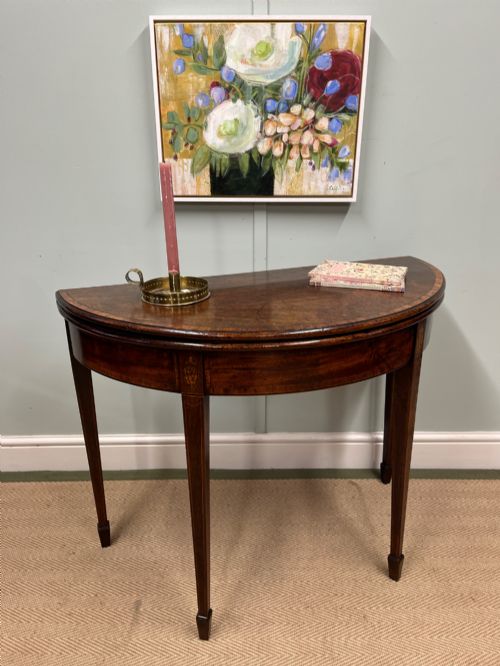
The form often functions as a side table or a fold-over games table, adapting a compact footprint for practical domestic use. Surviving examples range from plain functional hall furniture to decorative pieces featuring classical revival styling.
Materials and Construction
Cabinetmakers constructed these tables primarily using dense hardwoods such as mahogany and rosewood, sometimes accented with contrasting boxwood and satinwood inlay. Tops occasionally incorporate marble slabs supported by carved wooden frames.
Joinery techniques included mortise and tenon frames alongside precision hinges for folding card and tea table tops. Turned or tapering legs support the curved frames, sometimes enriched with brass mounts or detailed carving.
Dark Wood Demilune Table Retail Price Guide 2026
Typical asking prices for dark wood demilune table among the pieces listed under this phrase on Sellingantiques today, from the lower quarter to the upper quarter. They describe what is for sale here now, not the wider market.
Listings feature mahogany, rosewood, walnut, and marble across Georgian, Regency, and Victorian periods.
Distinction in Craftsmanship
The grade of a dark wood demilune table rests upon the selection of timber grain and the precision of its decorative stringing or inlay. Superior examples display balanced proportions and seamless joints in the complex curved aprons.
Refinement in leg carving and the crispness of brass fittings distinguish standard utility furniture from high-status commission pieces. The structural integrity of the folding mechanisms on card and tea variants further indicates workshop standard.
Thonet
The Dark Wood Demilune Table Glossary
- Demilune
- A half-moon shape used to describe tables designed to stand flat against a wall.
- Console table
- A wall-mounted or freestanding table supported by front legs or brackets, often placed in hallways or parlours.
- Fold-over table
- A dual-surface table with a hinged top that opens to double its surface area, commonly utilised for card games or tea.
- Inlay
- A technique where contrasting woods or metals are inserted into recessed cavities on the surface to form decorative patterns.
- Marquetry
- Elaborate wood veneer arranged in pictorial or geometric designs across the top surface.
Dark Wood Demilune Table: Frequently Asked Questions
What is a demilune table used for?
These tables served primarily as decorative console surfaces in hallways or as functional furniture for tea and card games when featuring folding tops.
Their semicircular shape allowed them to occupy minimal floor space while providing a stable surface for lamps, ceramics, or social gatherings.
How do I identify a Georgian demilune table?
Georgian versions typically exhibit clean classical proportions, understated mahogany grain, and straight or tapered legs without excessive ornamentation.
Many incorporate subtle string inlay or fold-over tops characteristic of eighteenth-century entertaining habits.
Are these tables solid wood?
Construction relies heavily on dense hardwoods like mahogany and rosewood, though secondary woods often form interior framing and structural supports.
Veneers appear frequently on curved surfaces to achieve decorative grain patterns without compromising structural stability.
Where should I place a demilune table?
The flat back edge allows the piece to sit flush against a wall, making it ideal for narrow spaces such as entrance halls and landings.
They also function effectively beneath mirrors or windows in principal reception rooms.