
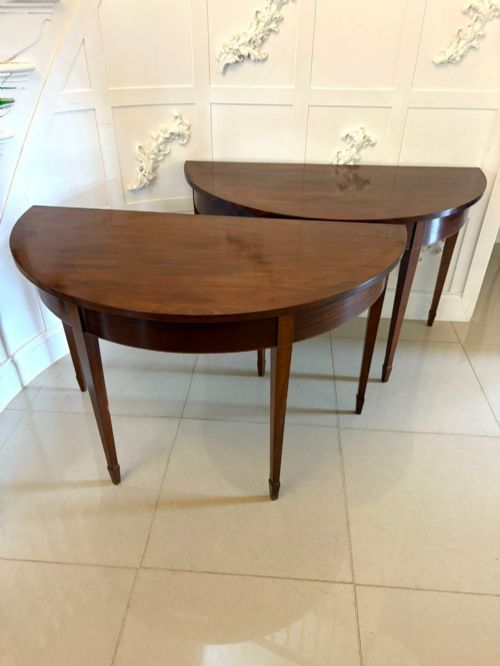
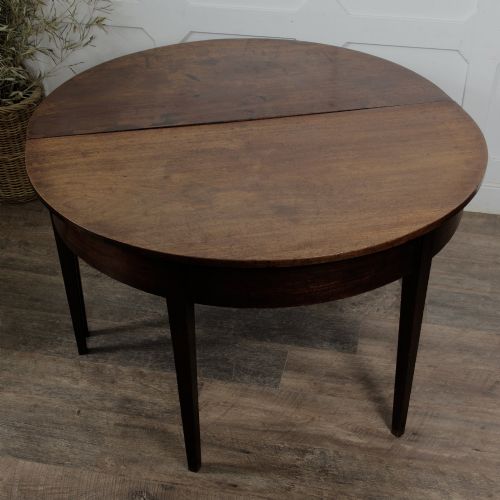
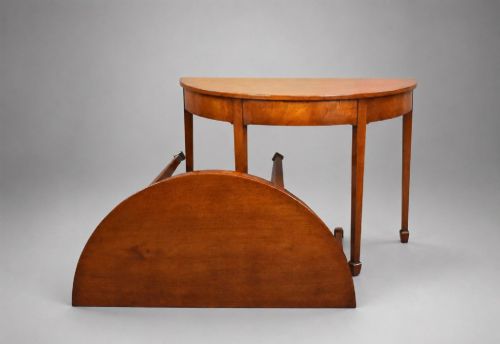
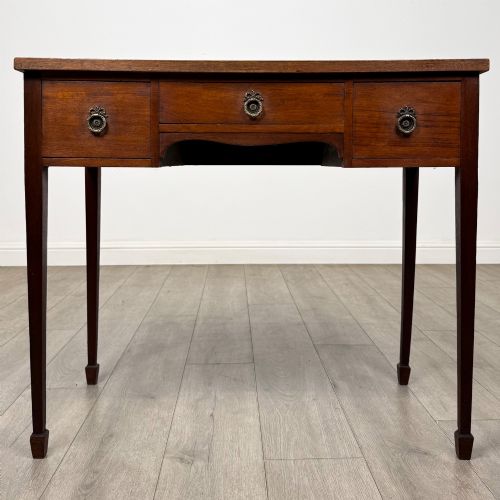

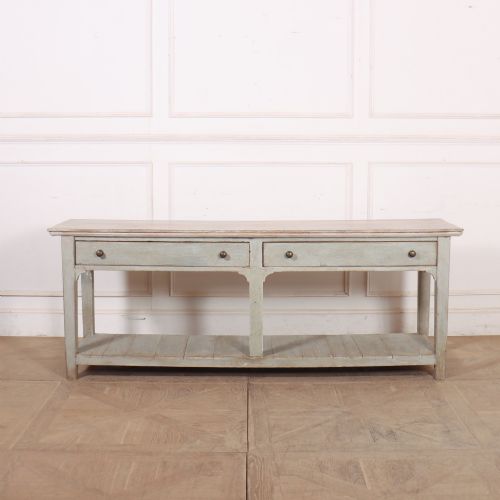


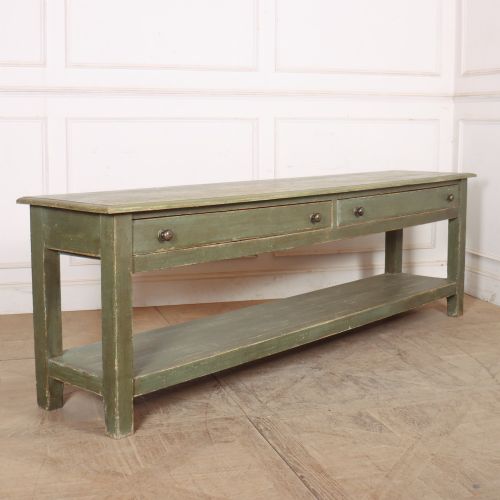


Georgian Timber Console Table
A georgian timber console table brings architectural grace to a hallway or drawing room, offering a narrow profile built to anchor a wall.
Georgian Timber Console Table
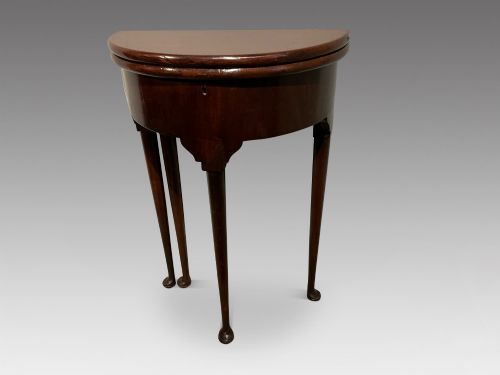
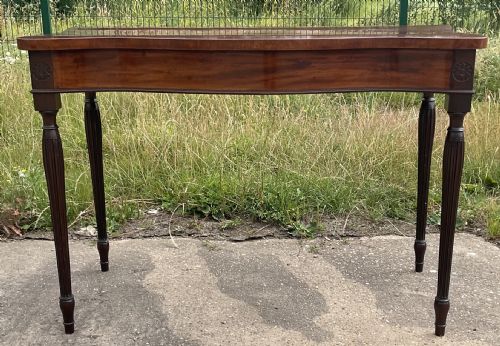
A georgian timber console table typically appears as a demi-lune, serpentine, or straight-fronted surface designed to stand against a wall rather than float in the middle of a room. These forms stem from eighteenth-century domestic design, though later revivals from the nineteenth and twentieth centuries also populate the selection.
How they were made
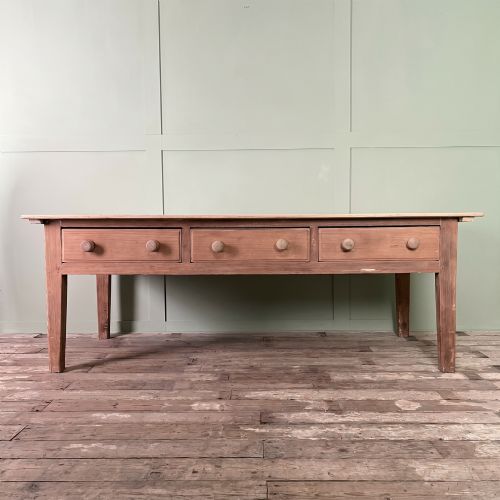
Cabinetmakers utilised solid timbers and selected veneers, predominantly mahogany, walnut, oak, and fruitwood, often supported by secondary woods like pine. Surfaces received finishes ranging from clear wax highlighting the grain to layers of paint applied in country workshops.
Construction techniques relied on traditional joinery, incorporating hand-cut dovetails for drawers and pegged joints for heavier framework. Metal fittings such as brass handles and hinges appeared on pieces intended for storage or serving.
Listings span the eighteenth, nineteenth, and early twentieth centuries, featuring mahogany, oak, walnut, pine, ash, and brass.
What varies in quality
Quality rests upon the selection of timber figures, such as highly figured mahogany or burr walnut, matched with the precision of the carving and joinery. Finer examples display crisp mouldings and harmonious proportions set down by the original cabinetmaker.
Later revivals and country pieces exhibit simpler execution, where utility dictated the construction rather than high-style ornamentation. The integrity of the timber and the retention of original surfaces carry significant weight in distinguishing different tiers of work.
Gillow·Hicks of Dublin
The Georgian Timber Console Table Glossary
- Demi-lune
- A half-moon shape commonly utilised for tabletops and console tables designed to sit flush against a wall. This profile saves floor space while providing a decorative surface.
- Serpentine
- A curved line featuring a convex centre flanked by concave sides, or vice versa, creating a flowing movement across the front of a table. It requires accomplished woodworking skill to execute.
- Potboard
- A lower open shelf built into dresser bases and serving tables, originally intended for storing earthenware pots and heavy vessels. It anchors the structural legs near the floor.
- Lowboy
- A small low table with drawers, functioning historically as a dressing table or side table. These pieces typically rest on slender legs.
- Drop leaf
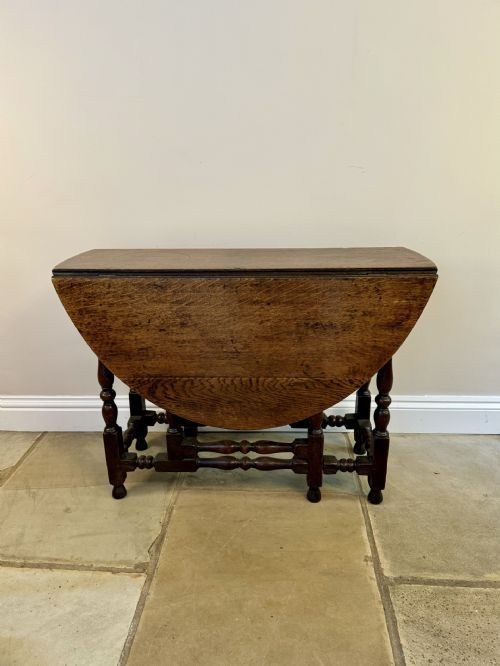
- A tabletop featuring hinged flaps that fold down to reduce the overall surface area when not in use. Brackets or swing legs support the leaves when raised.
Georgian Timber Console Table: Frequently Asked Questions
What is a console table used for?
These tables provide a narrow surface for display against a wall, frequently positioned in entrance halls or reception rooms below a mirror or painting.
Historically, serving tables and side tables fulfilled similar functions during dining and entertaining, holding dishes or decorative objects without blocking circulation.
How do I tell an original piece from a revival?
Examination of the timber, construction methods, and wear patterns reveals the manufacturing era. Eighteenth-century pieces display hand-cut joinery and signs of age within the secondary woods.
Revival pieces from the Victorian and Edwardian periods often utilise machine-sawn elements and different finishing techniques while copying earlier styles.
Are these tables suitable for small rooms?
The narrow depth of a console table makes it practical for compact spaces where standard furniture would protrude too far into the floor plan.
Demi-lune and serpentine shapes further reduce sharp corners, easing movement in narrow hallways and tight alcoves.
What woods were commonly used?
Mahogany and walnut dominate the formal examples, often chosen for their rich colour and capacity to take fine carved details. Oak, ash, and fruitwood appear frequently in regional and country pieces.
Secondary timbers like pine frequently form the interior framing and drawer linings.