


Inlaid Glazed Cabinet
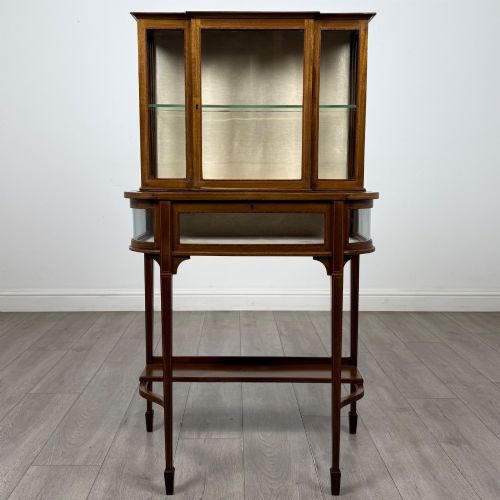
When choosing an inlaid glazed cabinet, you select a piece of furniture built to display cherished objects behind glass while enriching a room with fine decorative woodwork.
Inlaid Glazed Cabinet
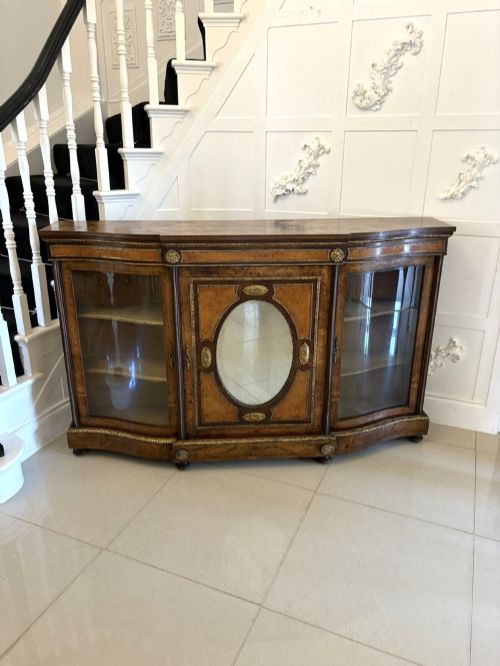
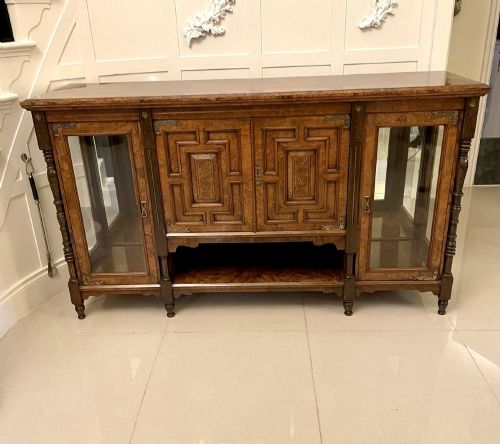
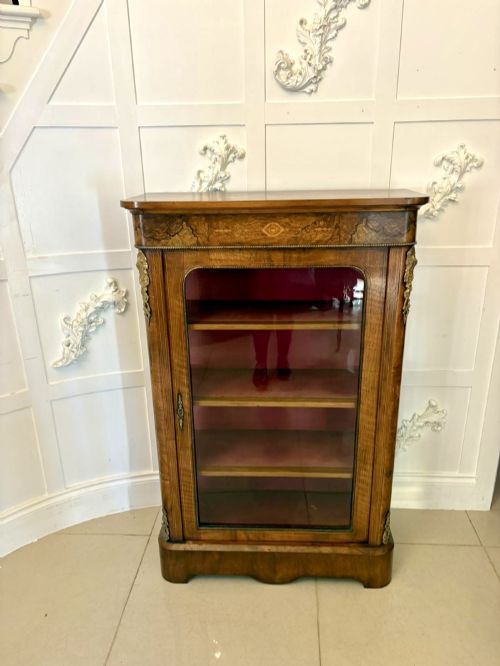
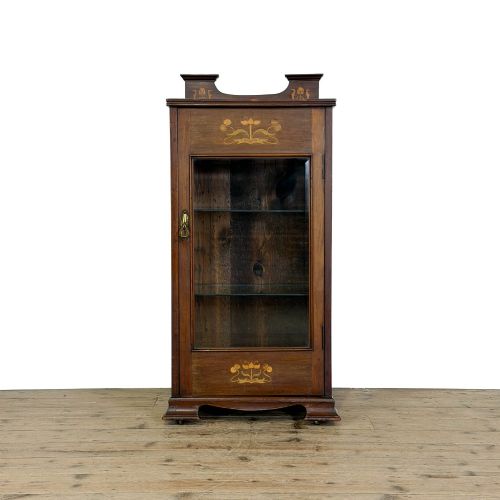
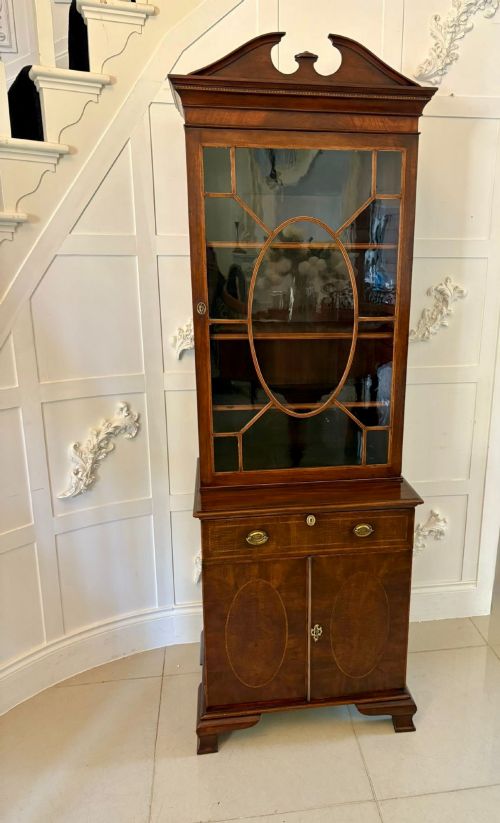
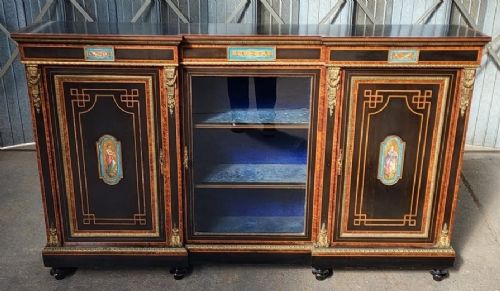
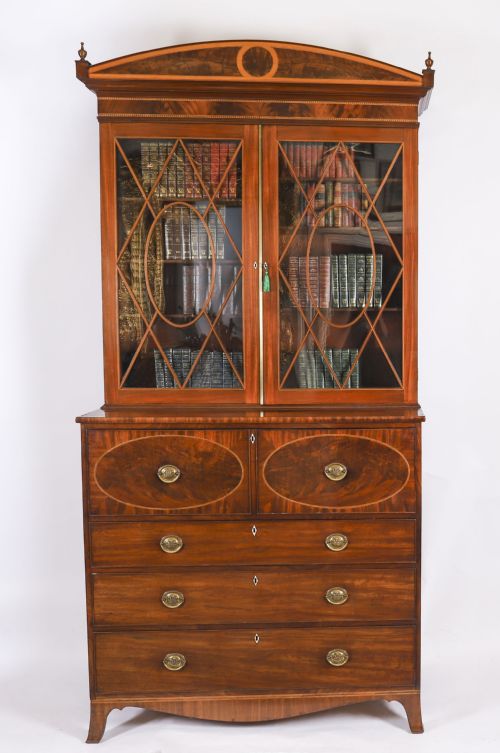
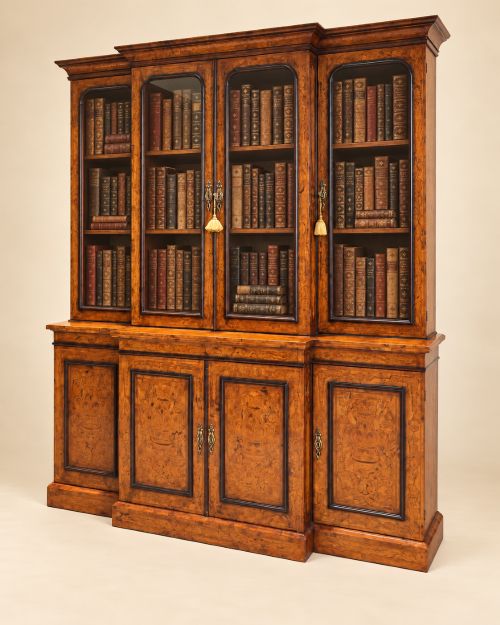
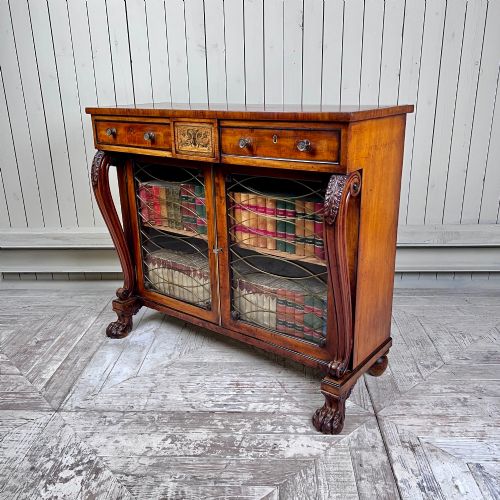
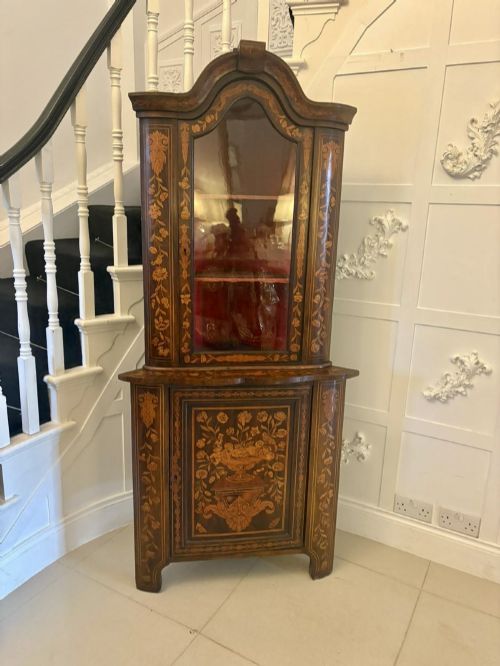
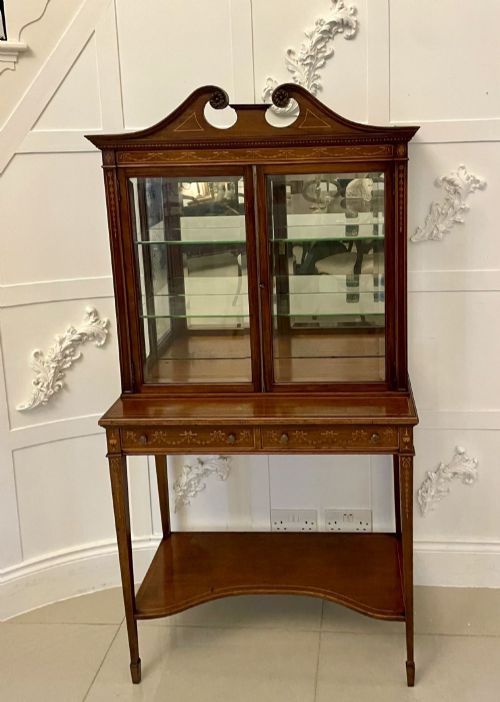
An inlaid glazed cabinet brings together transparent display space and detailed surface ornamentation, appearing in formats ranging from low pier cabinets and corner cupboards to tall bookcases, credenzas, and music cabinets. Pieces span the Georgian, Regency, and Victorian eras, with Edwardian and Sheraton Revival examples appearing frequently across the selection.
Makers utilised woods such as mahogany, walnut, satinwood, and rosewood, incorporating glass panels to protect books, china, and collectibles. Buyers encounter various configurations, including breakfront designs, bow-front profiles, and two-part standing units.
Regional work from Dutch workshops sits alongside English production, showing how cabinetmakers adapted classical proportions and marquetry techniques for domestic interiors over successive centuries.
Materials and Technique
Construction relies on solid timber frames faced with veneers of burr walnut, flame mahogany, or satinwood, providing stable ground for intricate contrasting inlays and marquetry panels.
Glazing takes the form of individual glass panes held by wooden glazing bars or astragals, alongside leaded windows in certain Art Nouveau and Edwardian iterations.
Metal mounts in ormolu, brass inlay, and fabric linings are integrated into the internal and external presentation of high-status Victorian and Regency pieces.
Inlaid Glazed Cabinet Retail Price Guide 2026
Typical asking prices for inlaid glazed cabinet among the pieces listed under this phrase on Sellingantiques today, from the lower quarter to the upper quarter. They describe what is for sale here now, not the wider market.
Form variations include corner cupboards, tall bookcases, music cabinets, and low pier cabinets fitted with glass doors.
Markers of Distinction
Quality rests in the precision of the marquetry work, the depth of figure in the chosen veneers, and the architectural harmony of the proportions rather than mere decorative overload.
Finer examples display careful timber selection matched across symmetrical door panels, alongside refined cast ormolu mounts and crisply shaped astragal glazing bars.
The integration of secondary timbers within the carcase and the structural integrity of internal shelving separate standard utility items from master cabinetmaker productions.

Edwards and Roberts·Collinson and Lock·Maple and Co
The Inlaid Glazed Cabinet Glossary
- Marquetry
- Decorative veneer work arranged in pictorial or geometric patterns using various coloured woods. This technique requires meticulous hand-cutting and fitting of individual pieces.
- Astragal
- A small convex moulding used as a glazing bar to divide glass panes within cabinet doors. These bars form intricate geometric or curved patterns across the front.
- Pier Cabinet
- A low display cabinet designed specifically to fit the narrow wall space between windows. Victorian examples often incorporate glazed doors and ormolu mounts.
- Credenza
- A sideboard or low storage cabinet originating in the nineteenth century, frequently fitted with glazed central cupboards and curved end display sections.
- Ormolu
- Gilded bronze mounts applied to the corners, feet, and friezes of furniture. This decorative addition signals high-status Victorian and Regency manufacture.
Inlaid Glazed Cabinet: Frequently Asked Questions
What fits inside a corner cabinet?
These units accommodate books, small porcelain collections, and glassware by utilising angular interior shelving designed to occupy unused room junctions.
Their glazed doors keep dust away while maintaining visibility from multiple angles in a dining room or parlour.
How do I distinguish Edwardian from Victorian work?
Victorian pieces tend to feature heavier timbers like burr walnut and mahogany, often accompanied by dense marquetry and ormolu mounts.
Edwardian and Sheraton Revival examples generally present lighter satinwood or mahogany frames with more restrained neoclassical inlay motifs.
What is a secretaire bookcase?
A secretaire bookcase combines a shelved upper display section with a fitted writing drawer that drops down to reveal small compartments and a leather writing surface.
This hybrid form provided dual functionality for domestic correspondence and book storage.