

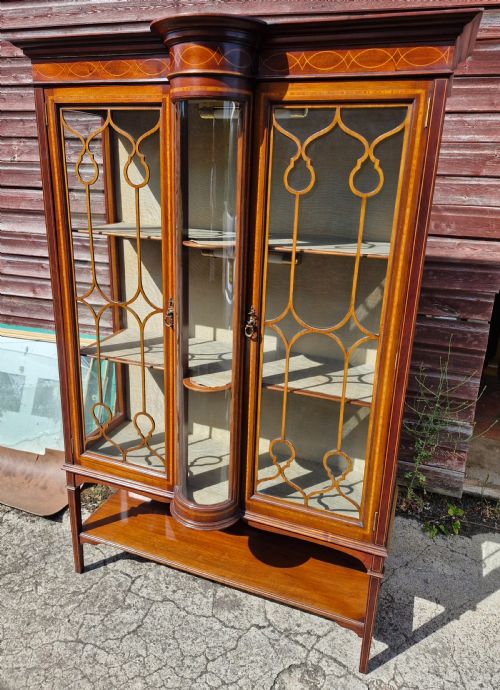
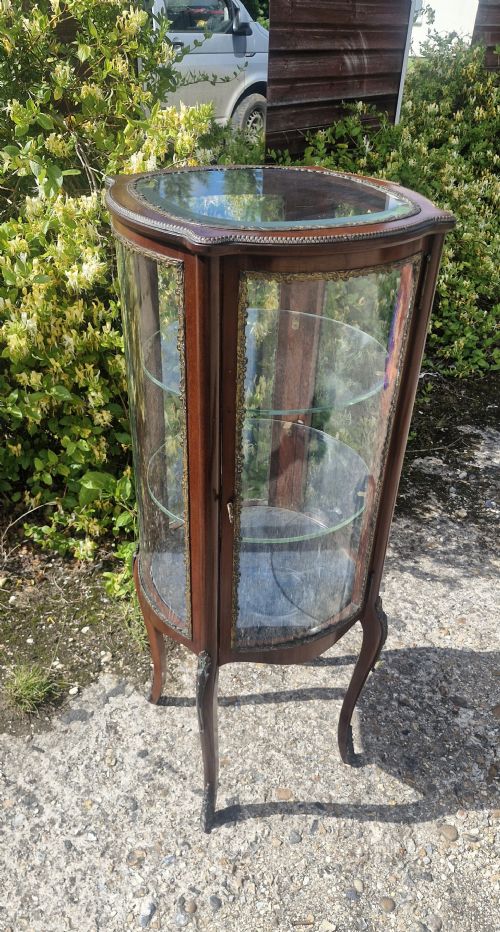


Antique Bijouterie Cabinet
An antique bijouterie cabinet provides a glazed display surface designed specifically to show off small collectables, curios and jewellery.
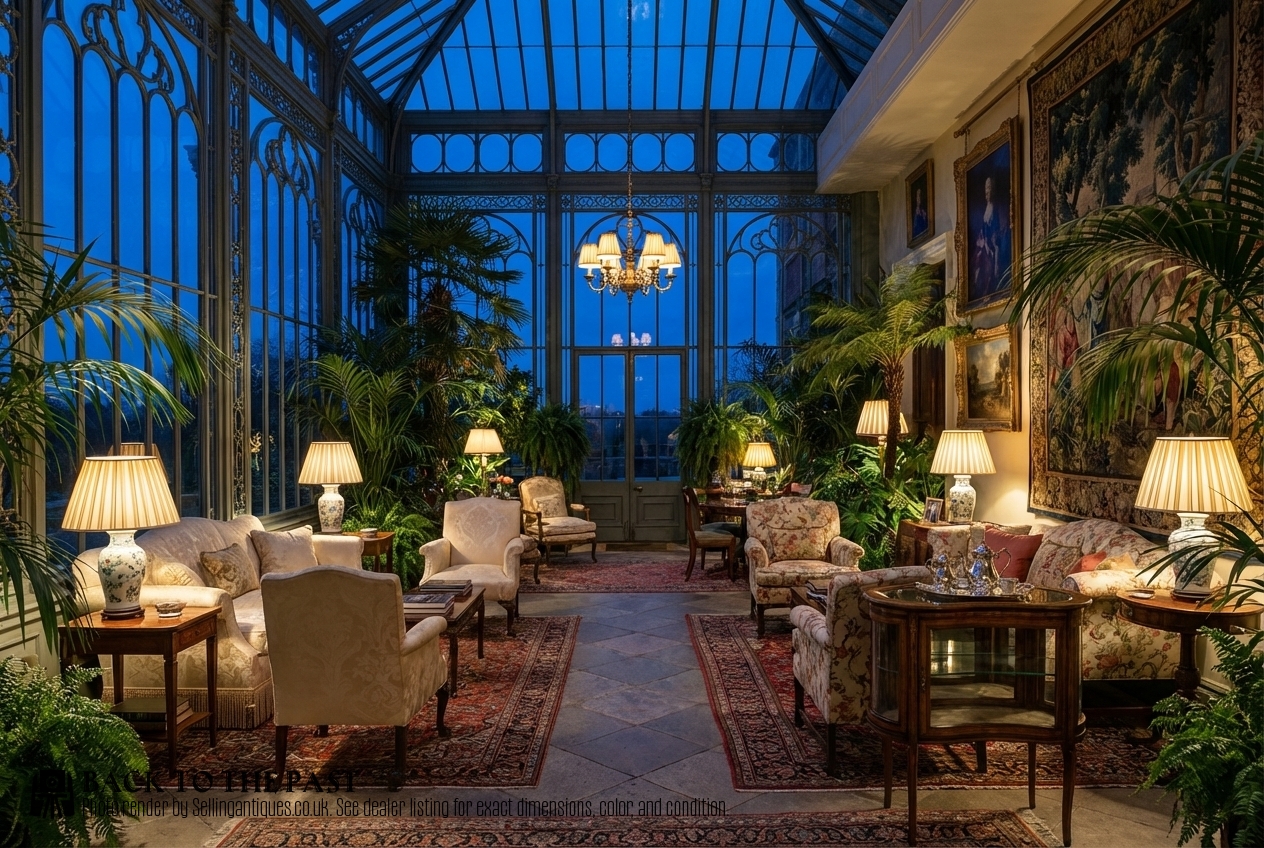
Antique Bijouterie Cabinet
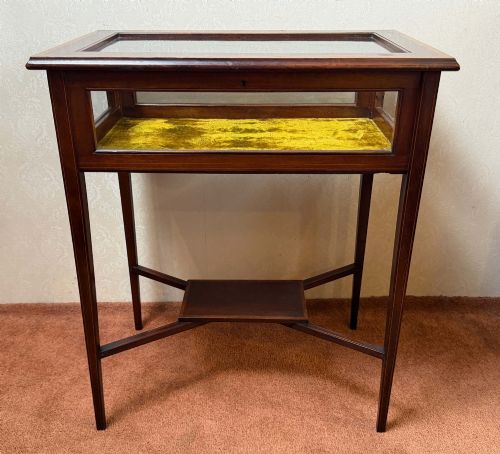
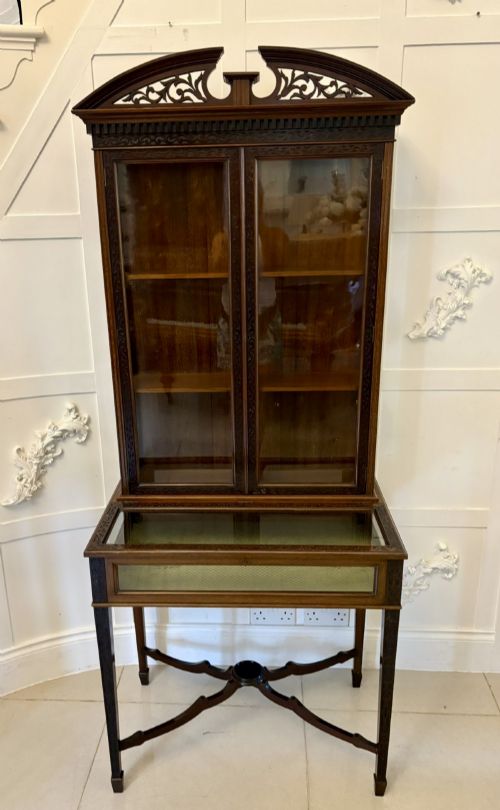
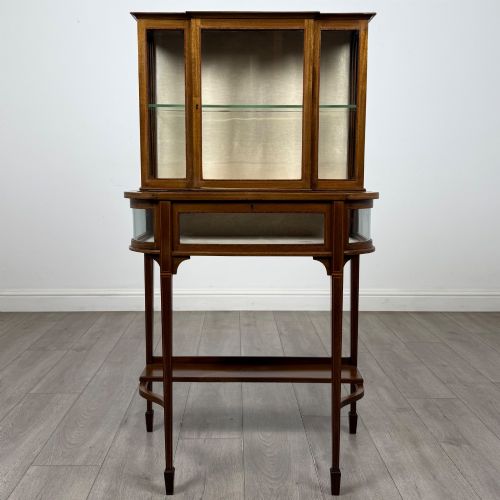
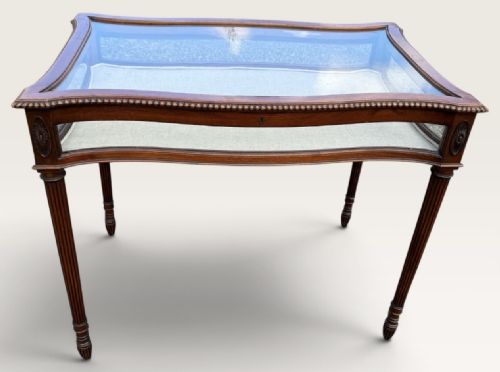
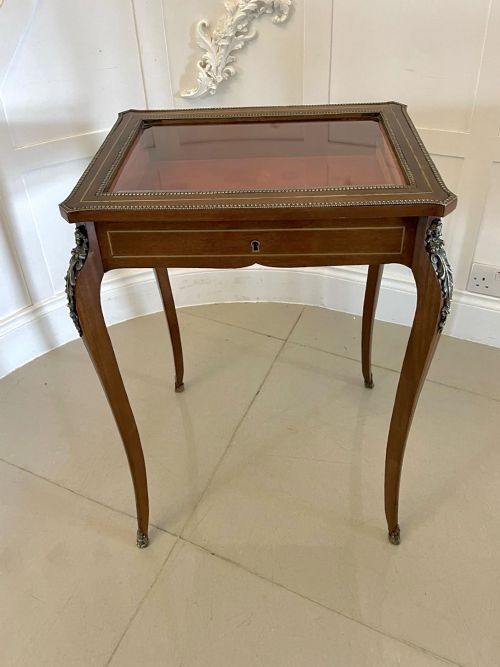
An antique bijouterie cabinet encompasses low display tables with glazed tops, upright cabinets, and countertop vitrines designed to hold small treasures. These pieces emerge predominantly from the Victorian and Edwardian eras, alongside late nineteenth century and early twentieth century examples.
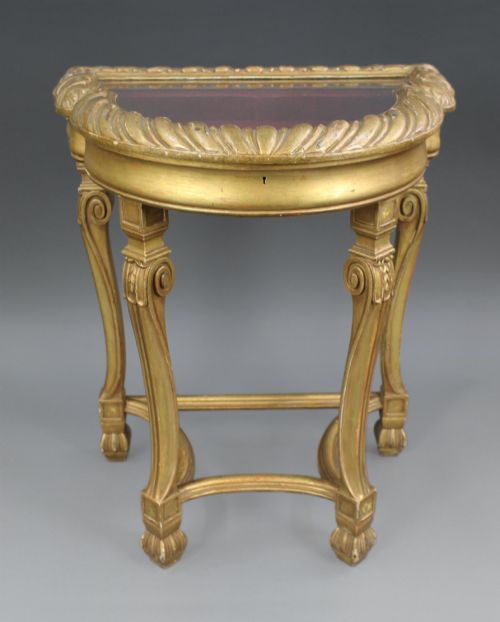
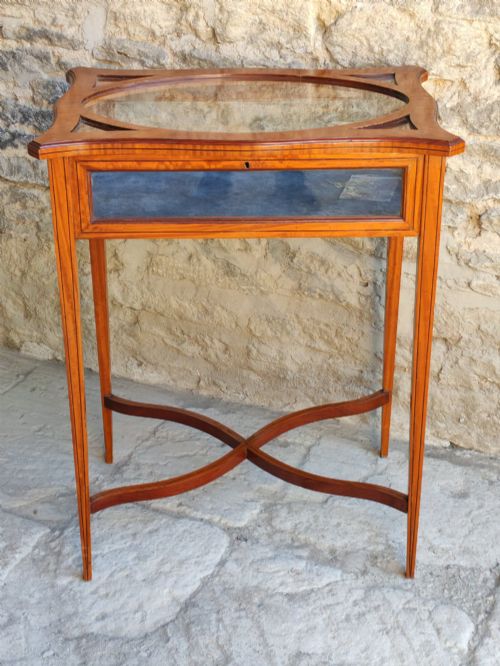
The buyer encounters various shapes on this page, ranging from standard rectangular and square profiles to serpentine, kidney, and octagonal forms. English and French workshops produced these items to serve both domestic drawing rooms and commercial retail shops.
Makers utilised different structural formats, offering pieces that stand on slender legs as display tables or sit upon counters and pedestals as enclosed vitrines.
Materials and construction
Makers constructed the carcases primarily from mahogany, walnut, satinwood, and kingwood, frequently applying delicate marquetry, crossbanding, or satinwood inlay to the timber surfaces. Glazed panels and bevelled glass lift lids or doors allow light to enter the interior display compartment.
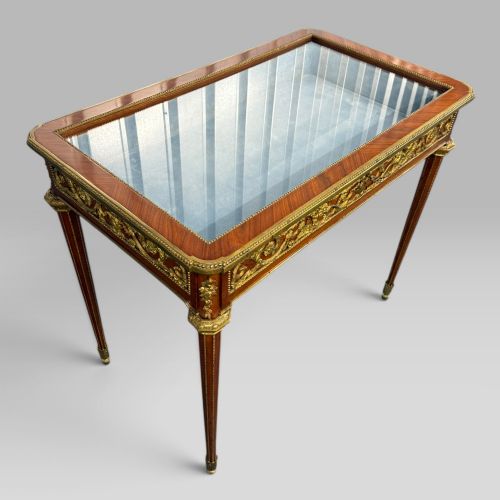
Metal mounts in brass, ormolu, gilt-bronze, and gilt metal accent the exterior frames and legs, particularly on French revival pieces. Interior compartments typically feature linings of velvet or fabric to cushion the displayed objects safely against the wood.
Cabinetmakers incorporated functional elements such as hinged lids, secure locks, and occasional painted decorative details or hand-painted panels to complete the construction.
Antique Bijouterie Cabinet Retail Price Guide 2026
Typical asking prices for bijouterie cabinet among the pieces listed under this phrase on Sellingantiques today, from the lower quarter to the upper quarter. They describe what is for sale here now, not the wider market.
Craftsmanship and distinction
The standard of an antique bijouterie cabinet depends upon the precision of the timber joinery, the crispness of any carved detailing, and the finesse of the brass or ormolu mounts. Finer examples display meticulous marquetry and well-figured grain across the mahogany or exotic veneers.
The choice of secondary woods, the quality of the bevelled glass in the display case, and the integration of specialised linings differentiate standard workshop production from exceptional maker-attributed pieces.
Edwards and Roberts·Denby and Spinks·Shapland and Peter
The Antique Bijouterie Cabinet Glossary
- Bijouterie table
- A low display table with a glazed compartment beneath the top designed for exhibiting jewellery and small curiosities.
- Vitrines
- Glass-fronted or glass-topped cabinets built specifically to display decorative objects while protecting them from dust.
- Ormolu
- Gilded bronze or brass mounts applied to furniture to provide decorative highlights and contrast with the dark timber.
- Crossbanding
- A border of veneer laid around the edge of a panel with the grain running perpendicular to the centre.
- Marquetry
- Decorative patterns formed by inserting pieces of contrasting veneer into a wood foundation.
Antique Bijouterie Cabinet: Frequently Asked Questions
What is an antique bijouterie cabinet used for?
These cabinets serve to house and display small collectables, pocket watches, coins, medals and jewellery under glass. The enclosed compartment protects delicate items from dust while allowing them to be viewed from above or the side.
Historically, they occupied drawing rooms and parlours where hosts could share their personal collections with guests. Today, they continue to function as elegant display furniture for modern homes.
How do I distinguish between French and English styles?
French pieces often incorporate flamboyant ormolu mounts, kingwood veneers, and serpentine or kidney shapes influenced by Rococo and Empire revivals. English variants tend to lean towards Sheraton or Chippendale styles, featuring understated mahogany construction with subtle satinwood stringing.
Examining the secondary woods and overall decorative restraint usually reveals the country of origin.
Are these cabinets secure for valuable items?
Many surviving examples retain their original working locks and keys, designed to secure the glazed compartment against casual handling. The sturdy glass lids and locked doors offer a basic level of physical security for items kept inside.
However, owners should rely on modern home security rather than antique locking mechanisms for high-value items.
How do I care for the fabric lining inside?
The interior velvet or fabric lining requires gentle maintenance, typically limited to careful surface dusting with a soft brush or low-suction vacuum attachment. Avoiding direct sunlight prevents the textile colours from fading over time.
If replacement becomes necessary, conservators can install period-appropriate replacement fabrics to match the original aesthetic.