
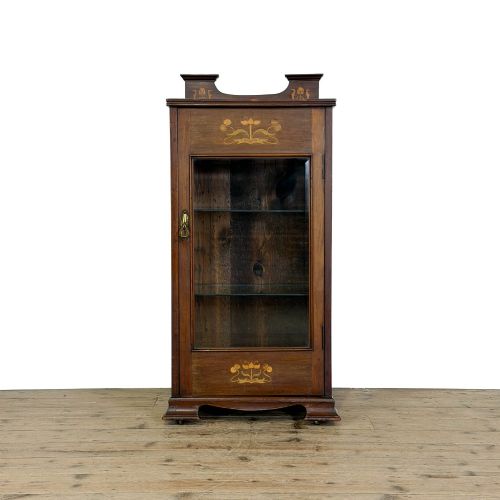
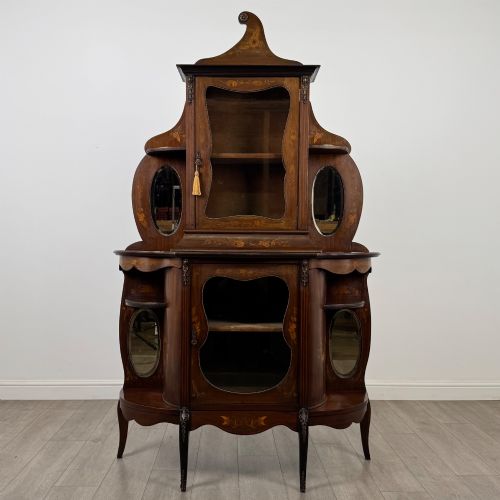

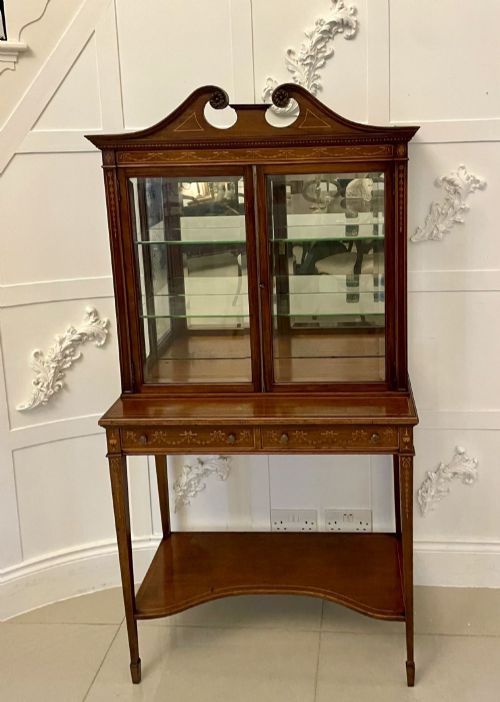
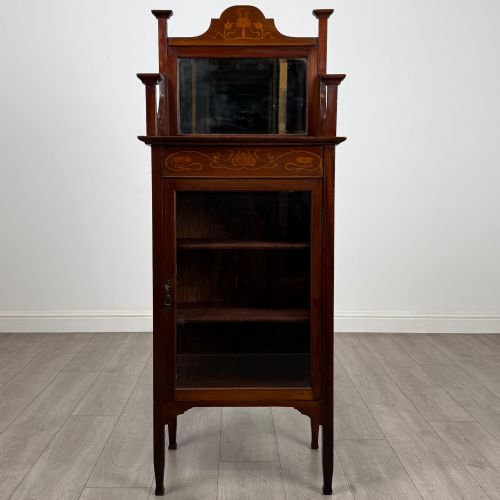
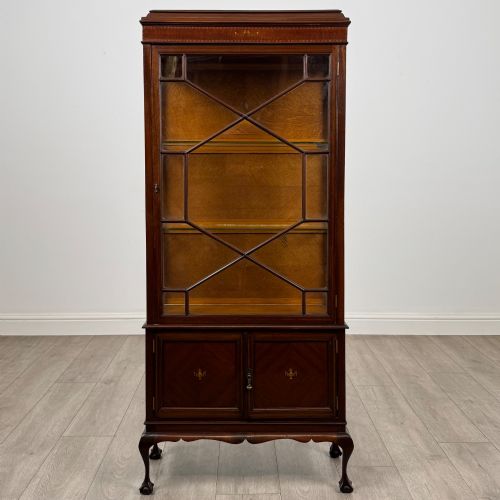
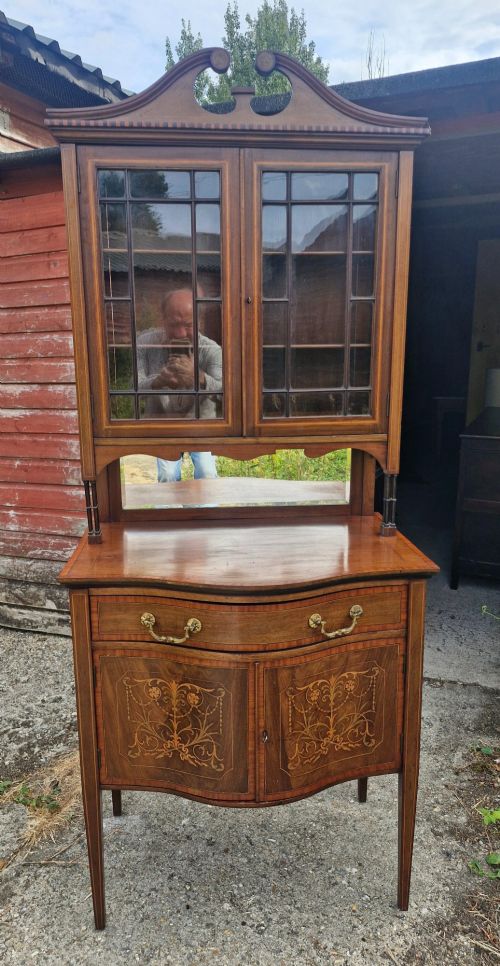
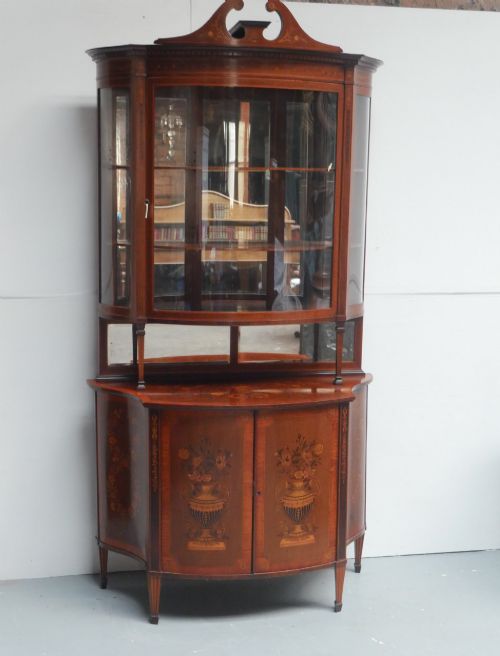
Edwardian Inlaid Vitrine
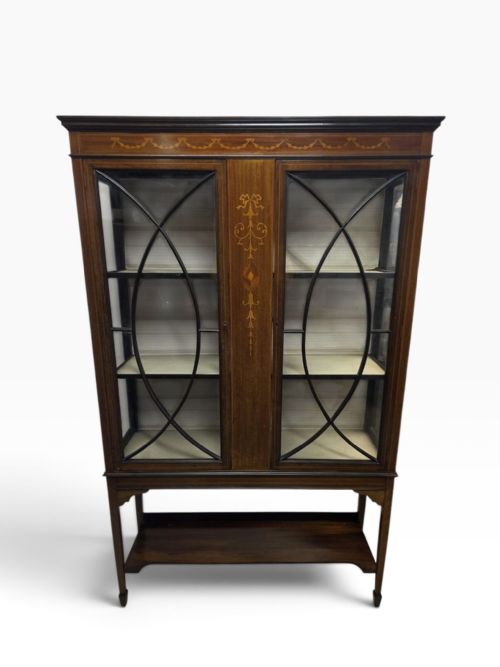
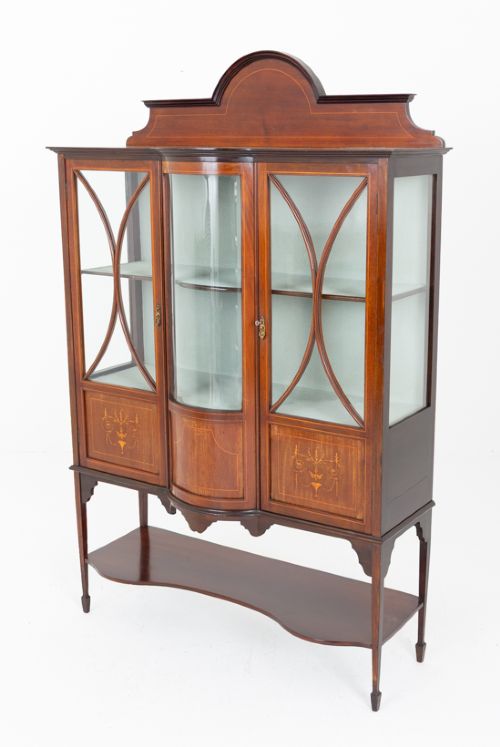
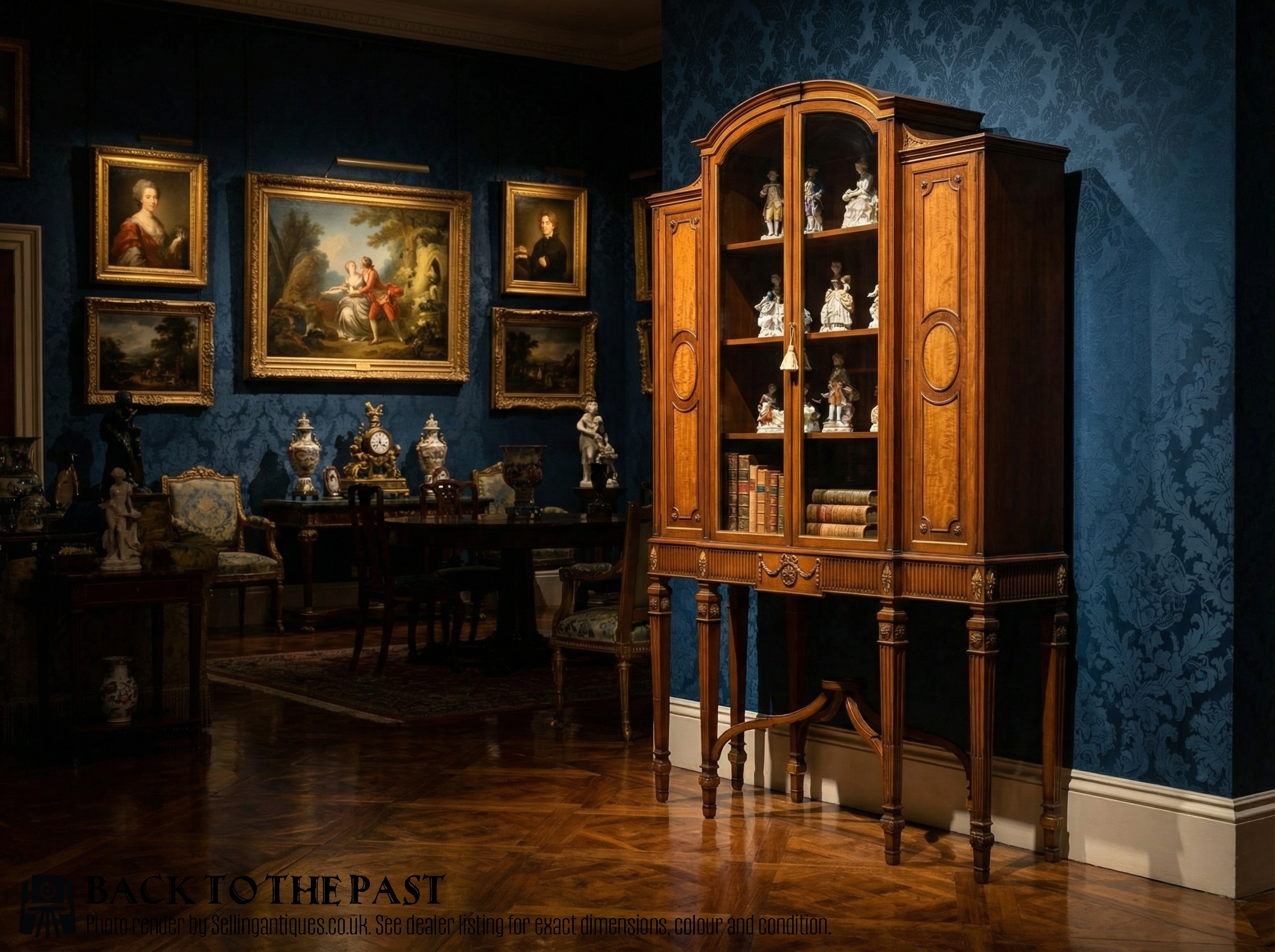
An edwardian inlaid vitrine brings light into a room through generous glass panels while holding silver, porcelain and books.
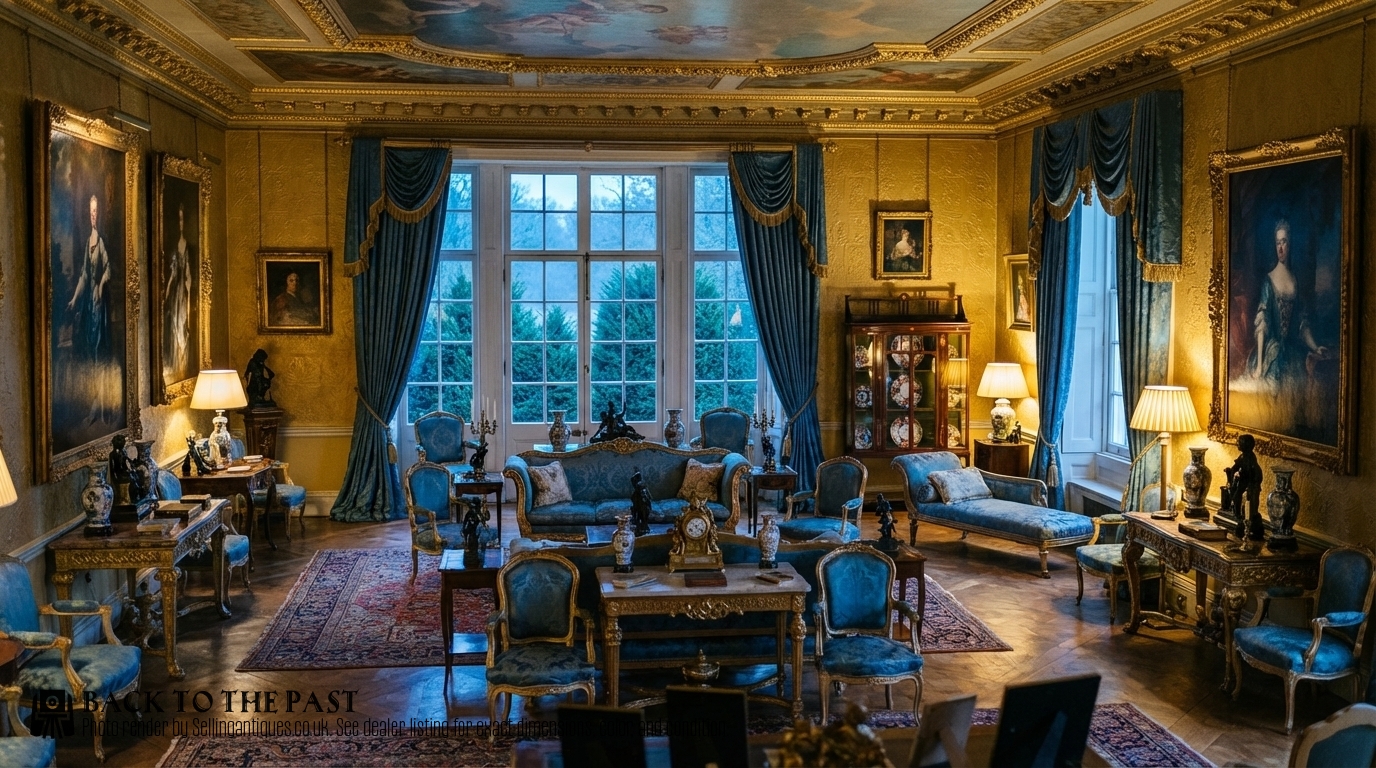
Edwardian Inlaid Vitrine
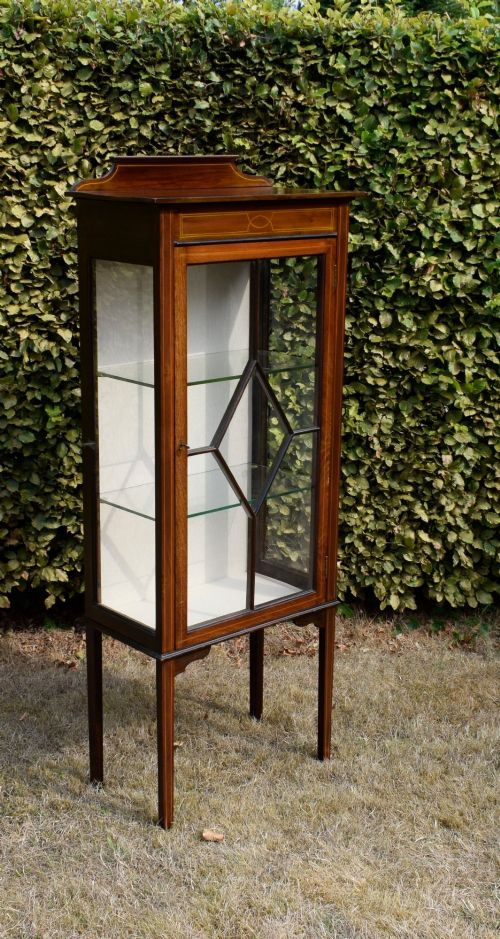
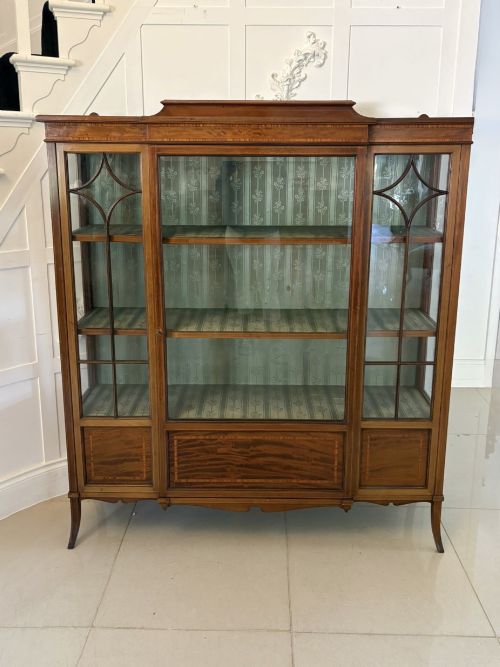
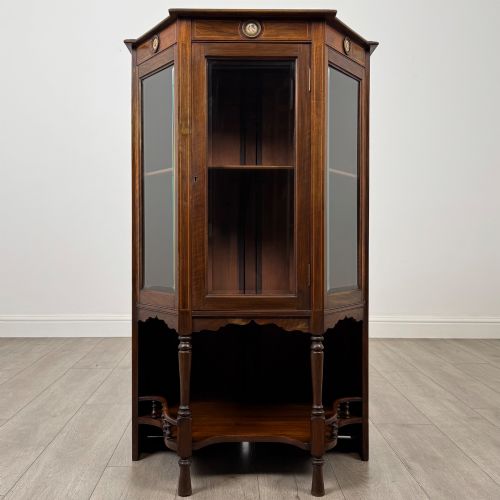
An edwardian inlaid vitrine is a glazed display cabinet or table designed to showcase collection items while protecting them from dust.
The pieces on this page span the late nineteenth century into the twentieth century, largely grouped under the Edwardian period and Victorian Sheraton Revival styles.
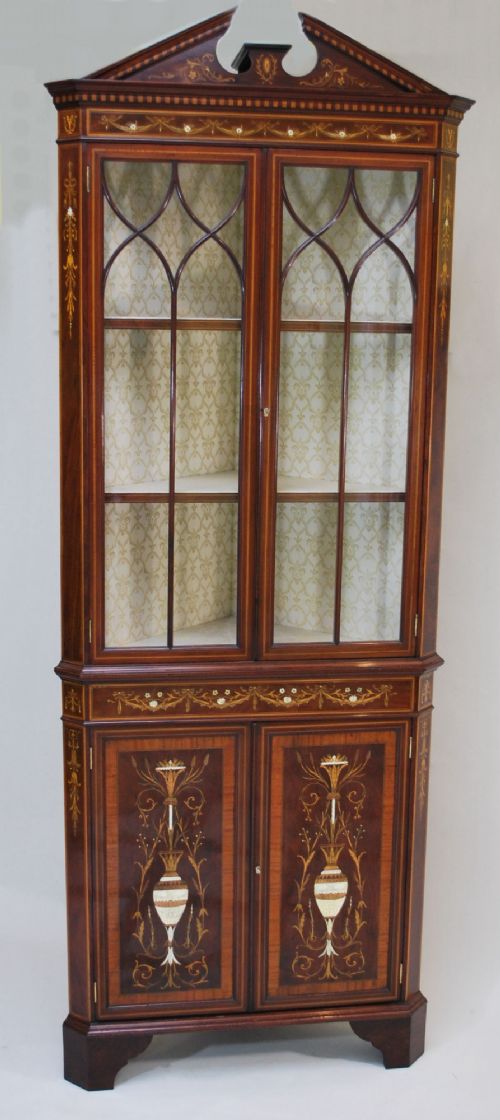
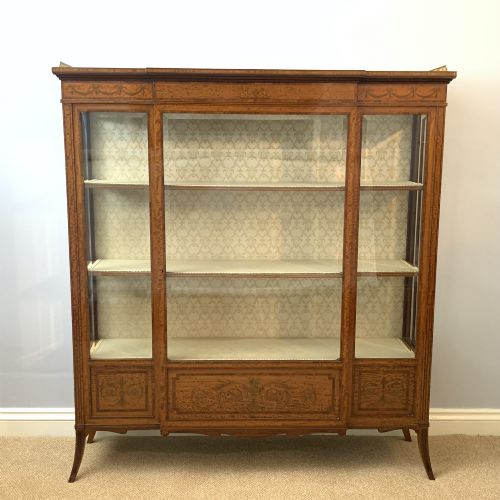
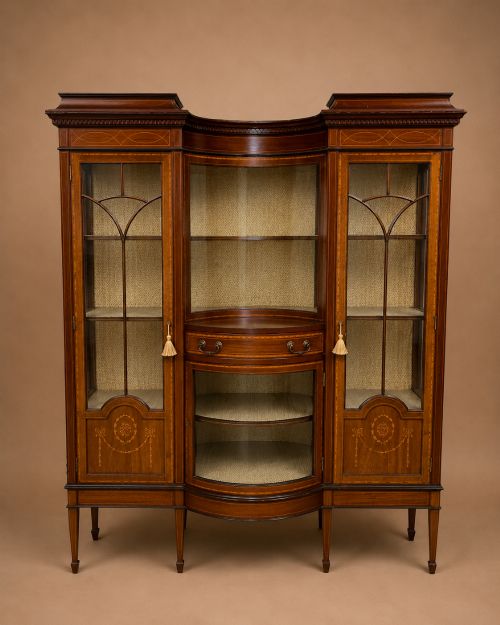
Forms include freestanding display cabinets, tall corner units, bow-ended models and glass-topped bijouterie tables intended for smaller curiosities.
Materials and Construction
Cabinets rely primarily on mahogany and satinwood timber frames fitted with large sheets of glass and occasionally mirror backs to reflect light.
Decoration is achieved through delicate wood inlay, satinwood banding and floral marquetry motifs set into the primary wood.
Structural elements include brass hardware, fabric linings within display spaces and multi-part construction allowing easier transport.
Edwardian Inlaid Vitrine Retail Price Guide 2026
Typical asking prices for edwardian inlaid vitrine among the pieces listed under this phrase on Sellingantiques today, from the lower quarter to the upper quarter. They describe what is for sale here now, not the wider market.
Periods represented span from late Victorian and eighteen eighty through the Edwardian era up to nineteen ten.
Markers of Quality
Quality rests upon the crispness of the marquetry work and the choice of figured timber rather than plain boards.
Finer examples show balanced proportions, such as well-executed bow fronts or serpentine shapes paired with robust internal shelving.
Maker attribution to known firms adds distinction, visible in the precision of the joinery and the finish of the brass fittings.
Edwards & Roberts·Shapland and Petter·Maple & Co.
The Edwardian Inlaid Vitrine Glossary
- Vitrine
- A glass-fronted cabinet or table designed for displaying fine objects and porcelain. The term derives from the French word for glass.
- Bijouterie table
- A low display table with a glazed top used for holding jewellery, medals and small curiosities. These pieces often feature hinged lids.
- Marquetry
- Decorative patterns formed by fitting together thin veneers of different coloured woods. This technique requires considerable patience and skill from the cabinetmaker.
- Astragal glazing
- Wooden bars dividing a glass door or window into smaller panes. These delicate mouldings define the opening of a cabinet.
- Sheraton Revival
- A late nineteenth and early twentieth century design movement inspired by late eighteenth century neoclassical furniture. It favours light timbers and restrained inlay.
Edwardian Inlaid Vitrine: Frequently Asked Questions
What is the difference between a vitrine and a display cabinet?
A vitrine typically emphasises glass panels on multiple sides to maximise light exposure for fragile items.
Display cabinets can encompass broader storage forms with solid wooden bases or fewer glass surfaces.
How were bijouterie tables used in period homes?
Bijouterie tables served as drawing room furniture where hosts could exhibit collections of coins, miniatures and jewellery.
Guests would inspect the contents through the glass top during social gatherings.
How do I identify an Edwardian piece?
Edwardian furniture dates from the reign of King Edward VII between nineteen hundred and nineteen ten, drawing heavily on lighter Sheraton forms.
Pieces from this era often feature bright mahogany surfaces combined with satinwood inlay and delicate floral motifs.
Where should I place a corner vitrine?
Corner cabinets fit neatly into unused room angles while utilising vertical wall space effectively.
They work well in reception rooms to display smaller porcelain collections without crowding floor space.