
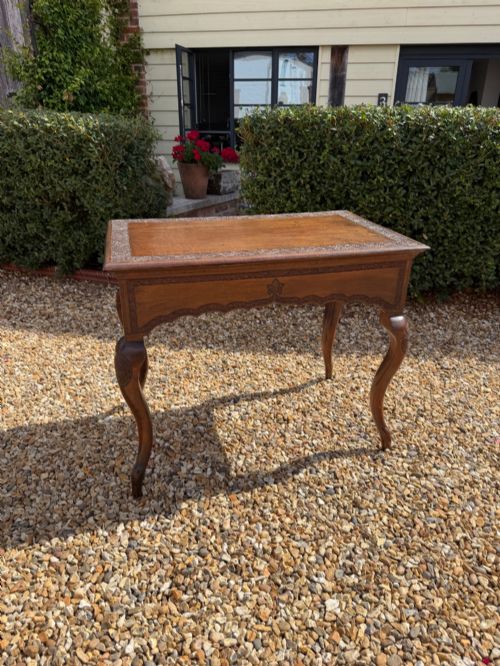
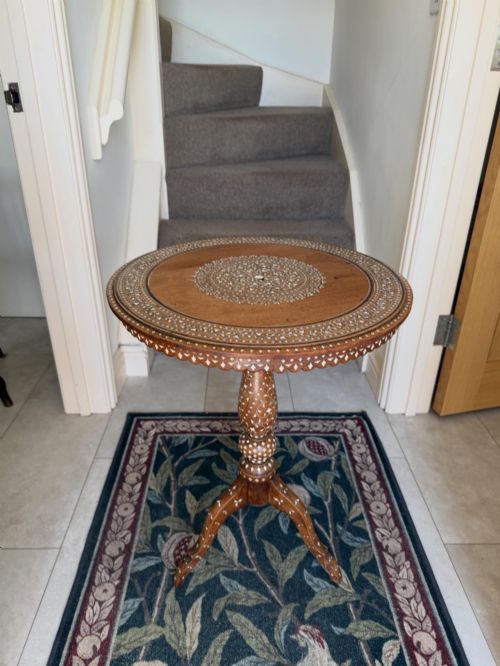
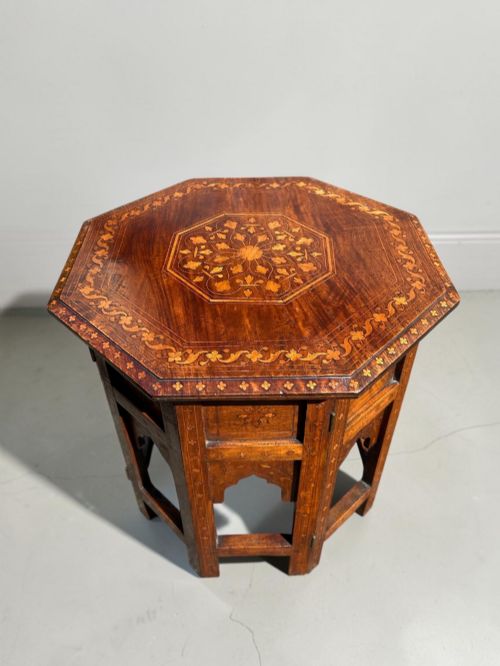
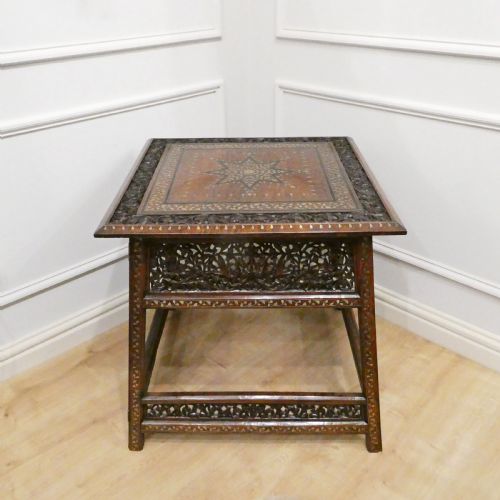
Indian Carved Side Table
When you want an indian carved side table, you find pieces shaped by intricate foliage, geometric brass work and dense regional traditions.
Indian Carved Side Table
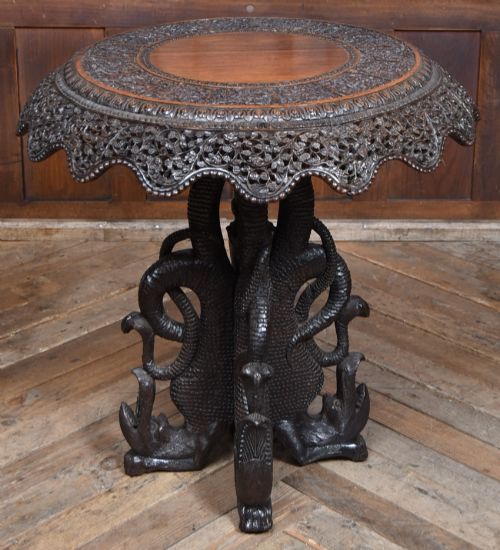
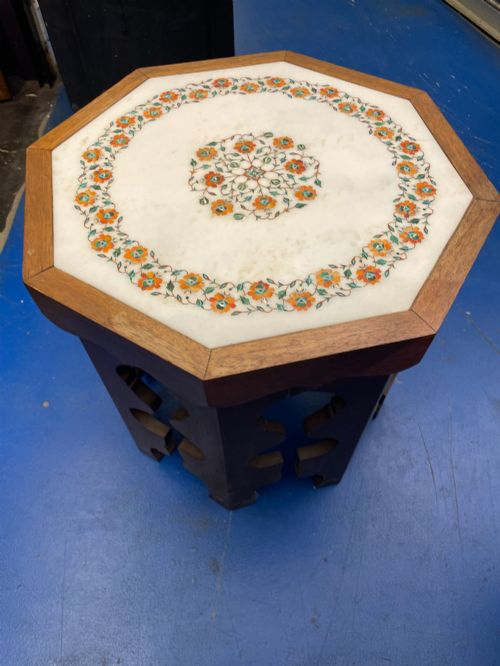
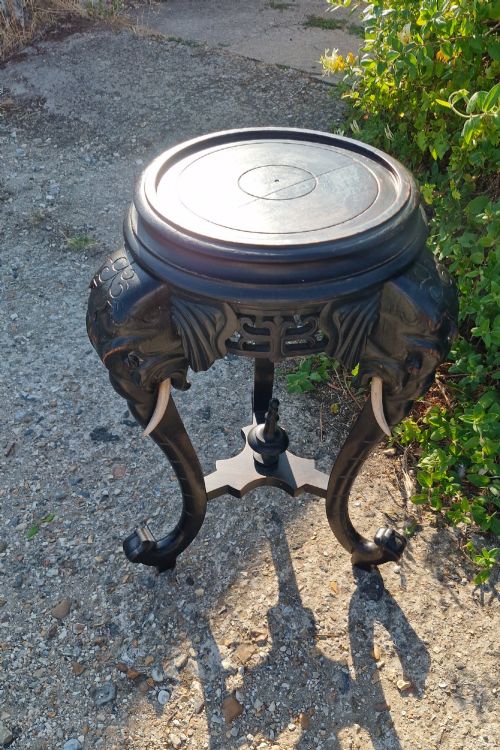
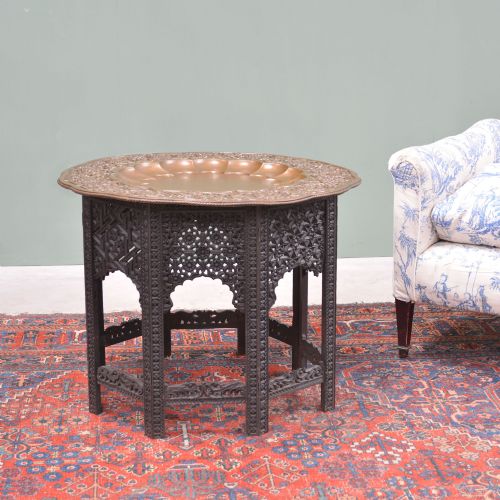
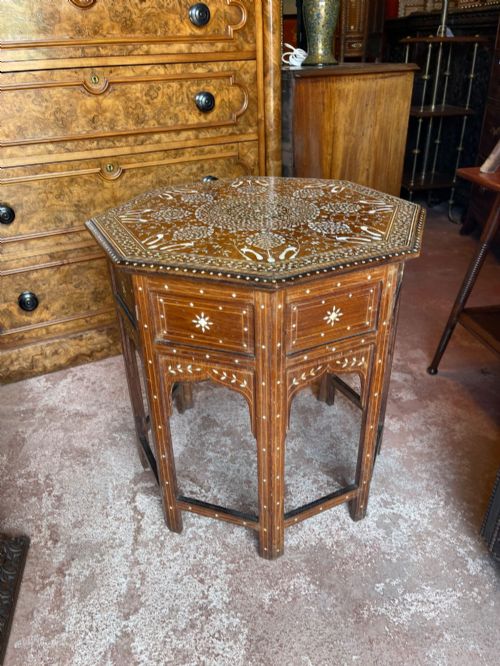
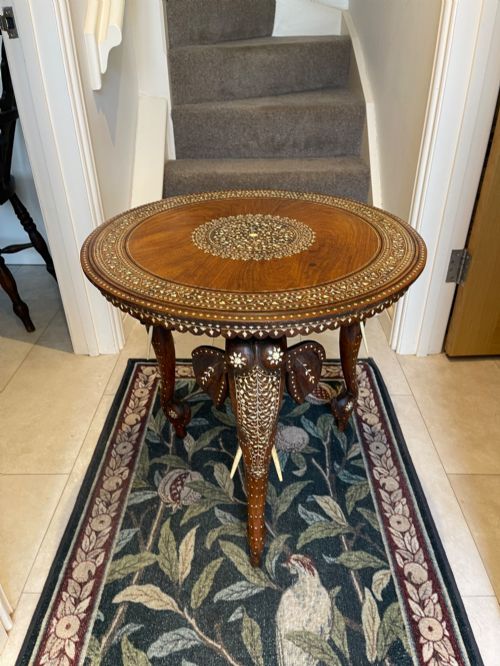
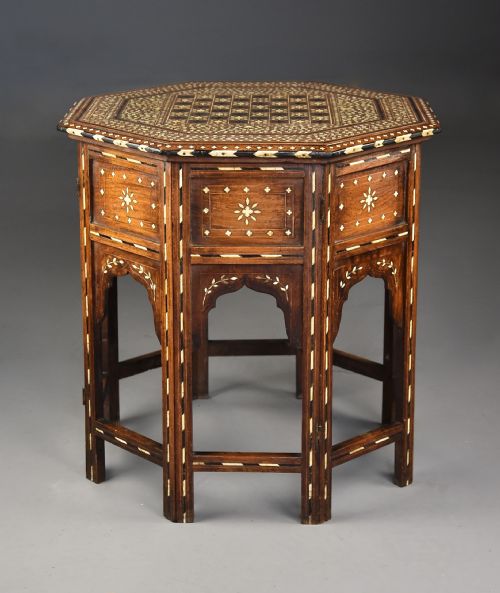
Makers utilised distinct regional patterns, incorporating elephant supports, pierced fretwork and intricate folding mechanisms designed for colonial officers and Victorian parlours alike. Octagonal tables with intricate folding stands dominate the current inventory, offering versatile proportions for lamp placement or display.
Beyond standard occasional tables, the category extends to pedestal tables, tiered buffets and marble-topped variants reflecting British aesthetic tastes of the Victorian era. These items bridge traditional craftsmanship with British colonial utility, resulting in heavily decorated surfaces intended to catch the eye.
How they were made
Artisans constructed these tables from dense timbers such as teak, padauk, rosewood and ebony, selected for their stability under deep chiselling. Workshops employed intricate piercing and low-relief carving to cover every square inch with floral scrolls, geometric motifs and mythical beasts.
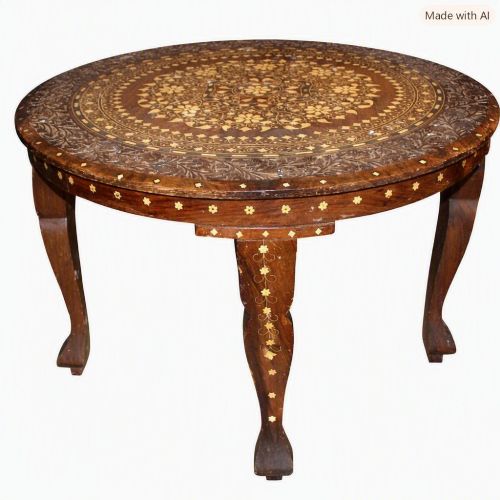
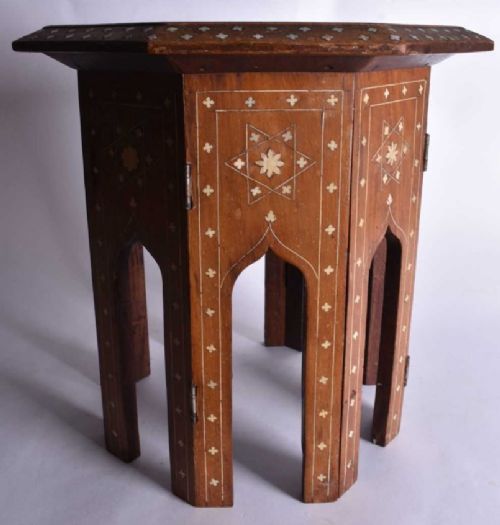
Surface embellishment frequently involved complex inlay work, pressing brass wire, bone, mother-of-pearl and dark resins into precision-cut grooves across the wooden tops. Folding bases utilised clever interlocking hinges that allowed octagonal and hexagonal surfaces to detach cleanly from their collapsible supports.
Listings span the nineteenth and twentieth centuries, incorporating Victorian, Edwardian, and Aesthetic Movement interpretations alongside Anglo-Indian and colonial forms.
What varies in quality
Depth and crispness of the chisel work separate master-carved examples from hurried commercial output, where softer wood yields shallow, indistinct patterns. The precision of the joinery in folding bases dictates long-term stability, separating rigid, well-fitted frames from loose, wobbly structures.
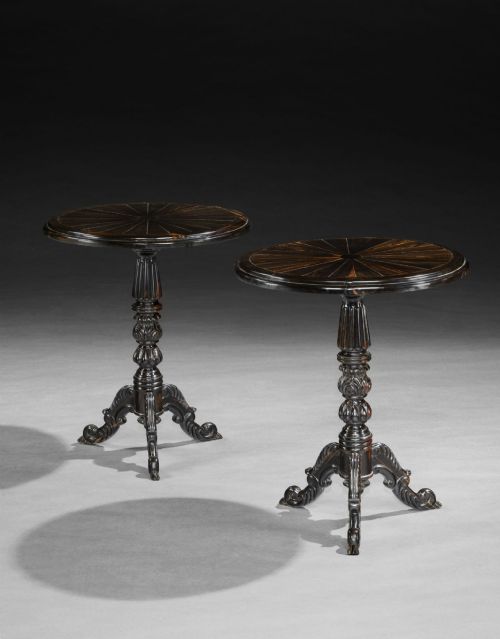
The integrity of the inlay work marks the upper tier of production, where flush brass or bone sections remain completely intact without missing fragments. Choice of timber also influences desirability, with dense, heavy padauk and Ceylon ebony commanding greater appreciation than standard utilitarian hardwoods.
Liberty And Co
The Indian Carved Side Table Glossary
- Hoshiarpur
- A town in Punjab renowned for intricate woodwork, specifically tables featuring dense vegetal carving and inlaid brass or bone. Pieces originating here often display folding octagonal or square tops.
- Padauk
- A heavy, durable tropical hardwood with a reddish-orange hue that darkens with age, frequently utilised in Burmese and Anglo-Indian furniture. It accepts fine, crisp chisel details exceptionally well.
- Fretwork
- Pierced woodwork cut through entirely to create ornamental openwork patterns resembling lace. This technique appears heavily on campaign and occasional tables to reduce weight.
- Campaign table
- Portable furniture designed for easy dismantling and transport by British military officers stationed abroad. Many feature clever folding bases and removable tops.
- Octagonal top
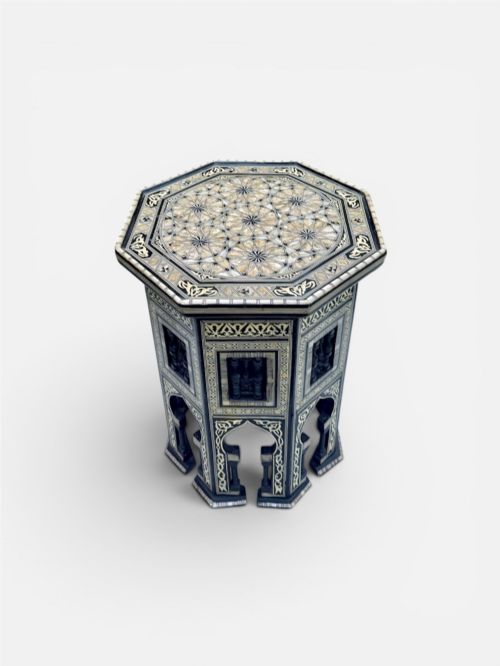
- An eight-sided surface characteristic of Moorish and Hoshiarpur folding tables. This geometry allows complex repeating inlay patterns to radiate from a central motif.
Indian Carved Side Table: Frequently Asked Questions
What is an Indian carved side table?
These are decorative occasional tables featuring dense hand-carved woodwork, often originating from nineteenth-century workshops in Hoshiarpur, Burma, or the Bombay Presidency. They combine traditional Eastern motifs with British colonial forms.
Most examples utilise folding wooden bases beneath octagonal, square, or hexagonal tops inlaid with brass, bone, or mother-of-pearl.
How were these tables used originally?
British officers and expatriates utilised them as portable campaign furniture, tea tables, or decorative display surfaces in colonial drawing rooms. Their collapsible designs allowed for straightforward packing and relocation.
Back in Victorian parlours, they served as exotic focal points for holding lamps, ornaments, or reading material.
How do I care for inlaid wood?
Protect the delicate surfaces from direct sunlight and extreme humidity fluctuations, which cause wood to expand and inlay to loosen. Dust gently with a dry, soft cloth rather than using harsh chemical polishes.
Feed the timber occasionally with appropriate wax to maintain the rich tone of the teak, padauk, or rosewood.
How do I distinguish regional styles?
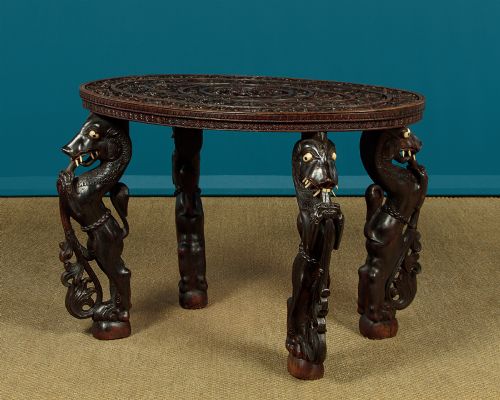
Hoshiarpur tables typically showcase dense floral carving paired with intricate brass wire inlay on folding octagonal frames. Burmese and Ceylonese pieces often feature deeper figural carvings, including elephants and dragons rendered in heavy padauk or ebony.
Moorish and Damascus influences introduce geometric mother-of-pearl patterns and hexagonal footprints reflecting Middle Eastern design traditions.