
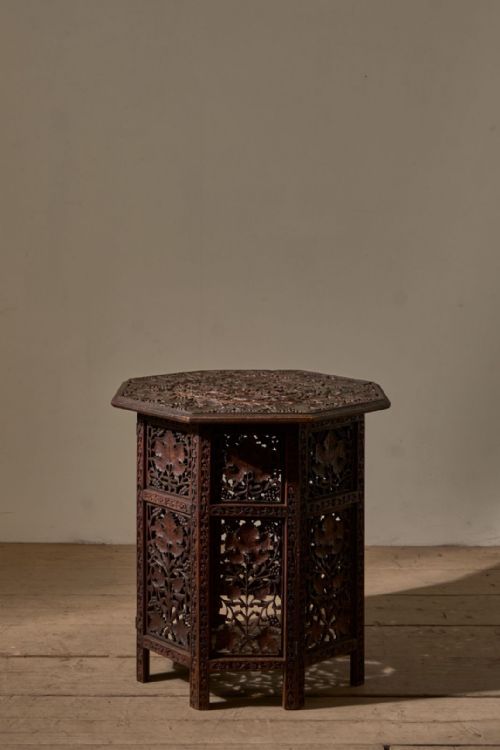


Colonial Folding Side Table
These colonial folding side table examples offer versatile portability rooted in nineteenth-century campaign traditions and intricate regional workshops.
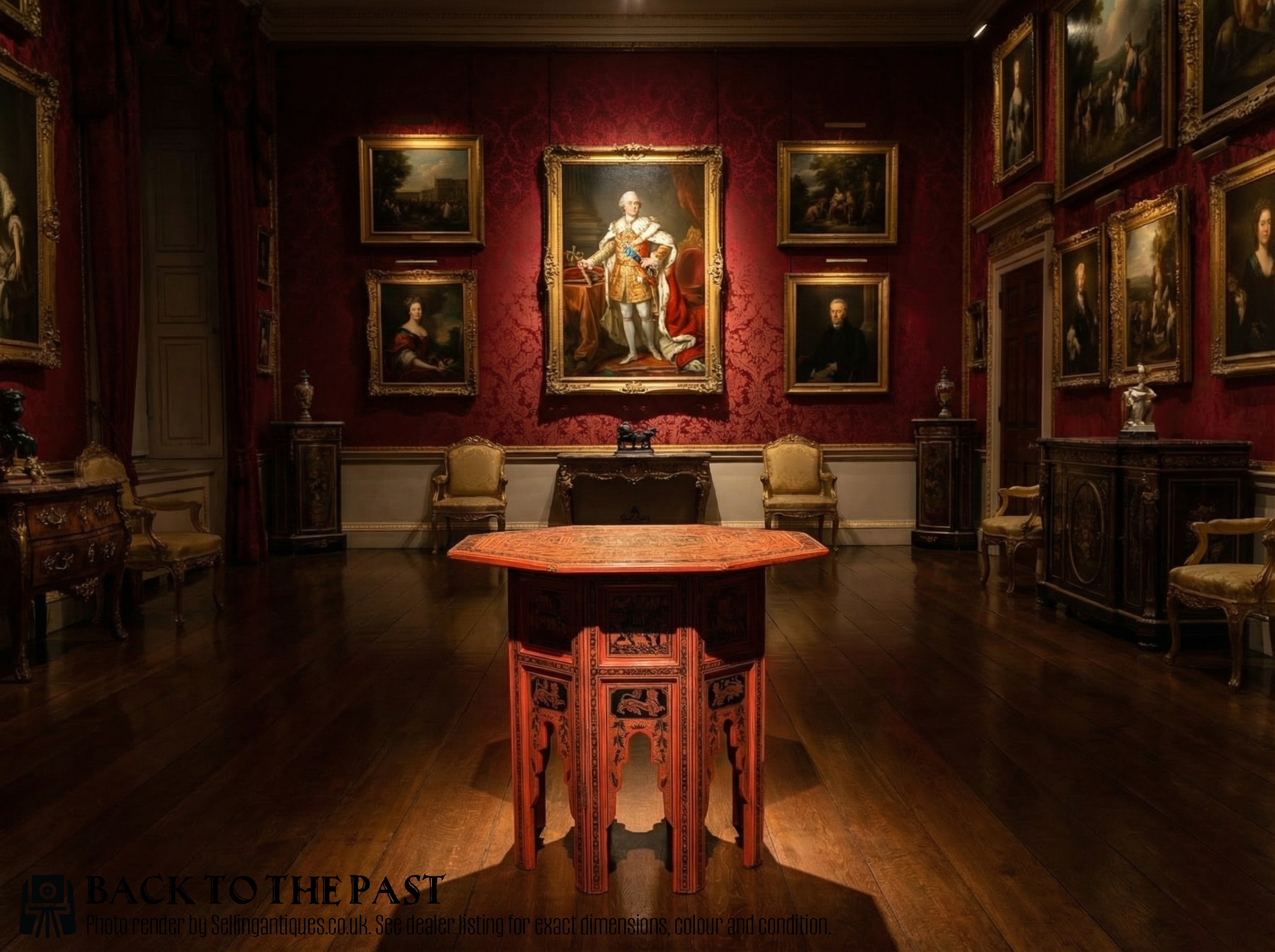
Colonial Folding Side Table
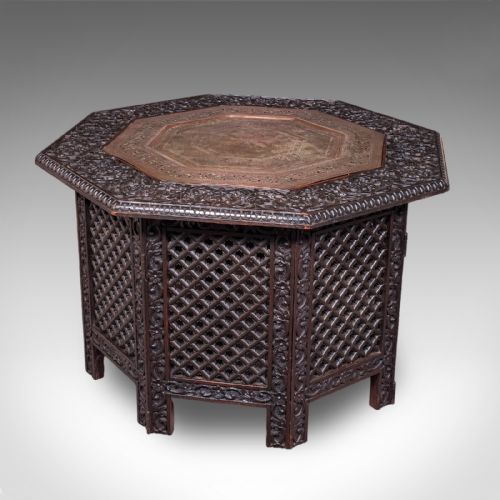
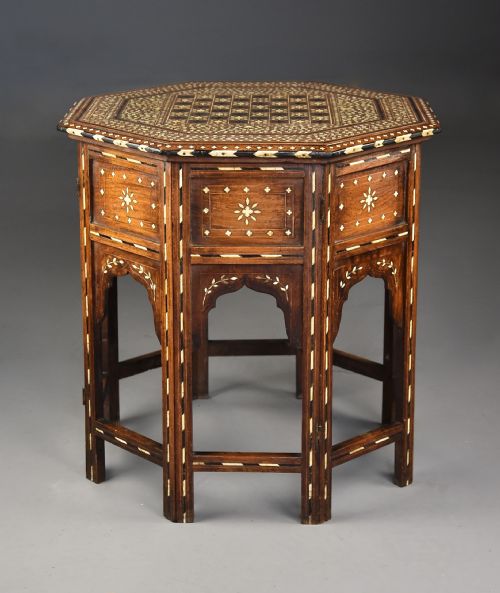
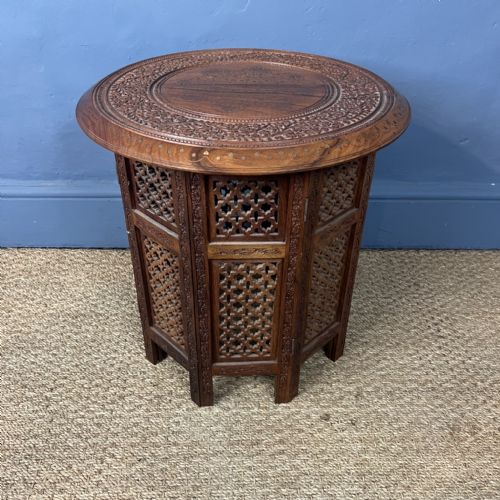
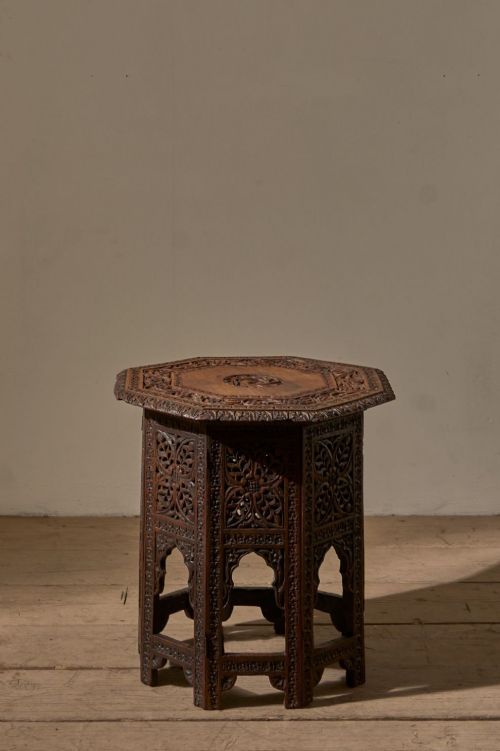
A colonial folding side table represents a portable piece of furniture designed for British administrators, military officers, and travellers across regions like India and Burma. These tables function as side tables, occasional tables, coffee tables, and lamp tables within domestic settings.
The pieces appearing on this page span from the Victorian era and the late nineteenth century through to the early twentieth century, specifically around nineteen thirty. Forms include octagonal occasional tables, circular tables, and collapsible designs.
Origins heavily reflect Anglo-Indian, Anglo-Indian Colonial, and Anglo-Burmese styles. Construction methods typically allow the surfaces and bases to fold or collapse flat for ease of transport.
How they were made
Craftsmen utilised dense hardwoods suited to tropical climates, predominantly teak, padauk, and rosewood, alongside occasional use of ebony. These sturdy timbers provide the structural integrity required for collapsible furniture.
Surface decoration frequently incorporates intricate carving alongside metal inlay work using brass and copper. Certain examples feature bone inlay or delicate lacquer finishes applied by regional artisans.
Certain tables hide fierce dragons within their foliage carvings, ensuring your tea cup rests upon a mythological beast.
What varies in quality
Quality differentiates itself through the depth, crispness, and complexity of the hand carving across the timber surfaces. Elaborate floral, leaf, and dragon motifs demand high skill from the maker.
The precision of the brass or bone inlay work dictates the overall refinement of the piece. Tighter joints in the folding mechanisms also separate standard utility items from finer parlour examples.
The Colonial Folding Side Table Glossary
- Anglo-Indian
- A style describing furniture made in India during the British colonial period, often combining British furniture forms with traditional Indian decorative motifs and carving techniques.
- Campaign table
- A portable piece of furniture designed to fold or dismantle easily for military officers or travellers on the move during the nineteenth century.
- Padauk
- A heavy, durable tropical hardwood with a reddish hue, frequently utilised in nineteenth-century colonial furniture making.
- Hoshiarpur
- A town in Punjab renowned for its intricate wood carving and meticulous brass and bone inlay work seen on nineteenth-century tables.
Colonial Folding Side Table: Frequently Asked Questions
How do I fold these tables?
Most campaign and folding tables rely on interlocking wooden bases that lift away from the top and fold flat into a scissors action. You simply lift the tabletop slightly and disengage the hinged or slotted cross-stretcher supports underneath.
Take care to support the weight of the timber and avoid forcing stiff hinges if the wood has expanded over decades in changing humidity.
Were these made for military use?
Many folding tables originated as campaign furniture intended for officers on active service or colonial administrators relocating frequently between stations. The collapsible design allowed efficient packing into crates for long journeys.
By the late nineteenth century, similar folding and occasional tables became fashionable fixtures for static domestic drawing rooms and parlours across Britain.
How do I clean brass inlay?
Dust the carved wooden surfaces regularly with a soft, dry brush to prevent dirt settling into the intricate recesses. Clean brass inlay sparingly using a dry cotton cloth rather than liquid polishes that might stain the surrounding teak or padauk.
Keep the timber nourished with a suitable quality wax to maintain the natural moisture and sheen of the hardwood.
What woods were used?
Workshops predominantly employed dense tropical hardwoods such as teak and padauk, alongside rosewood and ebony for finer decorative accents. These timbers resisted local insects and withstood the rigours of transport.
Surfaces were frequently left unpainted to showcase the natural grain of the wood beneath the elaborate carved patterns.