


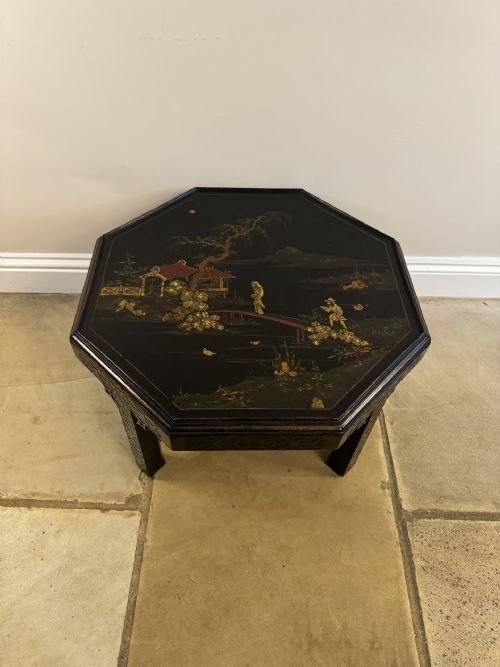


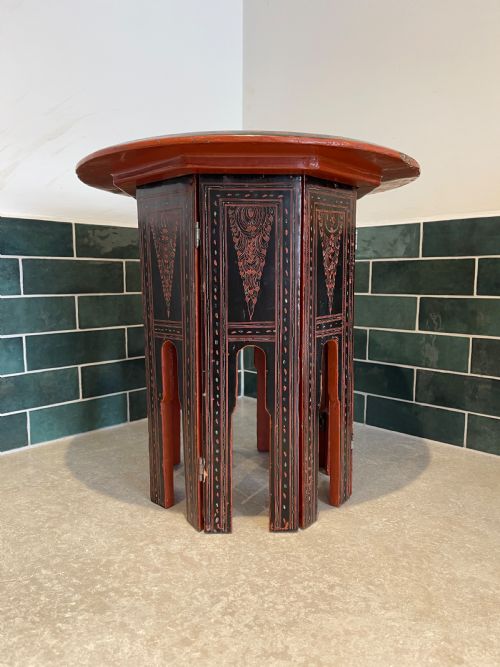

Oriental Octagonal Coffee Table
An oriental octagonal coffee table brings intricate regional carving and geometric form into a room, offering a distinct surface for daily use.
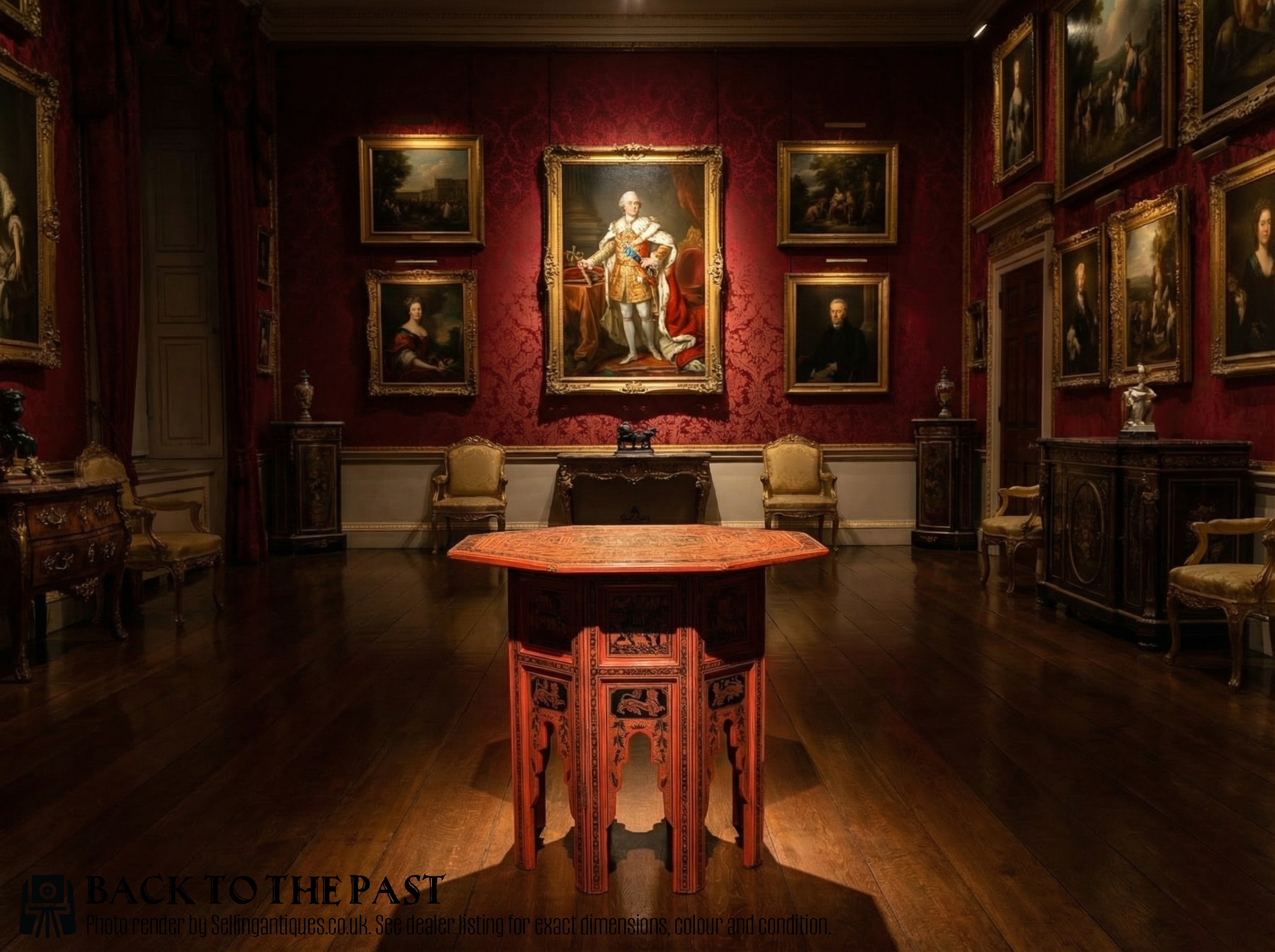
Oriental Octagonal Coffee Table
An oriental octagonal coffee table brings together eight-sided geometric forms and stylistic influences spanning the nineteenth and early twentieth centuries. These tables draw on Anglo-Indian, Moorish Revival, Anglo-Burmese, and Chinese Export traditions to create low surfaces suited to modern living.
The pieces listed here appear under various forms including occasional tables, side tables, and low coffee tables. Makers adapted traditional regional designs for Western drawing rooms during the Victorian and Edwardian periods.
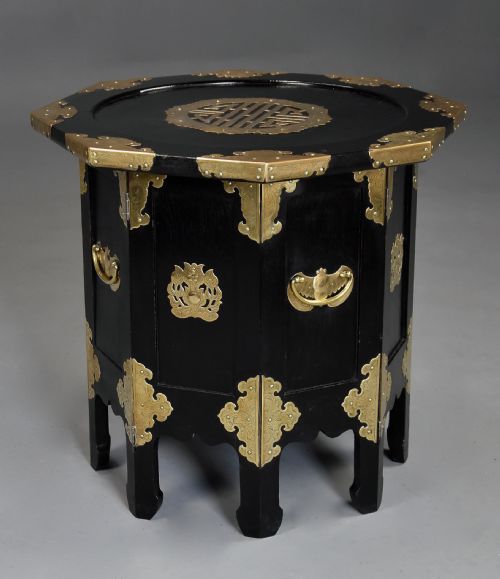
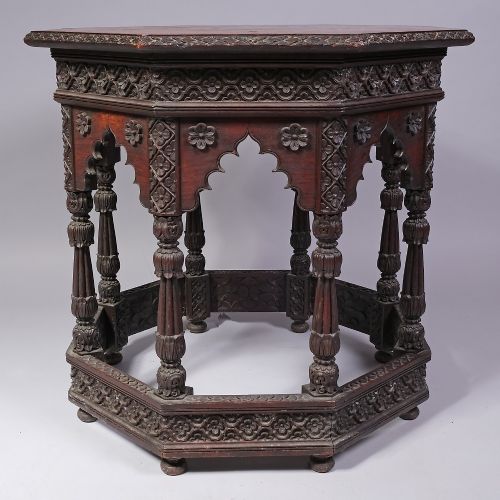
Examples on this page originate from diverse workshops and incorporate varied cultural motifs such as carved dragons, elephants, and intricate geometric panel work. Buyers encounter both low coffee tables and slightly taller occasional versions brought down to coffee table height.
Materials and construction
Construction relies upon dense regional timbers including teak, rosewood, ebonised wood, and general hardwoods. Artisans shaped these sturdy woods into eight-sided frames capable of supporting elaborate surface decoration.
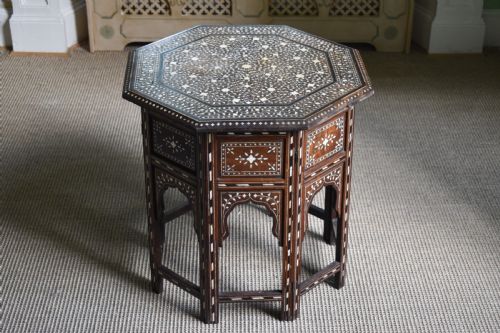
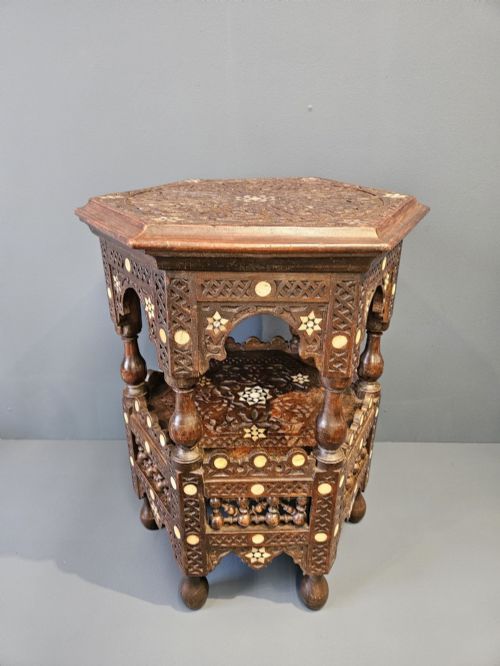
Surface ornamentation defines the group, utilising hand-carving, bone inlay, mother-of-pearl, and applied brass or copper tops. Lacquer finishes and painted chinoiserie decoration further distinguish specific pieces from plain timber examples.
Materials recorded across the inventory include teak, rosewood, ebonised wood, bone, brass, copper, and mother-of-pearl.
Judging quality
Quality rests upon the depth and crispness of the hand-carving across the panels and borders. Finer examples maintain tight joints and securely seated inlay work without missing sections of bone or mother-of-pearl.
The integrity of the secondary materials, such as the weight of a brass or copper top and the precision of ebonised finishes, separates standard production from superior craftsmanship.
The Oriental Octagonal Coffee Table Glossary
- Anglo-Indian
- Describing furniture made in India during the British colonial period for both local European residents and export. It combines British furniture forms with traditional Indian carving techniques and motifs.
- Hoshiarpur
- A town in Punjab renowned for intricate woodwork involving delicate micro-mosaic inlay of bone or brass set into dark hardwood. Pieces from this centre feature dense geometric patterns.
- Chinoiserie
- European artistic style reflecting Chinese motifs and techniques, popularised during the Edwardian era and earlier periods. It involves decorative painted scenes or lacquered finishes.
- Ebonised
- Wood treated with a dark finish to imitate expensive ebony. This technique provided a uniform black ground that highlighted brass inlay and intricate carvings.
- Moorish Revival
- An architectural and decorative style drawing inspiration from North African and Spanish Islamic design. It manifests in deeply carved panels and geometric star patterns.
Oriental Octagonal Coffee Table: Frequently Asked Questions
What is an oriental octagonal coffee table?
These are eight-sided low tables influenced by Asian, Indian, and Middle Eastern design traditions. They were produced primarily during the nineteenth and early twentieth centuries.
Craftsmen utilised regional woods and applied techniques such as bone inlay, hand-carving, and metal tops to create decorative surfaces for domestic interiors.
How were these tables used originally?
Many of these pieces began as occasional, lamp, or side tables rather than dedicated coffee tables. They sat in parlours and drawing rooms to hold decorative objects, lamps, or tea.
Over time, owners and dealers adapted many of these lower tables for use as coffee tables in contemporary sitting rooms.
What materials should I look for?
The listings feature dense timbers like teak, rosewood, and general hardwoods, often ebonised for a dramatic dark finish. Surface decoration frequently incorporates bone, mother-of-pearl, brass, and copper.
Lacquer and painted finishes also appear on pieces influenced by Chinese export styles and Edwardian chinoiserie.
How do I identify the period?
Dating relies on stylistic markers combined with timber choice and construction methods. Victorian and Edwardian examples often display specific revival styles like Moorish or Anglo-Indian colonial work.
Nineteenth-century pieces generally show deeper hand-carving and heavier construction compared to later twentieth-century iterations.
How do I care for inlaid wood?
Inlaid surfaces require gentle dusting with a dry or slightly damp cloth to protect delicate bone and metal elements. Avoid harsh chemical polishes that can seep into crevices and loosen small pieces of inlay.
Keeping the table away from direct heat sources and strong sunlight preserves the timber and prevents the wood from warping.