
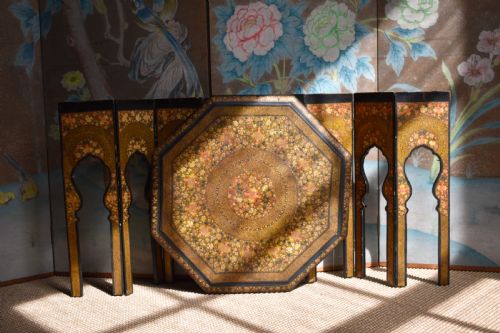


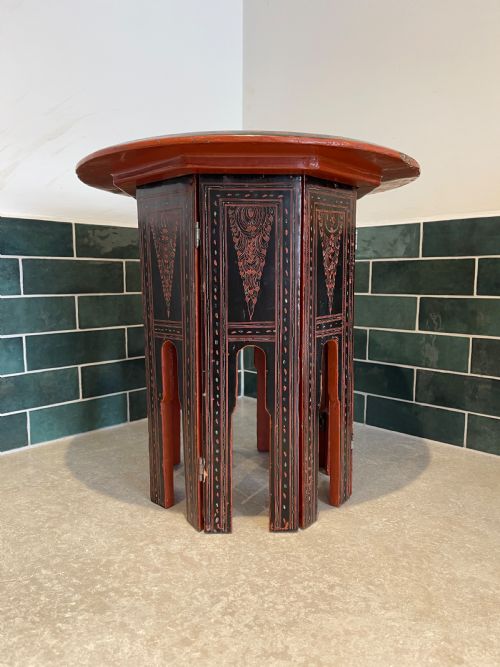


Carved Lacquer Tea Table
A carved lacquer tea table brings rich texture, deep pigment, and centuries of global craft straight into your sitting room.
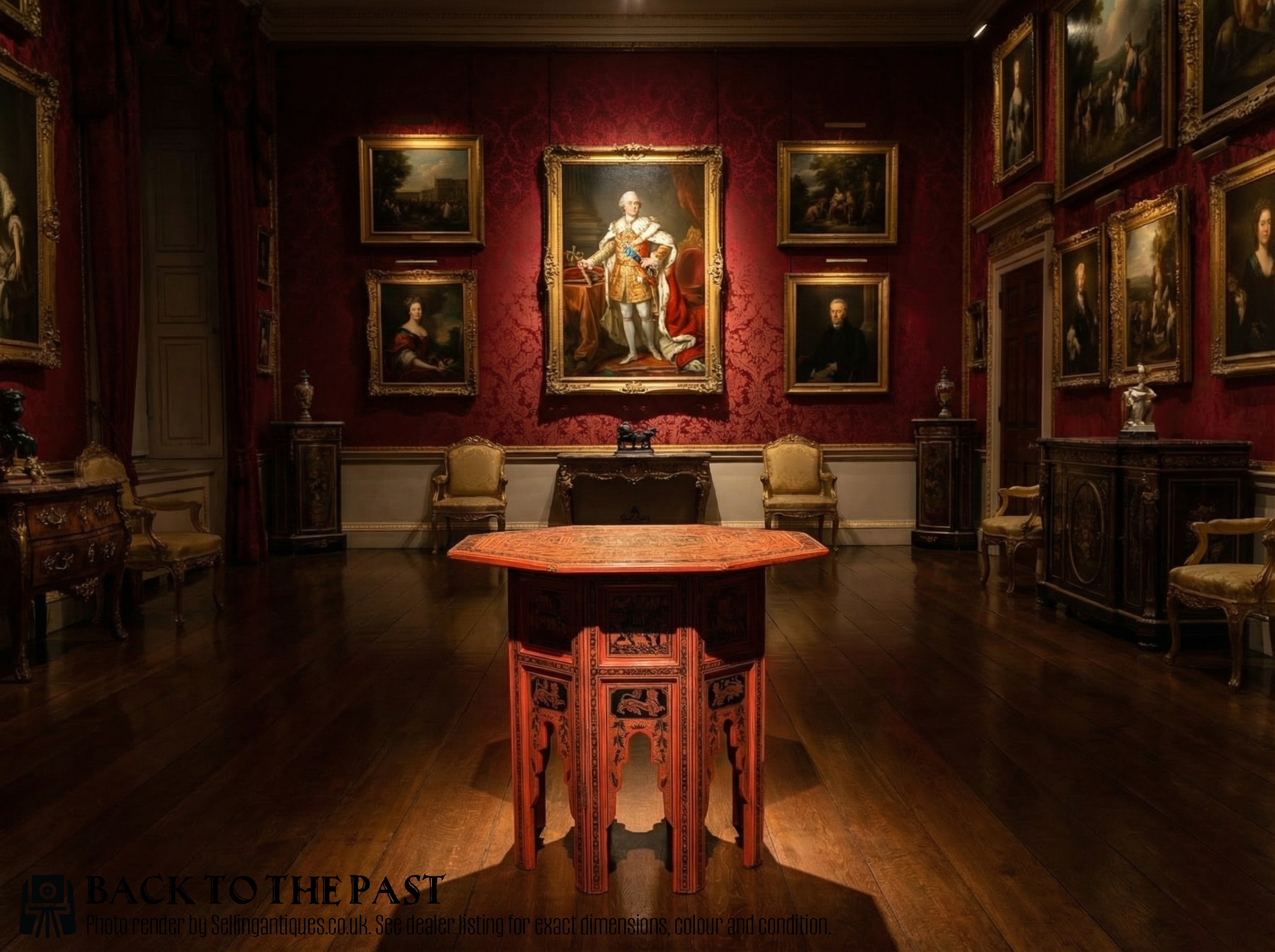
Carved Lacquer Tea Table
A carved lacquer tea table brings together low occasional surfaces and intricate regional finishes from global traditions. These pieces span the eighteenth century, the Victorian era, and the early twentieth century.
The selections on this page appear in various regional forms, including Chinese low coffee tables, Kashmiri painted side tables, and Burmese occasional tables. Buyers most frequently encounter black lacquer, red lacquer, and ebonised hardwood low tables suited for daily use.
Forms remain low to the floor, functioning primarily as side tables, coffee tables, and low occasional tables. Styles range from Qing dynasty and Chinese traditional to Anglo-Indian, Moorish Revival, and Kashmiri.
How they were made
Construction relies upon a core of solid wood or ebonised hardwood shaped into low tables, side tables, and coffee tables. Artisans built structural foundations using sturdy timber before applying surface coatings.
Makers built up successive layers of lacquer and paint, sometimes incorporating gilding or metal accents. Cinnabar finishes and black or red lacquered surfaces were carved while wet or dry to reveal intricate depth and pattern.
Some nineteenth-century makers secretly hid tiny painted birds beneath the lower framing of their tables just to amuse future restorers.
What varies in quality
Quality rests upon the depth of the lacquer layers and the precision of the carving across the surface. Finer examples display crisp detail in the motifs and stable joinery within the underlying hardwood frame.
The harmony of the colour application, whether deep red, glossy black, or intricate gilt work, dictates the visual success of the piece. Superior execution ensures the coating endures years of placement as a coffee or side table.
The Carved Lacquer Tea Table Glossary
- Lacquer
- A durable resin applied in numerous coats to form a hard, smooth, and protective surface. It resists moisture and provides a glossy finish that deepens in character over time.
- Cinnabar
- A bright red mineral pigment traditionally used to colour lacquer coatings. Artisans carved deeply into thick layers of this red material to produce dimensional designs.
- Ebonised
- Wood treated to resemble expensive ebony through staining or painting. This process creates a dark, uniform surface frequently utilised in nineteenth and early twentieth century tables.
- Occasional table
- A small, movable piece designed for specific, intermittent use rather than permanent placement. These low tables serve drinks, support lamps, or hold decorative items.
- Gilding
- The application of gold leaf or powder to highlight specific details on a surface. It adds luminous contrast against dark black or red lacquer grounds.
Carved Lacquer Tea Table: Frequently Asked Questions
What is a carved lacquer tea table?
A carved lacquer tea table is a low surface coated in multiple layers of resin and pigment, featuring hand-carved or painted ornamentation. These pieces originate from traditions across China, Burma, and Kashmir.
Such tables function as compact coffee or side tables, bringing decorative texture and distinct regional histories into modern interiors.
How do I use a low lacquer table?
Low tables sit close to the floor, making them suitable for casual seating arrangements or intimate living spaces. They provide a stable surface for tea sets, books, or small lamps.
Placement should avoid direct sunlight and excessive heat sources to protect the delicate lacquer finish from drying out over time.
How do I date an antique lacquer table?
Dating relies on examining the construction methods of the underlying wood, the palette of the pigments, and the specific decorative style. Eighteenth-century pieces differ significantly in framing and wear patterns from Victorian or early twentieth-century examples.
Comparing the depth of the carving and the composition of the lacquer layers helps place the item within its proper historical period.
How do I care for antique lacquer?
Care involves dusting gently with a soft, dry cloth and avoiding harsh modern cleaning chemicals. Maintaining stable indoor humidity prevents the wooden substrate from expanding and cracking the lacquer.
Treating the surface with mild care ensures the historic finish remains intact for generations to come.