
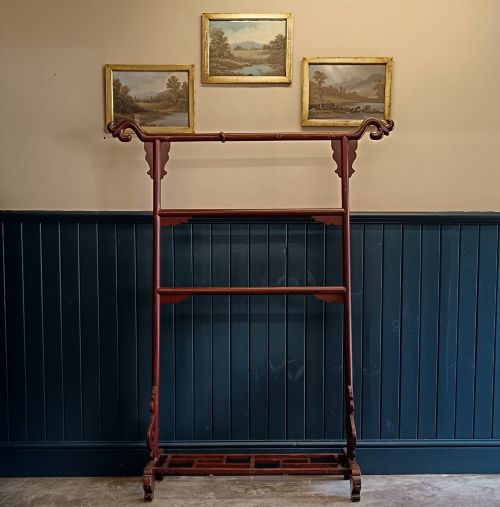


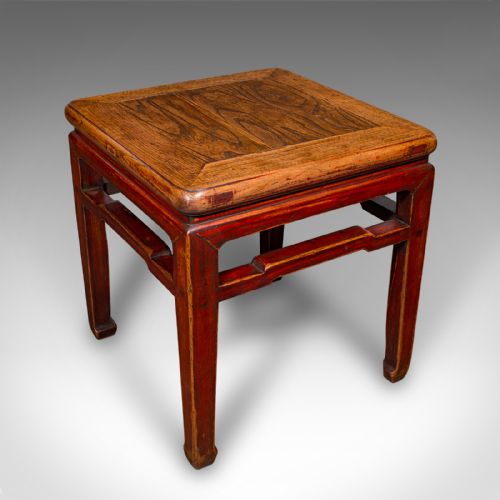


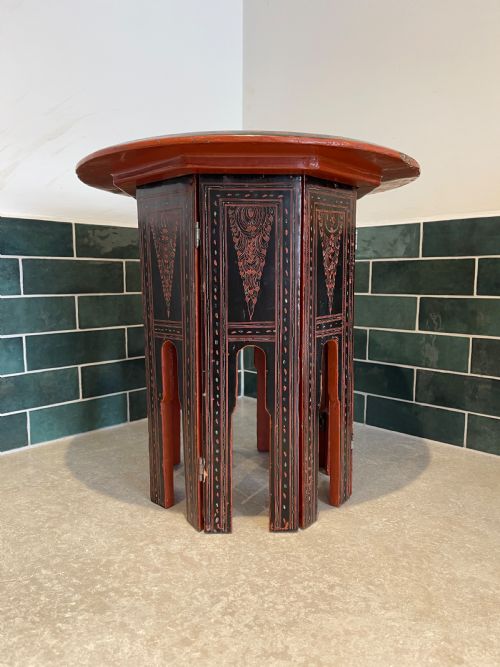


Asian Red Lacquer Stand
An asian red lacquer stand brings striking vermilion colour and polished Asian craftsmanship directly into a room.
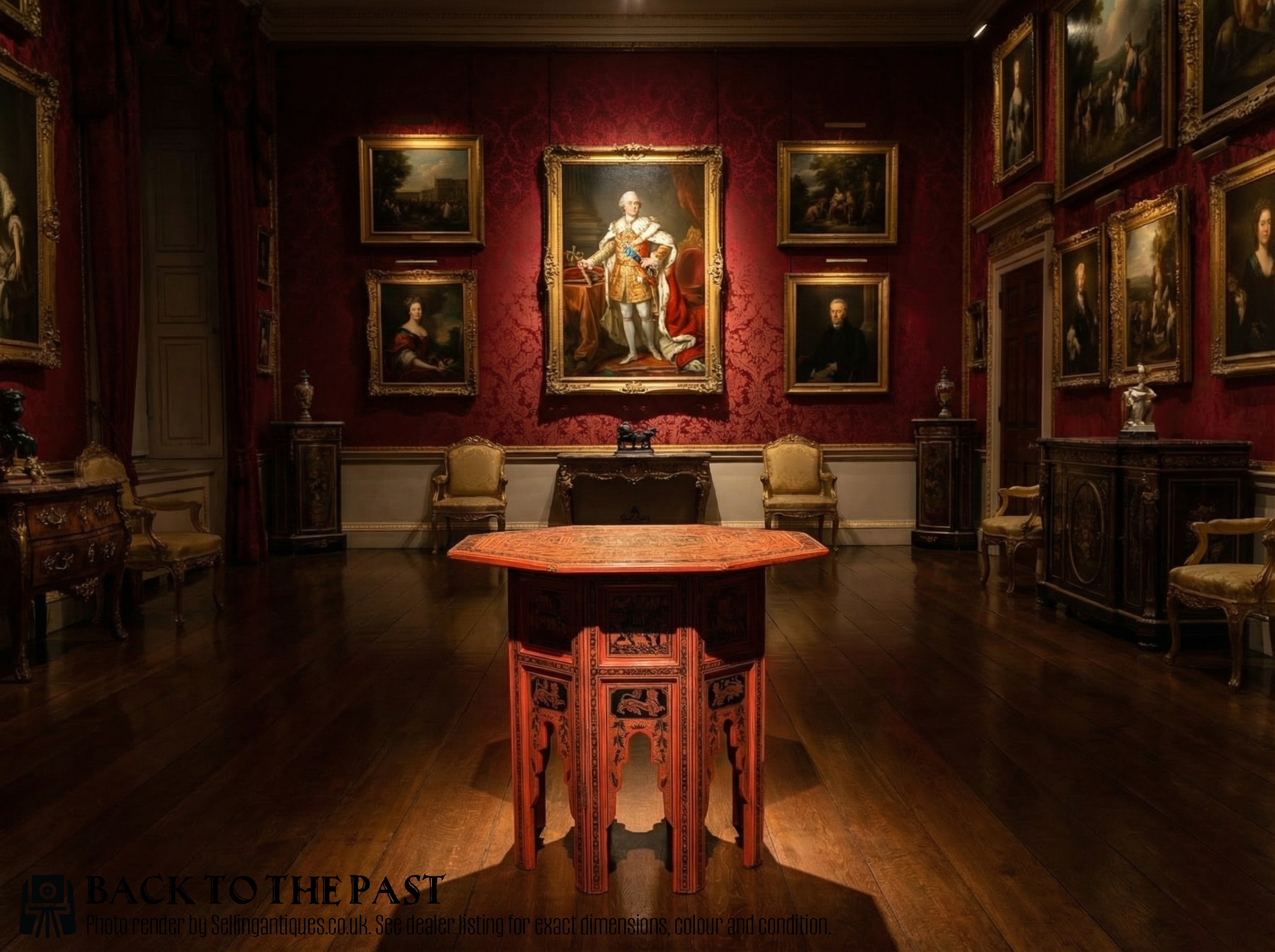
Asian Red Lacquer Stand
When searching for an asian red lacquer stand, buyers encounter a diverse selection of furnishings designed to elevate domestic spaces. These include tables, cabinets on stands, robe racks, and plant supports originating from various Eastern traditions.
The pieces on this page span the Victorian era through the early twentieth century, incorporating styles such as Chinoiserie, Anglo-Burmese, Japanese Meiji and Taisho, and Qing Dynasty influences.
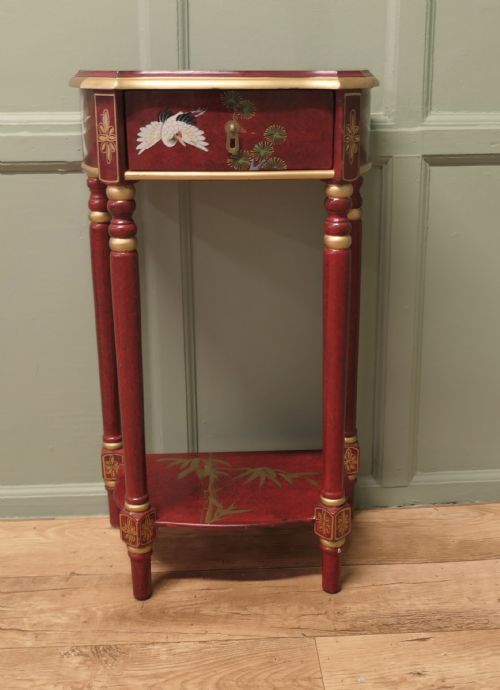
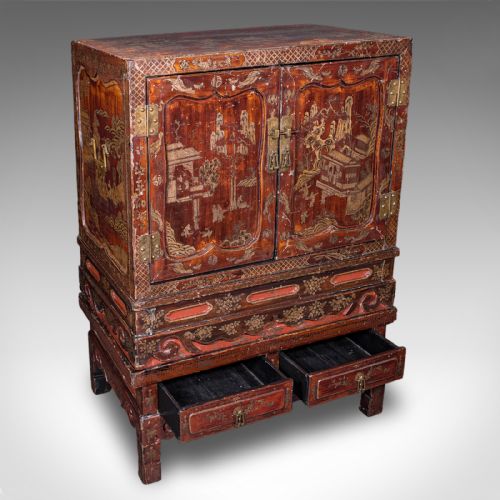
Most commonly, a buyer will meet occasional tables, side tables, and raised cabinets finished in brilliant red lacquer, often complemented by intricate carving or contrasting gilt details.
How they were made
The construction of these stands relies on solid timber foundations, frequently utilising elm and other sturdy woods beneath the surface finishes. Artisans applied layers of lacquer to create a smooth, resilient ground that protects the wooden structure underneath.
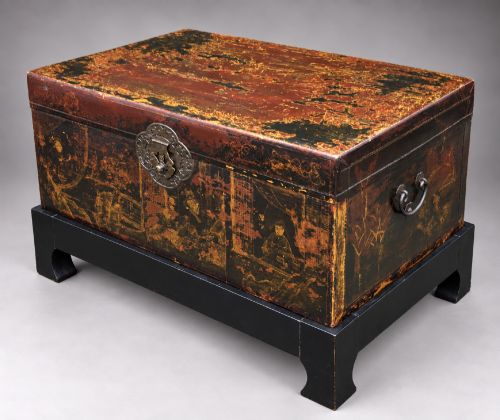
Many examples incorporate specialised surface treatments like cinnabar lacquer, where deep red layers are carved with intricate motifs, alongside applications of gold leaf and brass fittings. These techniques demand precise handwork from skilled craftspeople working within established regional traditions.
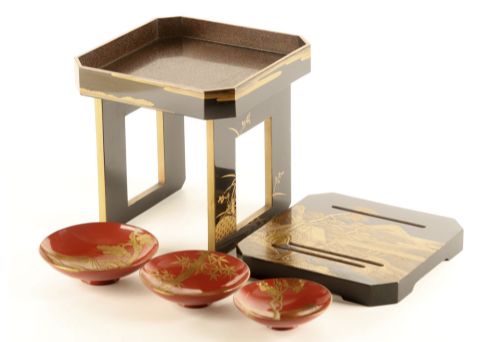
One early twentieth-century Japanese offering thoughtfully includes a matching set of three sake cups alongside its table.
What varies in quality
The standard of a piece depends heavily on the depth and complexity of the lacquerwork and carving. Finer examples display meticulous layering and hand-carved details that remain crisp and defined across the surface.
Structural integrity and the quality of the underlying timber also distinguish finer items. Pieces that retain their original brass mounts and gilding without extensive restoration represent the higher end of the range.
The Asian Red Lacquer Stand Glossary
- Lacquer
- A durable resin finish applied in multiple coats to wooden objects. It hardens into a smooth, glossy protective layer that resists moisture.
- Cinnabar lacquer
- A specialised technique involving numerous layers of red lacquer carved into intricate low-relief patterns. This method requires considerable time and skill to produce.
- Chinoiserie
- European artistic styles reflecting Chinese decorative motifs and techniques. It appeared frequently in furniture produced during the Victorian period and later.
- Meiji
- A Japanese historical period spanning the late nineteenth and early twentieth centuries. Furniture from this era often exhibits refined craftsmanship and traditional aesthetic principles.
- Robe stand
- A specialised piece of furniture designed for hanging garments or textiles. These tall stands often feature elaborate framing and lacquer decoration.
Asian Red Lacquer Stand: Frequently Asked Questions
What is an asian red lacquer stand used for?
These pieces serve multiple functional and decorative roles in a home, from holding plants and vases to providing surface space in a sitting room.
Tall variants such as robe stands were originally built for hanging garments, while smaller tables functioned as tea or occasional surfaces.
How do I care for red lacquer furniture?
Maintaining lacquer requires keeping pieces away from direct sunlight and extreme temperature fluctuations to prevent the finish from drying out.
Dusting gently with a soft, dry cloth is usually sufficient for daily upkeep without needing chemical polishes.
How can I tell the period of a stand?
Dating relies on observing construction methods, joinery, and stylistic markers associated with eras like the Victorian period or the early twentieth century.
Materials such as specific brass fittings and the type of timber used underneath the lacquer also offer clues to age.
What styles influence these pieces?
The selection includes items shaped by Chinoiserie, Qing Dynasty, and Anglo-Burmese traditions.
Japanese influences from the Meiji and Taisho periods also appear alongside Indian and Chinese export designs.
Are all red lacquer stands made of solid wood?
Most pieces utilise a wooden core, with elm appearing frequently among the structural timbers recorded in the evidence.
The defining characteristic is the layered lacquer coating applied over this wooden base.