





Chinese Lacquer Side Table
A Chinese lacquer side table brings deep red or black pigment, gilt detailing and practical surface space into a room.
Chinese Lacquer Side Table
A Chinese lacquer side table spans varied forms including nests of tables, altar tables, demi-lune consoles and occasional stands. These items emerge from the nineteenth century, the early twentieth century, and the Victorian and Edwardian eras, reflecting both traditional domestic furniture and pieces made for export.
The materials combine wood structures such as elm and hardwood with layered lacquer surfaces, brass fittings and gold leaf ornamentation. Styles range from Qing Dynasty designs and Chinese provincial work to Chinoiserie interpretations and Regency export pieces.
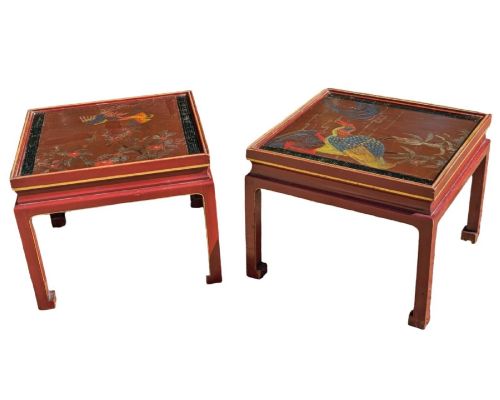
The most common versions encountered here are nineteenth-century red or black lacquer tables and nests of four occasional tables decorated with gilt motifs. Occasional tables and plant stands also appear frequently across these listings.
How they were made
Carpenters constructed the underlying frames using timber like elm and general hardwood, often employing traditional joinery methods suited to tables, cabinets and stands. Elm provided a sturdy base grain for pieces destined for heavy daily use.
Workers applied successive layers of lacquer to the wooden carcase, building a smooth surface that accepted painted decoration, gilt leaf and carved details. Cinnabar lacquer required building thick layers of red material before carving intricate patterns into the hardened surface.
Chinese Lacquer Side Table Retail Price Guide 2026
Typical asking prices for chinese lacquer side table among the pieces listed under this phrase on Sellingantiques today, from the lower quarter to the upper quarter. They describe what is for sale here now, not the wider market.
Listings incorporate items spanning the eighteenth century through to the 1930s, utilising elm, brass, gold leaf and cinnabar.
What varies in quality
The fineness of the hand-painted Chinoiserie decoration and the depth of the lacquer layers distinguish standard workshop production from finer examples. Superior pieces display crisp gilt work and well-preserved surface finishes that retain their original sheen.
Structural integrity of the underlying elm or hardwood frame affects durability, particularly in nests of tables and folding or tilt-top occasional pieces. Original finish preservation and the crispness of carved details on cinnabar or rootwood elements indicate the care taken during manufacture.
The Chinese Lacquer Side Table Glossary
- Lacquer
- A durable resin applied in multiple layers to a wooden base, creating a hard, smooth and protective finish. It forms the primary visual and tactile characteristic of these tables.
- Chinoiserie
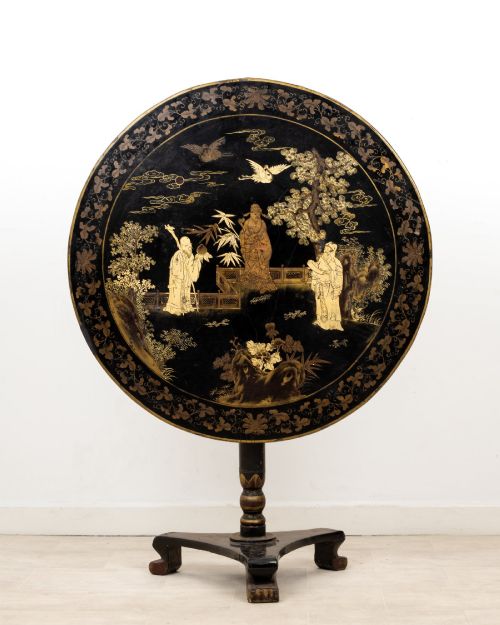
- European decorative style imitating Chinese artistic traditions, often featuring landscapes, figures and pagodas in gold on a black or coloured background. This aesthetic heavily influences many nineteenth-century items on the market.
- Altar table
- A traditional rectangular table featuring upturned ends or flanged flanges, originally used in domestic or temple settings. Nineteenth-century examples often utilise red lacquer over elm.
- Demi-lune
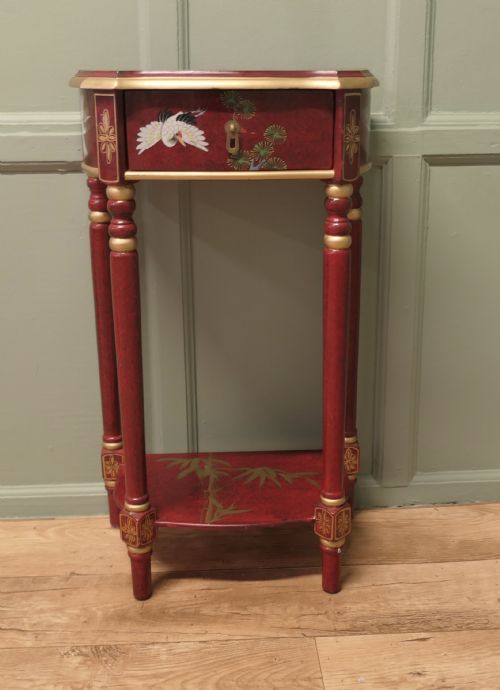
- A half-moon shaped console table designed to sit flat against a wall. Pairs of these tables appear frequently in nineteenth-century red lacquer configurations.
- Cinnabar
- A red mineral pigment used to colour lacquer, applied in thick layers and carved with intricate motifs. It provides a distinct textured surface on select cabinets and tables.
Chinese Lacquer Side Table: Frequently Asked Questions
How do I care for a lacquer surface?
Keep wooden lacquer pieces away from direct sunlight and extreme temperature fluctuations to prevent cracking or warping of the finish.
Dust gently with a soft, dry cloth and avoid chemical polishes that can damage the historical surface layers.
What is the difference between export and domestic pieces?
Export items were made specifically for Western markets, often blending traditional Chinese lacquering techniques with European furniture forms such as work tables and sewing cabinets.
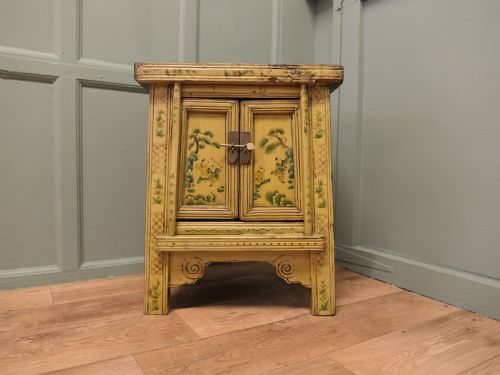
Domestic pieces followed local Chinese forms like altar tables, elm side cabinets and provincial stools intended for native households.
Are nests of tables an original Chinese form?
Nests of tables gained immense popularity during the nineteenth century through export trade, though stacking table sets evolved from traditional nesting furniture concepts.
They served flexible household functions, allowing multiple surfaces to occupy a small floor space when not in use.
How can I tell a nineteenth-century table from a later piece?
Nineteenth-century examples show natural wear patterns, hand-mixed lacquer characteristics and traditional joinery within the elm or hardwood framework.
Twentieth-century and Edwardian pieces often exhibit different baseline timber preparations and standardised decorative applications.