
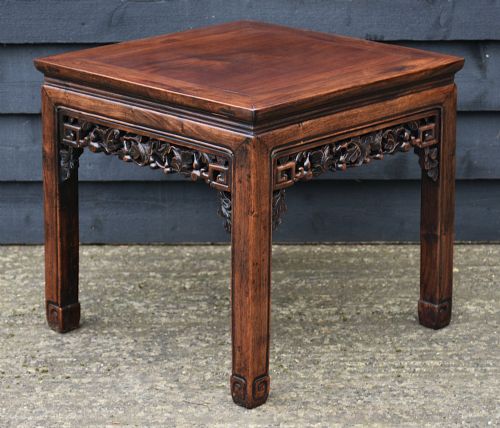
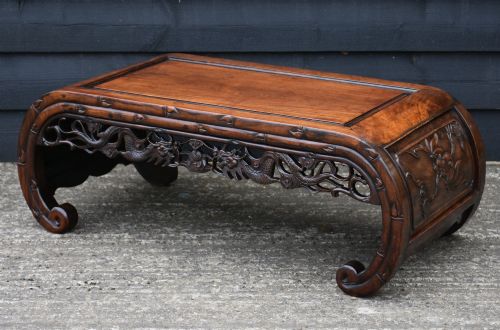


Qing Dynasty Coffee Table
A qing dynasty coffee table brings low, grounded timber proportions and carved scroll-ends directly from nineteenth-century domestic interiors into modern living spaces.
Qing Dynasty Coffee Table
A qing dynasty coffee table typically takes the form of a low kang or opium table, a scholar's stand, or a repurposed day bed originating from nineteenth-century workshops. These low tables feature restrained rectangular, circular, or octagonal timber surfaces designed originally for floor-level or platform living.
Buyers will most frequently encounter nineteenth-century elm, rosewood, and hongmu low tables alongside occasional nests and red lacquer variants. The selection spans standard domestic furniture adapted for modern seating heights as well as traditional scholar's writing tables.
Proportions remain low and horizontal, often finished with distinctive scroll-ends or dragon details carved directly into the dense hardwood frame. Occasional tables and trunks also appear, reflecting the broader repertoire of oriental export and domestic furnishings from the period.
What varies in quality
The degree of hand-carved detail and the selection of timber dictate the distinction between standard utilitarian furniture and exceptional pieces. Dense rosewood and hongmu examples with crisp dragon carvings or scroll-ends represent the higher tiers of craftsmanship.
The integrity of the original lacquer finish or the preservation of the raw hardwood grain distinguishes well-maintained surfaces from heavily altered items. Proportional balance and the finesse of the joinery further separate ordinary low tables from scholarly or reception pieces.
Object forms span low tables, kang tables, nests of tables, chests, day beds, and scholar's stands.
The Qing Dynasty Coffee Table Glossary
- Kang table
- A low platform table traditionally used in northern Chinese homes for sitting, dining, or drinking tea. These low surfaces form the direct template for many modern low table adaptations.
- Hongmu
- A generic Chinese term applied to dense, dark hardwoods including various species of rosewood. It translates literally to red wood and provides exceptional weight and durability.
- Scroll-end
- A structural end to a table top where the timber curves outward into a scroll shape. This stylistic feature appears frequently on nineteenth-century low kang tables.
- Opium table
- A common historical term for a low Chinese coffee table used domestically. They share the low proportions and sturdy hardwood construction of traditional kang tables.
- Huanghuali
- A prized yellow-hued rosewood utilised in high-status Chinese furniture. The timber displays intricate grain patterns that appeal strongly to collectors.
Qing Dynasty Coffee Table: Frequently Asked Questions
What is a kang table?
A kang table is a low, traditional Chinese platform table designed to sit atop a heated brick bed or floor surface. They serve as the primary structural template for low timber tables found today.
Their compact height and sturdy construction make them readily adaptable for use as low coffee tables in contemporary rooms.
How were these tables used originally?
They functioned as domestic surfaces for writing, drinking tea, or sharing meals while seated on mats or low platforms. Scholars and households utilised them for daily living tasks at floor level.
Over time, many lower forms have transitioned into living rooms to function as coffee tables due to their horizontal proportions.
Are all these tables from the Qing Dynasty?
The pieces span the nineteenth century and the early twentieth century, including the late Qing period and Edwardian export items. Dating relies on recorded construction periods and traditional workshop styles.
Most surviving examples reflect nineteenth-century craft traditions rather than earlier imperial eras.