

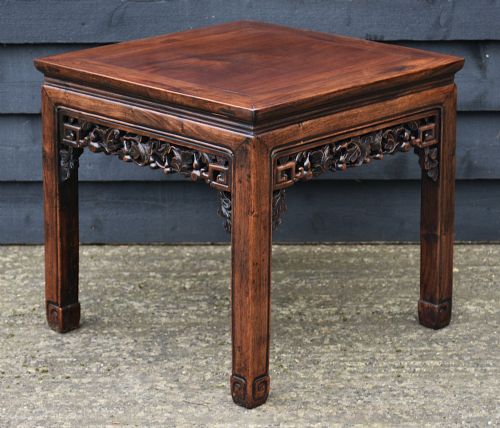


Carved Wooden Kang Table
These carved wooden kang tables are low domestic platforms built for sitting or resting items, offering practical surface space with distinct regional character.
Carved Wooden Kang Table
A carved wooden kang table is a low surface originally designed for sitting or placing items upon domestic platforms in traditional interiors. These pieces now function primarily as low coffee tables or occasional tables in modern settings.
Makers produced these works in varied scales, from smaller low tables to substantial occasional surfaces. Each piece brings traditional craftsmanship and low-profile utility into a contemporary room.
How they were made
Carpenters constructed these low tables using robust Asian hardwoods, elm, padouk, rosewood, and timber. These heavy materials provided the structural strength required for low-profile furniture subjected to daily domestic use.
Craftsmen applied traditional joinery methods alongside detailed carving and red lacquer finishes. The combination of dense wood and skilled hand-tooling produced durable surfaces with deep, aged patinas.
Carved Wooden Kang Table Retail Price Guide 2026
Typical asking prices for carved wooden kang table among the pieces listed under this phrase on Sellingantiques today, from the lower quarter to the upper quarter. They describe what is for sale here now, not the wider market.
The listings span from the eighteenth century through to the early twentieth century, incorporating Qing Dynasty and Chinese Export styles.
What varies in quality
Quality rests in the crispness of the carved details and the selection of the primary timber, such as dense rosewood or padouk against standard elm. Better examples exhibit a deeper, warmer natural patina developed through decades of handling and use.
Proportion and scale distinguish finer regional output from mass production. A well-balanced frame with refined joinery demonstrates superior workshop execution.
The Carved Wooden Kang Table Glossary
- Kang table
- A low platform table traditionally used on a heated brick bed in northern China for dining, writing, or resting. They are prized today for their versatile low proportions.
- Padouk
- A heavy, durable tropical hardwood prized for its rich reddish-brown colour and dense grain structure. It takes a fine carved finish.
- Patina
- The lustrous surface sheen developed on old wood through age, wear, and polishing. A good patina indicates genuine age and careful maintenance.
- Qing Dynasty
- The final imperial dynasty of China, spanning from sixteen forty-four to nineteen twelve. Pieces from this era often feature elaborate carved motifs and traditional joinery.
Carved Wooden Kang Table: Frequently Asked Questions
How were carved wooden kang tables used?
These low tables were originally placed upon heated brick platforms in traditional homes for eating, drinking tea, and social gathering.
Today, buyers use them as low coffee tables or accent pieces in contemporary living spaces.
What woods were used for these tables?
Carpenters utilised dense Asian hardwoods including rosewood and padouk, alongside regional timbers like elm.
These durable materials provided the structural integrity needed for heavily carved low furniture.
How do I date a wooden kang table?
Dating relies on assessing the timber type, the depth and style of the carving, and the overall construction methods.
Pieces originating from the Qing Dynasty exhibit distinct regional characteristics compared to later Republic Period examples.
How do I live with a low table?
A low table works well placed centrally in a room to anchor seating arrangements or beneath a window.
Ensure you use coasters and protect the aged timber surface from excess moisture.