
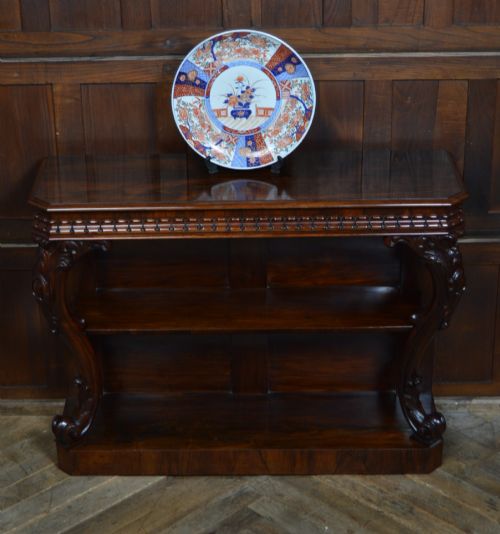
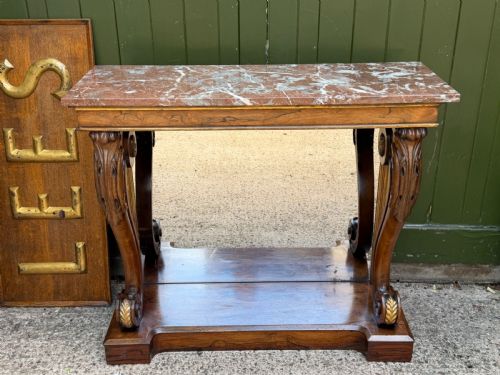


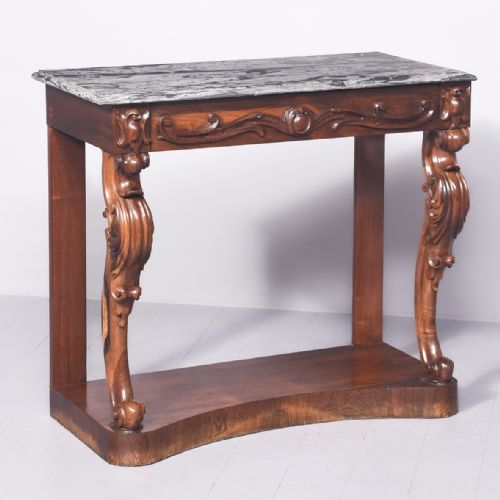


Carved Rosewood Pier Table
A carved rosewood pier table brings architectural weight and rich timber grain to a room, offering a solid marble top and often a brilliant mirror-back.
Carved Rosewood Pier Table
A carved rosewood pier table stands against a wall, typically designed to sit between windows beneath a pier glass or mirror. These pieces appear in forms such as console tables, pier tables, and chiffoniers.
The selections available run through the nineteenth century, taking in Regency, William IV, and Victorian periods. Makers channel diverse aesthetics, including Anglo-Indian production and designs in the manner of Gillows.
Buyers encounter regional variations including Irish and Scottish examples alongside English pieces. The form bridges formal drawing room furniture and functional display surfaces.
Materials and construction methods
Makers construct these tables using dense rosewood, occasionally featuring simulated rosewood grain or parcel-gilt highlights. Heavy figured marble tops provide durable, cool surfaces designed to contrast with the dark wood.
Makers integrate mirror glass within the backboards to reflect light and enhance the sense of space in a room. Carved detailing and parcel-gilt elements elevate the decorative scheme of the timber frames.
The site's listings feature nineteenth-century rosewood, marble, and mirror glass across Regency and Victorian periods.
Factors that define quality
Quality rests in the depth and crispness of the carved details applied to the rosewood frames. The selection of the marble top, particularly its thickness and figuring, marks the distinction between standard and superior pieces.
The integration of original mirror glass and the refinement of parcel-gilt enrichments elevate a piece. Structural cohesion across heavy timber and stone components remains essential to a successful design.
Robert Strahan·Gillows
The Carved Rosewood Pier Table Glossary
- Pier table
- A side table designed to stand against a wall, traditionally between two windows. These tables often feature mirror-backs to amplify light.
- Console table
- A table supported by wall brackets or console legs, functioning closely alongside the traditional pier table form. Many nineteenth-century examples combine these functions.
- Parcel-gilt
- Partially gilded woodwork where gold leaf highlights specific carved motifs. This technique contrasts bright metallic areas against dark rosewood.
- Chiffonier
- A low cabinet or sideboard featuring shelves and doors, sharing materials and period aesthetics with pier tables. Scottish and English makers produced these alongside console forms.
- Anglo-Indian
- Furniture made in India by native craftsmen for British occupants or export, typically featuring dense carved foliage. These pieces utilise local rosewood traditions.
Carved Rosewood Pier Table: Frequently Asked Questions
Where should I place a pier table?
These tables suit hallways, drawing rooms, or reception rooms where wall space permits a substantial piece of furniture. They anchor large mirrors or paintings effectively.
Position them away from direct heat sources to protect the rosewood timber and the marble top from thermal shock.
How do I care for the marble top?
Clean the marble surface using a soft damp cloth and mild neutral soap, avoiding acidic cleaning agents that etch the stone. Dry the surface thoroughly after cleaning.
Treat the rosewood frame with appropriate furniture wax sparingly to maintain the natural lustre of the timber grain.
What is the difference between a console and pier table?
Console tables rely partly on wall fixings or brackets for support, whereas pier tables traditionally stand independently on four legs. Nineteenth-century makers often blurred these distinctions.
Both forms serve identical decorative purposes against a wall beneath architectural mirrors.
How do I identify a Regency period table?
Regency pieces often display classical motifs, bold rosewood veneers, and parcel-gilt accents reflecting early nineteenth-century design tastes. Proportions tend to remain architectural and formal.
Construction methods from this era involve solid timber framing and hand-cut joinery before industrial mass production.